The Window into Ötzi

On our way to the EAA meetings in Rome, the Ethical Entanglements team stopped over in Bolzano to see the exhibit of one of the most famous individuals in European prehistory, “Ötzi the Ice Man,” at the South Tyrol Museum of Archaeology, and to meet with the director Elisabeth Vallazza to discuss choices, strategies, and experiences in caring for such an exceptional individual. The visit proved to be very interesting since not only the archaeological find itself, but also the choices for the display, are unique, and inspire reflection and discussion. 

Nicole and Rita in conversation with Director Elisabeth Vallazza at the South Tyrol Museum of Archaeology in Bolzano. Photo by Liv Nilsson Stutz.

In 1991 two hikers found the remains of a human body, emerging from the melting ice in the Ötzal Alps, on the border between Italy and Austria, at an altitude of 3,210 meters. The body was so well preserved that it was assumed to be the remains of a recently deceased mountaineer, and local rescue and law enforcement were alerted. The body, still partially encased in the glacier, was pried from the ice with force. The working conditions were difficult because of dire weather conditions and the process was delayed. The body, along with objects recovered at the site, were eventually transported to the medical examiner’s office in Innsbruck. There, archaeologist Konrad Spindler concluded that this was not the body of an unfortunate alpinist, but an individual from the end of the Neolithic period. Closer examination of the human remains would later reveal that he had been the subject of two violent attacks before his death. First an encounter several days earlier, that led to a stabbing wound in his hand. Then an attack by arrow, causing both severe damage to his shoulder and blood loss, and leaving the arrowhead lodged in his shoulder.

The find soon captured global attention from archaeologists and the public alike. The body was given the name Ötzi, and as science uncovered details about his life and death, his humanity emerged and captured the attention of a large public. He soon became one of the best-known individuals of European prehistory. When we visited the museum on a Monday morning in late August, people were lining up in a long queue that spilled out into the street and around the corner of the museum. Droves of people waited patiently in the light summer rain. They were all there to see Ötzi. 

The find is spectacular. The naturally mummified body has allowed for a range of studies that have provided insight into his cause of death, his diet, his movements thoughout his lifetime, his health status, and his tattoos. In addition to the body itself, Ötzi’s clothes and gear provide a unique window into a dimension of stone age material culture that is rarely preserved. His coat carefully crafted from alternating pelts of goat and sheep skin creating a striped garment, is stunning, as are his leggings made from small patches of goat skin carefully sewn together in a patchwork pattern, and his shoes padded with dried grass. His toolkit includes, among other things, birchbark vessels, a fire kit of embers wrapped in leaves, a bag pack, a perfectly preserved mounted copper axe, and a soft hammer composite tool with a cylindrically shaped core made of deer antler placed in the centre of a wooden handle. 
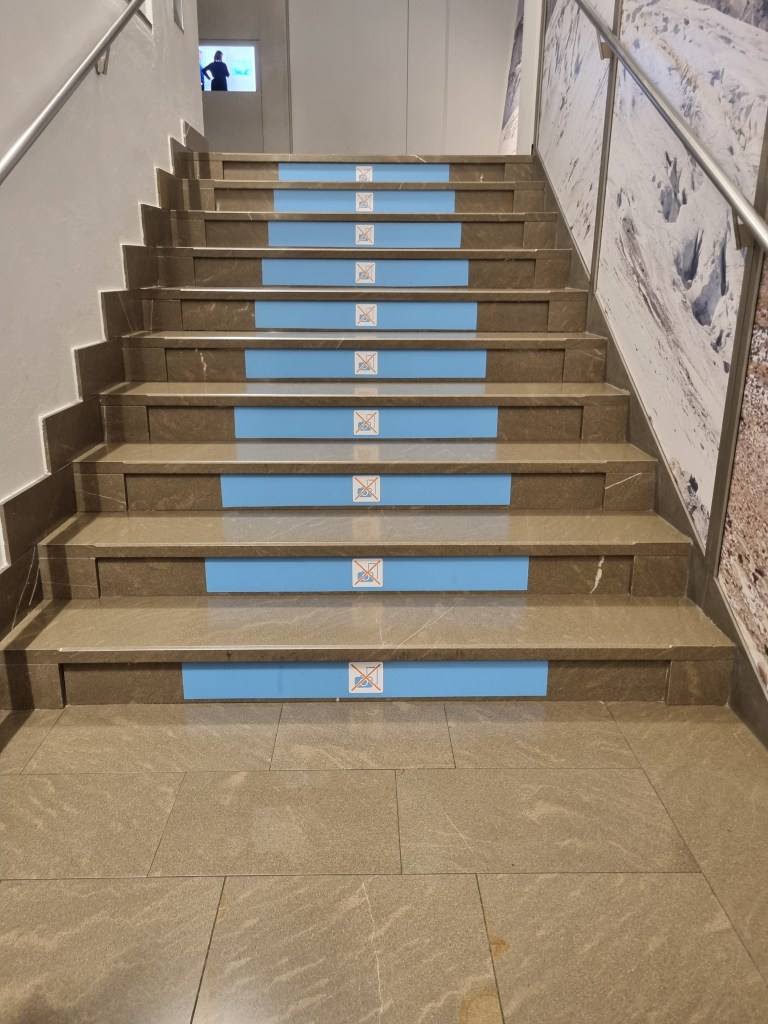
The staircase leading up to the exhibition floor with the body of Ötzi and all the original artefacts. Note the “photography not allowed” signs (and the number of them!). Photo by Liv Nilsson Stutz.

When Ötzi was found in 1999, the South Tyrol Museum of Archaeology was still just in the planning stages, but the find (and presumably the much-covered border dispute regarding the national claim to the find) prompted an acceleration of the plans, and in 1999 the museum could open with an exhibition centered on these extraordinary finds. How, we wondered, do you curate and care for Ötzi and his artefacts? How do you tell his story, that is so connected to him as an individual, to the public today? What can you show – and how? Bolzano is a town in a conservative region, and there were initially some objections from traditional Catholics about showing the body of a dead person. But the museum decided nevertheless to put Ötzi on display for visitors to see. 

The way the museum shows Ötzi is an interesting example of how conservation can be combined with a pedagogical experience for the public. The conservation needs call for a stable environment of -6°C, and to make this possible, Ötzi is placed in a controlled and protected space with limited exposure. The walls protecting him are clad in metal and give off an almost fortresslike vibe. But despite the coldness of the space, the needs to protect and preserve have created a display that in addition to providing an optimal environment for preservation, also guides the visitor to a personal encounter. 

The area where the body is on display is shielded off by a convex screen wall, and behind it a short maze created by retractable barriers allows visitors to stand in an orderly line gradually approaching the metal clad wall with a small square window into which one person at the time can look at Ötzi. The queuing system, and the one-to-one encounter may just be the fortuitous result of preservation requirements, but it provides an experience during which each visitor has a period of waiting, a period that allows them to pause and prepare themselves for the privilege of meeting an individual from the deep past.  The small window frames the encounter itself to be one of equality. The set up focuses your attention to the window and prevents, or at least hinders conversations among visitors during the meeting. It becomes focused – even personal. When we visited Ötzi we were alone in the museum, and the scene was quiet. As we walked past it later that morning after the museum had opened to the public, the area was a lot louder and more busy – but the short moment of encounter would still provide the opportunity to focused attention – even contemplation.

…it is interesting to note that the body itself is so central to how we understand Ötzi. It is his naked body that people associate with the find. It is the image of the mummified remains –with the left arm in extension, rotated inward and lifted across the body–we most often see on book covers and websites. It is also very likely that it is this body that most of the visitors are there to see.

When asked about people’s reactions to the display, Elisabeth Valazza shares that the great majority of the feedback they get is positive, even emotional, but rarely critical or negative. It seems like the exhibition choice is successful. There are no trigger warnings or special instructions to the visitors (except that photography is not allowed). It appears that the embodied experience (the waiting in line, the one-to-one encounter) may serve the purpose of reframing the visit in a more fundamental way that makes these direct communications unnecessary. Of course, we cannot know for sure since we did not interact with the visitors about their experience, but it seemed like a real possibility. 
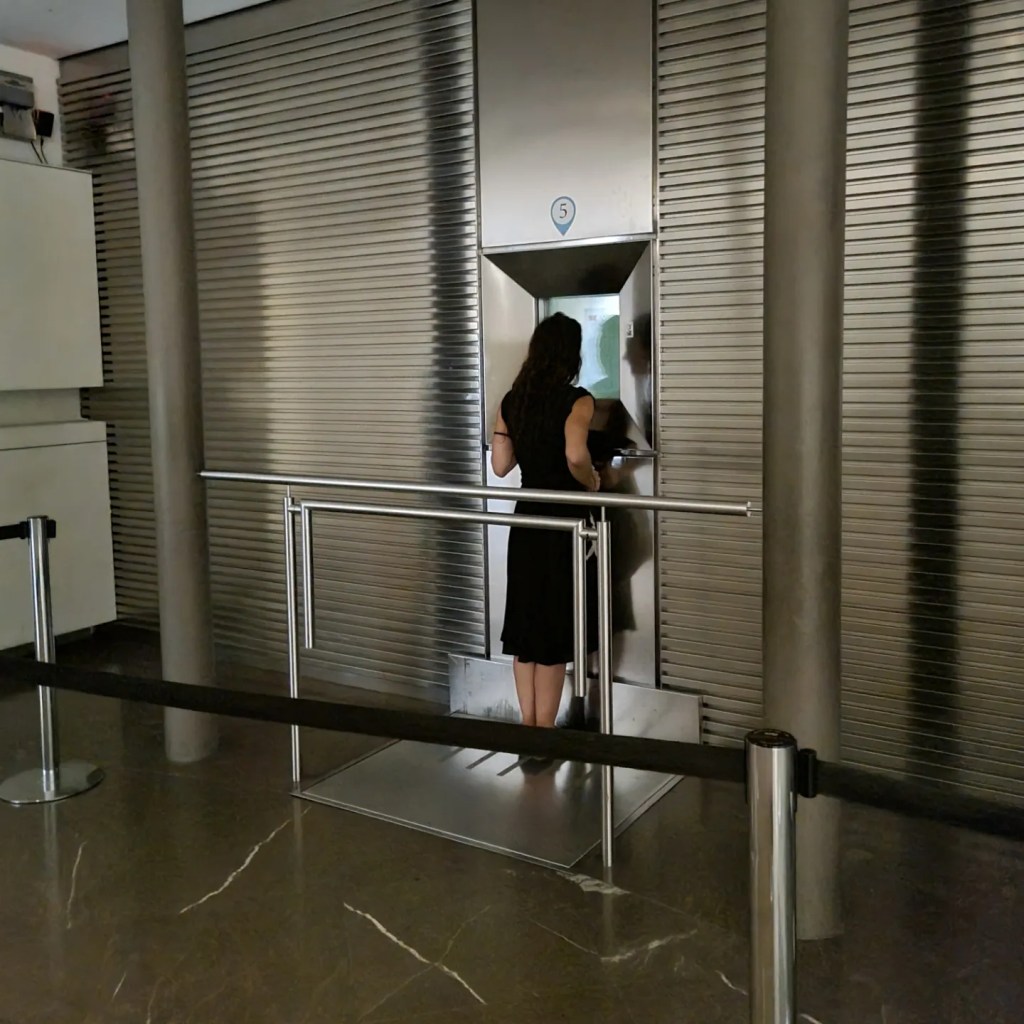
Rita standing at the window looking at Ötzi. Photo (with permission) by Liv Nilsson Stutz.

Ötzi’s body is displayed without clothes. This is partially a preservation choice. Different materials require different forms of conservation and care. Here the choices made clearly privilege conservation and even accessible exhibition over, for example, respect for the dead. Given the exceptional character of the objects and the mission of museums to preserve them, this is not surprising. But it is interesting to note that the body itself is so central to how we understand Ötzi. It is his naked body that people associate with the find. It is the image of the mummified remains – with the left arm in extension, rotated inward and lifted across the body – we most often see on book covers and websites. It is also very likely that it is this body that most of the visitors are there to see. Elisabeth Vallazza shared an anecdote that illustrates this. One day the lighting in the window display stopped working and the staff started to problem solve. Would they have to reimburse the visitors if they were not able to see Ötzi? The fact that the museum was filled with unique artefacts somehow did not immediately seem enough. The body is important.

The impact of Ötzi’s naked body – so fragile, small, and stripped – is, at least for me, one of vulnerability. This vulnerability can be contemplative for the visitor – it may allow them to see Ötzi as a vulnerable human in death, or perhaps themselves, or mortality, at that private privileged moment at the window. But, of course, the ethical issues remain entangled. Is it right to show him this way? Are there any alternatives?

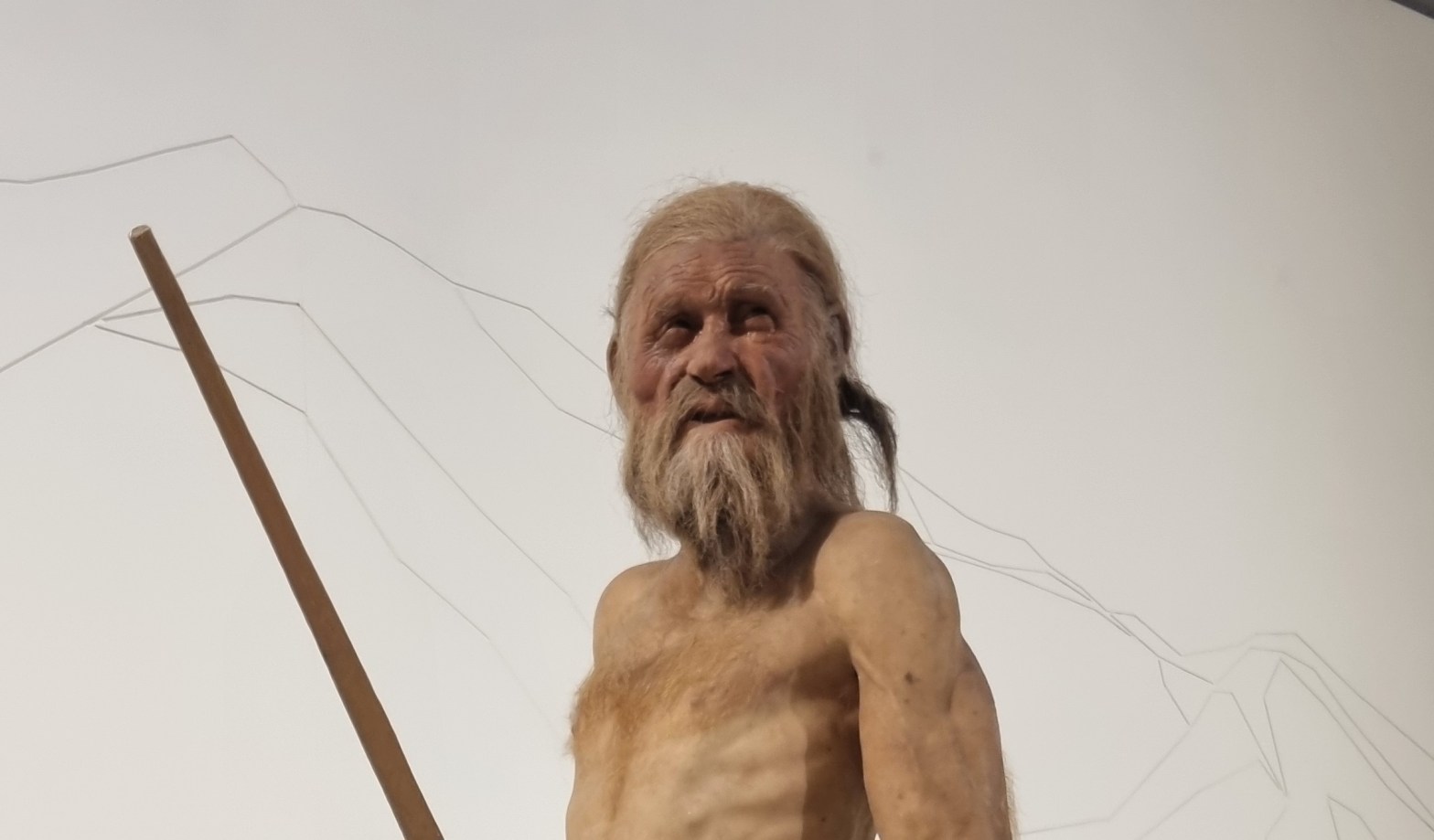
Reconstruction of Ötzi. He is bare chested to show the tattoos on his back. Photo by Liv Nilsson Stutz

The reconstruction of Ötzi is also very telling. In a room dedicated to the reconstruction, he is on display holding his partially finished bow, and wearing his underwear and leggings – but with his upper body bare. The reason given for this is that it was important to show the tattoos on his back. It is interesting that these tattoos are considered more important and more interesting, than, for example the coat – or the full gear. This makes me wonder about our fascination with mummified bodies as rare, and somehow intriguing in and of themselves to the point of overriding other interests. This is especially obvious at the mummy table where visitors can touch an interactive screen and digitally unpeel the layers of his body. This feature stands in very stark contrast to the structured visitation of Ötzi at the square window. 
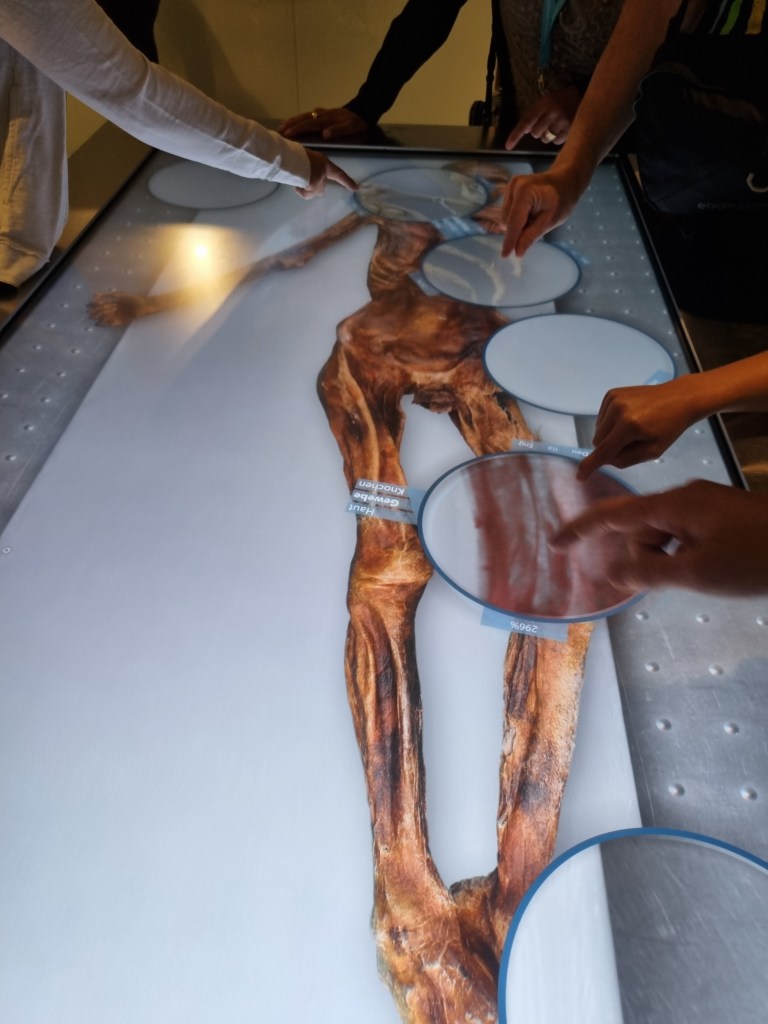
The interactive mummy table where visitors can explore different layers of the body of Ötzi. Photo by Liv Nilsson Stutz.

For the most part the museum display of Ötzi shows him more as a lived life than as an object of science. A lot of room is dedicated to telling the story about his life and death. A parallel narrative throughout the exhibition is that this lived life emerges from the scientific work carried out on both his body and the material culture found with him – as objects of science. Here the two are intimately linked and dependent on one another. The close connection with the museum to this one exceptional individual seems to have created a sort of “bond of care.” This is a phenomenon I have noted elsewhere in museums that have singular, but exceptional human remains. Somehow their uniqueness (in character and quantity) favours care. However, because of Ötzi’s celebrity status, not only his objects, but especially the reconstructions of his body now exist in multiple copies in different museums across the world. What happens to the care for his personhood as his body transitions through versions of virtuality and materiality – at the mummy table and through replicas of his body throughout the world? Is this something we need to consider?
A Nordic Perspective on Collections of Human Remains

Viewed from the outside, it often seems as if the Nordic countries are very similar in terms of culture and values. But despite their entangled political and cultural histories, and their cultural similarities, a closer look reveals interesting differences, and this is certainly the case for their professional attitudes to the ethics of collections of human remains.

The Nordic Network for Collections of Human Remains is an informal forum that organises different stakeholders in human remains collections, predominantly collection managers, but also researchers and museum professionals across the Nordic countries . The purpose of the forum is to provide a space for reflection and support in professional discussions and development of ethical practices. The Network organised a conference at Arkivcenter Syd, in Lund on October 26-27, 2023 (for full disclosure, Liv Nilsson Stutz has been a member of the steering group during the period 2020-2023, and was part of the organising committee for this conference). The purpose of the conference was to come together for the first time after the end of the pandemic, update one another on the state of the field in the different Nordic Countries, and strengthen both formal and informal ties and relationships throughout the community.

The conference invited speakers from several large collections across the Nordic countries to share their perspectives and experiences. Unfortunately the participant from Norway (Julia Kotthaus from De Schreinerske samlinger, at the Medical Faculty at the University of Oslo) had to cancel last minute, since she needed to prioritise her presence at a repatriation from the collection she manages. These presentations were inspiring in the sharing of protocols and experiences, but also showed the differences in approaches between countries.

Careful storage of human remains in a Swedish museum. Photo by Liv Nilsson Stutz (intentionally blurred).

The Danish model is interesting since it clearly separates ownership from deposition and curation. The former is held by local museums, while the latter is managed by essentially two centralized collections: ABDOU at the University of Southern Denmark (presented by Dorthe Dangvard Pedersen), and The human skeletal collection at the University of Copenhagen (presented by Niels Lynnerup, Marie Louise Jørkov, and Kurt Kjaer). This arrangement has interesting consequences for the management of processes. The facilities are all highly adapted for the preservation and study of human remains, and the research facilities support, track and assist in access to the collection by researchers, students, and even the public. It can be argued that this system that separates the human remains from their otherwise historical and archaeological context in order to prioritise preservation, control, and documentation, implicitly or explicitly categorises the remains almost exclusively as Objects of Science. It appears to be a very clear, but also unproblematising approach. The division has interesting consequences for the most significant case of repatriation of human remains in Denmark, Utimut – the repatriation of human remains and culturally significant objects to Greenland. The ownership of the human remains is now held by Greenland, but Greenland has elected to follow the same system for the management of collections of their human remains as that practiced for remains found on Danish soil, keeping them in Copenhagen. This case is always interesting to bring up in debates about repatriation since it is clear here that the Greenland side appears to share the same concerns for these remains as their Danish counterpart, and also feels that a practice that protects them as Objects of Science is valuable for them. But that does not mean that nothing has changed. There is a significant shift in the attitudes on behalf of the collection managers who do not claim control or ownership, but take the role as mediators and assistants. In this sense then, the Danish system is arguably more inclusive and progressive than in the rest of the Nordic countries, where ownership tends to be associated with the institution that holds the remains.

The Swedish system with decentralised practices and control was illustrated by presentations from two Swedish collections. The Historical Museum at Lund University was represented by Jenny Bergman and Sara Virkelyst who presented a newly established flow chart to systematically support repatriation processes in order to make them transparent and predictable for all stakeholders. The collections at the National Historical Museums were presented by Elin Ahlin Sundman. The issues of ethics appear to be top of mind for the Swedish institutions, but the decentralised practices result in great diversity in protocols and processes – which stands out as quite a contrast to Denmark.

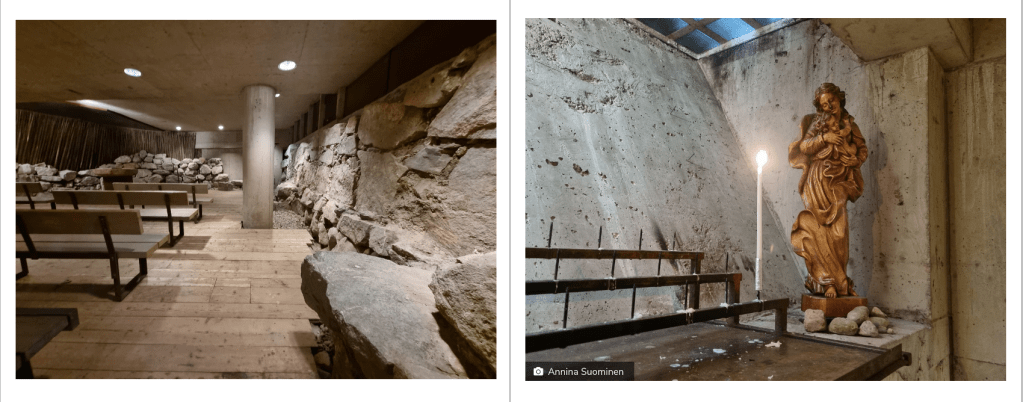
Images from inside the Chapel of the Holy Ghost in the basement of the Casagrande House in Turku, a semi private place of worship that also serves as a resting place for excavated human remains from the later medieval and early modern period. Photos by Annina Souninen, and published by Åbo Underrättelser.

Finland seems to have the least regulation and formalised processes for the care of collections of human remain at the moment. With a law that currently calls for decisions of future reburial to be made before an excavation has even started, human remains, in Finland, appear to be treated more toward the end of “Lived Lives” than in the other countries. They are often reburied immediately – sometimes even before osteological study. It should be added, however, that this position in reality is almost directly dependent on the chronological age of the remains, with prehistoric remains being systematically collected, and historical remains more often reburied. The decision is often made by local parishes who hold a lot of the power in these negotiations. Liisa Seppänen from the University of Turku presented a hybrid solution with the case of the contemporary chapel in the Casagrande House in Turku. The historic building, previously known as Ingmanska huset, was built in the 17th century at the previous location of a Graveyard of the Holy Ghost Church in Turku. After being threatened with demolition in the 1980s, the architect Benito Casagrande purchased and renovated the building under supervision of the Finnish Heritage Agency, and it now includes businesses, shops, and restaurants. The remains of the people buried in the underlying churchyard (from the 14th century and to 1650) were excavated in consecutive projects from the 1960s and through the 1980s, and were collected by a dentist at the university who kept them as a teaching and research collection (predominantly the crania). After extensive lobbying, Benito Casagrande, managed to have the remains transferred from the university to a newly built chapel in the basement of the house, where they can both rest in a sacred space and be accessible for research. The chapel is not open to the public, but can be visited upon request. A small working group, of which Casagrande is a part, oversees the collection and makes decisions with regards to access and curation. The impact of a private citizen is, to say the least, quite extraordinary in this case – but perhaps this is not as difficult to reconcile in a system with a tradition of consultation with the leadership of local parishes. From a more traditional collection manager point of view, Risto Väinölä discussed he human remains collection at the University of Helsinki (LOUMUS) which is a heterogenous collection with a long and diverse history of collection, with potential for research but with limited manifested interest both on behalf of researchers and calls for repatriation.

In addition to the presentations of the state of the field in the respective countries, I also want to highlight two more conceptual papers. Karin Tybjerg from Medicinsk Museion in Copenhagen presented an interesting paper on historical medical collections as a foundation for amemnesis – the clinical medical process of recovering the medical history, usually referring to patient history, to understand medical states in the present, but here expanded to include a broader investigation into the field of medical science, medical history and medical humanities (she has published these ideas in an interesting paper in Centaurus 65(2), in 2023). Equally interesting was Eli Kristine Økland Hausken‘s paper Adressing Bare Bones and Human Remains about her work with exhibitions at the University Museum of Bergen and the underlying ethos of their activities to engage the local community by “lifting the curtain” on the process knowledge production and the history of institutions. I was somewhat surprised at the choice to exhibit a shrunken head, a South American Tsansta (an issue that has also been debated by curator Åshild Sunde Feyling Thorsen from the same intitution), and while I am personally not convinced, I was interested in the arguments in favour of making such an unconventional choice today.

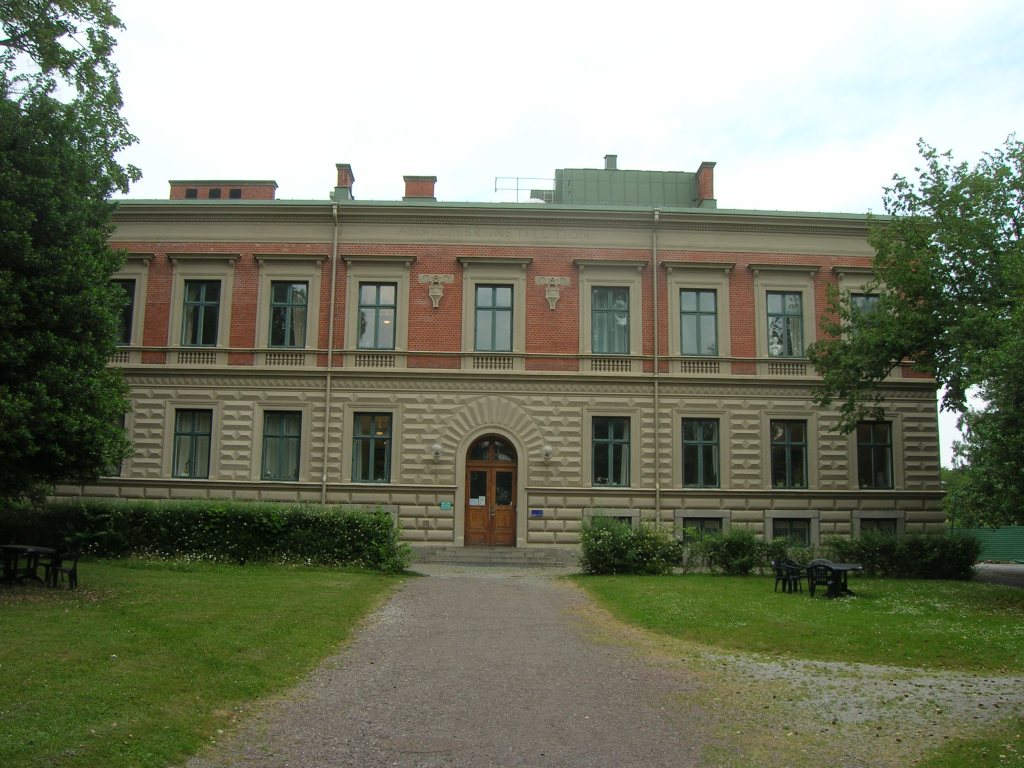
The Old Department of Anatomy at Lund University. Image by Väsk, licensed under CC BY-SA 3.0.

During the course of the conference, three panel talks explored several fundamental issues for the care of collections of human remains. The following topics were explored:

  • Panel 1: What is the value of collections of human remains? This panel explored the broader topic of the value of these collections for science, pedagogy and history in a time when they are increasingly questioned. Are they valuable? And if so, how?
  • Panel 2: How to make the collections accessible (including perspectives on digitalization, exhibition, and access for researchers). Should we? And how best to do this?
  • Panel 3: Accession and deaccession. What are our current challenges? This panel talk will discuss the responsibility (and cost) of accession and deaccession, and discuss the connections to repatriation and (re)burial.

Throughout these conversations it became clear just how entangled these issues really are. The final discussion, on accession and deaccession, also linked up the the local history of anatomy in Lund where a large part of the old and seemingly “worthless” or “problematic” collections from the Department of Anatomy were unceremoniously discarded in 1995 when the department was closed down permanently. Some remains were transferred to the Historical museum (the institution that received most of the skeletal remains) and to other institutions that had previous ownership of remains in the collection, but a shocking amount of wet specimen, ended up in containers to be destroyed or haphazardly collected from the street by private people, potentially to take on another life, now even more in the shadows and even further removed from ethical care. The date, 1995, serves as a reminder that it is not that long ago that these issues were hardly problematised at all.


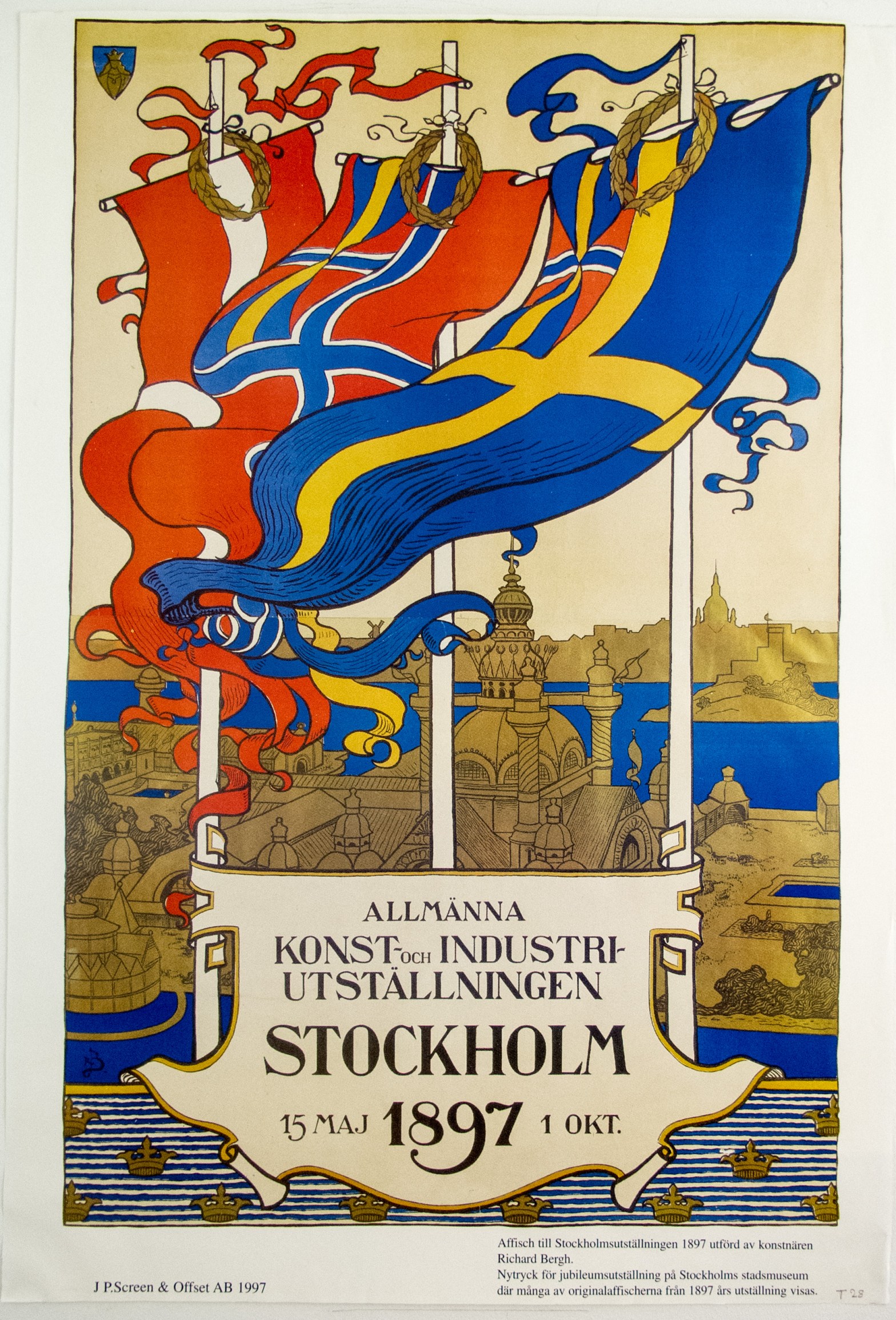
Featured image: Poster for the General Art and Industry Exhibition in Stockholm 1897 (licensed CC BY-SA 4.0). While this poster from the 19th century shows a different political reality, it can be veiwed as a good illustration of the continued entanglement of the Nordic nation states.

Exploring the Ethics of Human Remains at the Annual Meeting for the European Association of Archaeologists in Belfast .

The European Association of Archaeologists convened at Queens University in Belfast for their annual meeting, August 30th to September 2nd, 2023.

Conference mood. Photo: Liv Nilsson Stutz

Two events immediately touched on the ethical dimensions of human remains, and Ethical Entanglements was present at both of them. The first was a session entitled “From What Things Are to What They Ought to Be: Ethical Concerns on Archaeological and Forensic human remains, organized by Clara Viega-Rila, Angela Silva-Bessa, and Marta Colmenares-Prado. The session included 11 papers with contents ranging from the ethical considerations at the the molecular level of human remains, to the ethics of repatriation, museum practices and contract archaeology.

Aoife Sutton- Butler discussed her survey of visitors to museums with anatomical and pathological collections with regards to “potted specimen.” The survey demonstrated that an overwhelming majority of people tend to both accept and value the opportunity of viewing these human remains on display. The general representation of the study can be discussed since it only included people who had elected to visit these museums, but among the interesting insights was that many said that the experience allowed them to identify with the the person in the past – thus challenging assumptions often made that potted specimen automatically are a form of objectification. An interesting detail in the study was that the use of potted specimen in teaching helped students in osteology to think more carefully and intentionally about the personhood of the individual, and about pain and suffering. 

Example of “potted specimen” [File:Fig-1-Photograph-of-the-teratological-collection-in-the-Museum-for-Anatomy-and-Pathology-of-the-Radboud-University-Medic.gif, by Lucas L. Boer, A. N. Schepens-Franke, J. J. A. Asten, D. G. H. Bosboom, K. Kamphuis-van Ulzen, T. L. Kozicz, D. J. Ruiter, R-J. Oostra, W. M. Klein is licensed under CC BY 4.0.]

Constanze Schattke and colleagues form the Natural History Museum in Vienna presented another study that looked at public opinion, in this case with regards to repatriation of human remains from non-European contexts. Their approach to the topic was to analyse newspaper articlas and their online comments section, and code pro and con attitudes. They concluded that while there is are still different views on the topic, over all, the public is more positive to the repatriation of human remains than to the return of objects, which indicates – once again, that human remains are not perceived as neutral objects.

In her thoughtful and problematising paper “Sentenced to Display,” Ethical Entanglements member Sarah Tarlow prompted the room to question the ethics of the display of the human remains of known historic criminals. While the encounter with these infamous bodies in surrounded by a certain level of glamour and thrill, we must also ask to what extent the display of these bodies in museums today simply prolongs the abandoned practice of punishment by display.

I (Liv Nilsson Stutz) presented a paper – “Handling Liminality” – on the results of the survey of the handling of human remains in Swedish museums (also recently published in the International Journal of Heritage Studies) with a focus on the theoretic model of viewing old human remains on a spectrum between objects of science and lived lives.

Ethical Entanglements member Rita Peyroteo Stjerna presented a thought provoking paper entitled “The Multiple Ethics of Biomolecular Research on Human Remains: Researcher’s Perspective” on the emerging ethical challenges relating to the new methods for analysis often associated with the Third Science Revolution in Archaeology – including issues relating to the privacy of the dead, the unbalanced relationship in knowledge production, and curation and preservation. Her paper presented insights gleaned from interviews with laboratory based scientists, and advocated for the a more proactive engagement with the development of professional ethics that also includes these researchers in the conversation.

Ina Thegen and Clara Viega-Rilo both addressed the challenges of contract archaeology in Denmark and Spain respectively, with lessons learned and thoughts about and how to best engage with multiple and embedded stakeholders including the public, the media, descending communities, and communities of faith.

Three papers engaged in different ways with the legal regulation and process of professional ethics. Sean Denham presented the Norwegian model where research on old human remains, and while recognising the multi-disciplinary character of the research, is included under the broader umbrella of the National Research Ethics Committee, and a special advisory committee. Angela Silva-Bessa problematised the double standards for body donations and the handling of the dead before and after death, with a special focus on the cultural context of Portugal where the cultural practice allows for exhumation of burials as soon as 3 years after death – with teh assumption that the family cremates the remains or moves the remains to an ossuary. But the family is not always able to care for the remains, and they can also be donated to osteological collections. Silva-Bassa asked several important questions: Can this practice be better regulated? Should cemeteries have access to donation registers to be able to see if the person buried would object to being used in this way. Should there be another registry? Nichola Passalacqua and colleagues shared current American standards for forensic science.

Nicole Crescenzi getting ready to present at the Roundtable on illicit trade. Photo: Liv Nilsson Stutz

Ethcial Entanglements affilliate Nicole Crescenzi presented her work in a Round Table Session on illicit trade, where she focused on unforeseen ethical challenges of the new EAA recommendations to increase the use of 3D-copies of bones and other human remains. While this at first glance appears to be a convenient short cut around the growing critique against exhibiting authentic human remains, she argued, the technology itself opens up a whole new Pandora’s box of ethical issues, including ownership, control and reproducibility.

Between Objects of Science and Lived Lives

On July 25 (2023), the International Journal of Heritage Studies published (open access) the article “Between Objects of Science and Lived Lives. The legal liminality of old human remains” by Liv Nilsson Stutz, which is the first major article published for Ethical Entanglements. The article serves several purposes: 1) it presents a summary of the results from the survey of Swedish museums practices; 2) it reviews Swedish law with regards to the handling of different categories of human remains; and 3) it frames these analyses within the theoretical model that views human remains as moving along a spectrum between objects of science and lived lives – a theoretical foundation for Ethical Entanglements:

To capture the complexity of the category ‘human remains’, conceptually, legally, and scientifically, our research project ‘Ethical Entanglements’ relies on a model that sees them as moving on a spectrum between being objects of science and lived lives. This model is not intended to lead to any conclusion about how they should be handled, or define how we personally view them, but rather to capture the range of how they historically have been, and still are perceived, categorised, and handled – from the view of the remains as being a relative or an ancestor, to a view represented by the practice of predominantly scientific collection and curation – as objects to be studied. In between lies the range of levels of entangled object- and subjecthood that resonates through all the different aspects of the ethical challenge. Where along the spectrum, between object and subject, any given human remain is perceived to be located depends on several factors including provenance, research history, level of familiarity, level of information, state of preservation, and age, but also current political and cultural debates, cultural concerns, religious and spiritual convictions, and political needs.

The review of the legal instruments clearly demonstrates that there is a distinction made between the recently dead whose remains are covered by laws regulating medical practice, medical research, declaration of death, and burial – and old human remains, which are reduced to cultural heritage, often by proxy to remains resulting from living people’s actions – such as burials practices, commemorative practices, or ritual practices. The recently dead are viewed as subjects, the long dead as objects. But both researchers and the public know that it is not quite that simple.

In the front: The remains of a 7-year old child, with evidence of hypoplasia on the tooth enamel indicating stress related to food insecurity or possibly disease. In the back: a child cranium with healthy teeth. From the Nesolithic collective burial in Rössberga. Exhibition at the Swedish History Museum. Photo by Liv Nilsson Stutz. Intentionally blurred.

The article demonstrates that there is no real support in law, or in professional ethical guidelines that recognises this complexity, and this is a problem for several reasons:

Are old human remains people, or are they heritage? How should they be treated in museums and research? While research practices, museum practices and public debates increasingly recognise the complex nature of old human remains as both objects of science and lived lives, this study shows that there is no consensus – neither in law nor in guidelines – on how to handle this development. The research on old human remains is a largely unregulated field. This is a problem for mainly two reasons: First, it leaves both museums and researchers working with old human remains vulnerable to critique from the public, especially from a post-colonial perspective questioning the right of research to treat the remains of people as objects of science. This critique is valid but can still be nuanced since many museum professionals and researchers share the sensibilities of human remains being a more complicated category than neutral objects. Second, the lack of standardised protocols for reviewing access to human remains for destructive sampling (Alpaslan-Roodenberg et al. 2021), and for sharing potentially sensitive data, risks causing unnecessary stress, potentially create conflicts, and in the worst case, may cause damage to valuable and sensitive remains.

Nilsson Stutz, L. 2023: Between objects of science and lived lives. The legal liminality of old human remains in museums and research, Intl. Journal of Heritage Studies.

For the purposes of Ethical Entanglements a final challenge is viewed as central:

“…the review of both laws and practice identifies an inconsistency in the categorisation of human remains where old human remains from indigenous people are considered with more care for their subjectivity than human remains from non-indigenous contexts. This is a problem because it risks restricting the ethical debates to specific groups, while leaving other categories of old human remains completely unproblematized.”

Nilsson Stutz, L. 2023: Between objects of science and lived lives. The legal liminality of old human remains in museums and research, Intl. Journal of Heritage Studies.

The article proceeds to proposing possible ways forward of strengthening the professional ethics in the handling of old human remains in museums and research. Beyond new guidelines and legal frameworks, it is argued, we need clear processes that in turn will strengthen the ethical awareness within the field.

featured image: anatomical preparation showing a head with superficial musculature, and the nerves of the face. Exhibited at the University Museum in Groningen. Photo by Liv Nilsson Stutz (intentionally blurred).