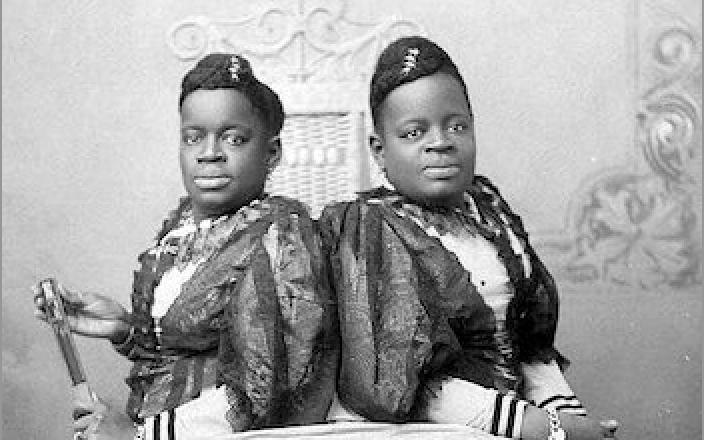
Millie-Christine McKoy, Christina Larsdotter, trauma and resilience. Micro History and Community Engagement in North Carolina.

Earlier this fall, I was invited to celebrate Millie-Christine Day in Whiteville NC. It was a quite spectacular occasion. For the first time hiphop artist, musician, poet, and activist Napoleon Maddox brought the full production of Twice the First Time, a performance that celebrates the life of conjoined twins Millie-Christine McKoy and gives form to persisting marginalization, oppression and violence connected to racism and ableism, to the community in which they were born.
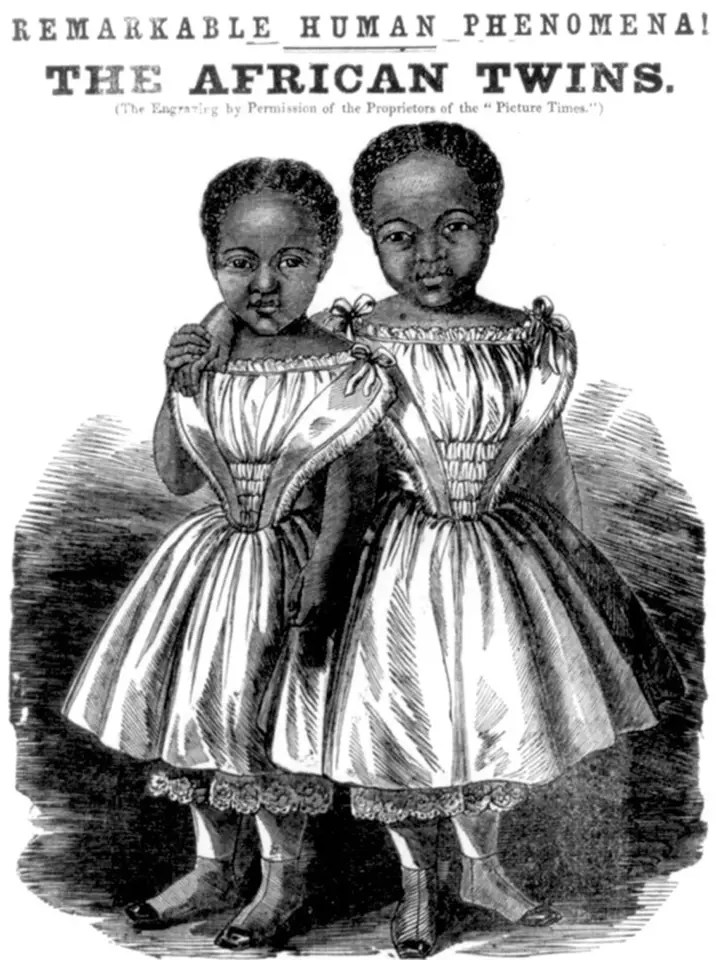
Drawing of Millie-Christine as children, a period during which they were sold and trafficked by various owners who made money exhibiting them.

The story of Millie-Christine McCoy is extraordinary. They were born as conjoined twins to their enslaved parents Jacob and Monemia McKoy, near Whiteville, NC in 1851. They were sold for the first time at the age of 10 months, an event that was just the first in a string of sales, trades, trafficking and kidnapping for the purpose of exhibiting the girls in fairs, freak shows, circuses, and museums across the US and Canada. For example, they were exhibited in the P.T. Barnum Museum in downtown Manhattan along with other people with unusual pathologies and disabilities. Eventually they were trafficked to Liverpool by Joseph P. Smith, and that is where their mother finally located them in 1857. Millie Christine would have been between five and six years old at the time. After the emancipation proclamation, Millie-Christine gained more agency and autonomy but remained in the “care” of the Smith family, and continued to appear at similar shows and museums as before, but now with the ability to keep some of their earnings. They were also examined by medical doctors. They learned several languages, toured the world singing, and became known as the “the two-headed Nightinggale” with Millie singing alto, and Christine soprano. In their performances they turned their disability into an asset and the particular gait they had developed to walk, was developed into a dance. The complexity of their lives illustrates the entanglements of agency, subjectivity and autonomy with dependency, objectification and exploitation – and between popular culture and science in a zeitgeist permeated by racism, classism, sexism, and ableism in this Victorian world. Meanwhile, Millie-Christine self identified as “beautifully and wonderfully made” as a testimony to the fact that the deepest form of resistance in an oppressive system, is the conviction of one’s humanity, dignity, and right to self definition.
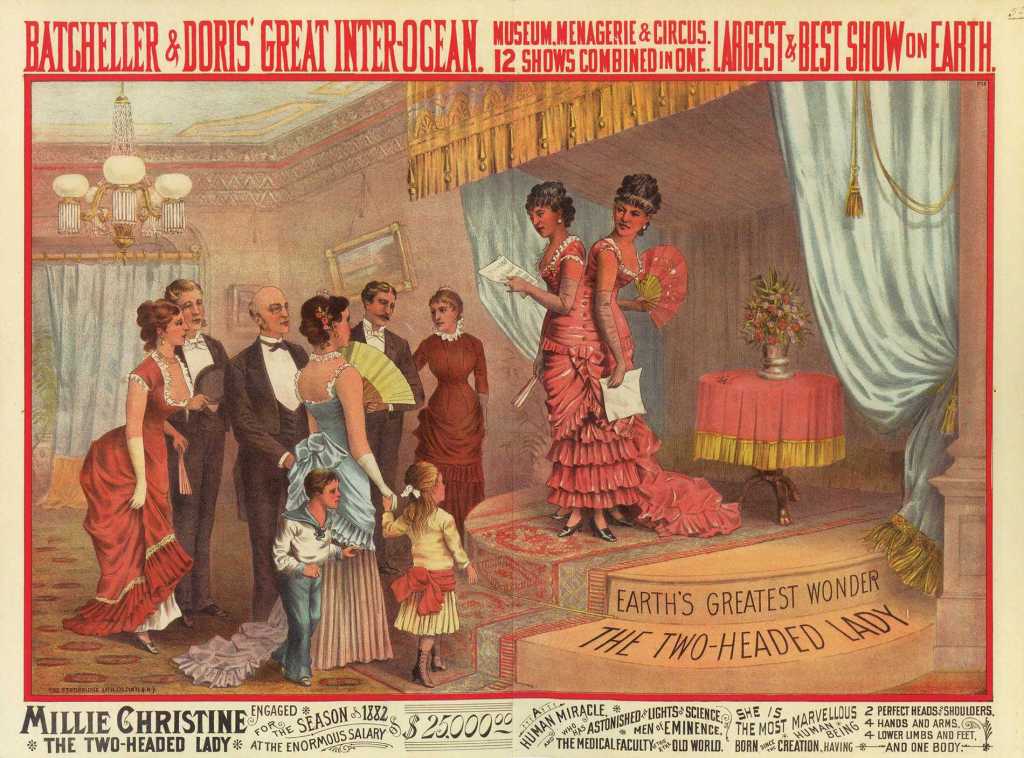
Toward the end of the 19th century, Millie-Christine toured less, returned to Whiteville NC, and settled down in a big 14 room house that they were able to build with their earnings. Millie-Chirstine died in 1912, and since 2012 the city of Whiteville celebrates them every October on Millie-Christine Day, when their many ancestors and family member honor their memory and legacy. 

In 2017, one of Millie-Christine’s descendants, award winning composer, vocalist and hip-hop artist Napoleon Maddox was commissioned by the Cincinnati Contemporary Arts Center to create a piece as part of their Black Box series. The result was the extraordinary performance piece Twice the First Time, where Maddox wrote the lyrics to music composed by French musician, composer and music producer SORG . This year Maddox and ISWHAT?! performed Twice the First Time during Millie-Christine Day, along with other community performances, speeches, and commemoration activities.
The McKoy family lined up on stage before the performance of Twice the First Time

I was honoured to be invited to participate in the program of Millie-Christine Day this year. My quite open brief was to bring an academic dimension to the event and discuss the international impact of the story of Millie-Christine. I had invited Napoleon Maddox to Linnaeus University in 2019, where he had given lectures and engaged both at the university and in a local high school, and it was my honor to share how impactful that work had been. In addition, I wanted to connect the story of Millie-Christie to the ideas that I have formulated as part of Ethical Entanglements and discuss them with the community in Whiteville, thus bringing Ethical Entanglements into new kinds of conversations. My talk focused on drawing parallells between Millie-Christine McKoy and Christina Larsdotter and discuss how micro-histories in very different parts of the world are pathways to understanding both global history and the human experience, which is always at the center of my own work as an archaeologist and anthropologist. The following community dialogue further explored these connections, both between the two cases, and between the scholarship and Napoleon Maddox’s lyrics.

The parallels of the fates of Millie-Christine and Christina Larsdotter are striking. In life they all performed on 19th century stages that beyond their vocalist performances also showcased their disabilities and “racial” features as curiosities. While Millie-Christine’s body was stolen and trafficked in life, that of Christina Larsdotter met the same fate after death, as her corpse was stolen from her grave, and transported to Karolinska Institutet to become incorporated in the study collection of Anders Retzius (read more about the Retzius legacy at Karolinska Institutet here, and here), cast in a post mortem role not unlike the “freak shows” and exhibitions of curiosities (scientific and otherwise) that used to take advantage of Millie-Christine in their early lives. But in the face of the violence committed against these women by science and popular culture in their lifetime, they possessed both autonomy and independence, and claimed their place as strong individuals in their respective communities (e.g. as home builders, land owners, and active community members). The contrast between this indisputable agency, and the role as objects of curiosity forced upon them, is demonstrated in their histories. In that sense they also illustrate the spectrum model of Ethical Entanglements, and serve as a reminder of our responsibility today to keep recognising the lived life in the human remains we study, and of our “duty to past persons” (to paraphrase the title of Malin Masterton’s thesis) as a fundamental aspect of our professinal ethics. The repatriation and reburial of Christina Larsdotters remains this past spring is also a reminder of what it can mean for all stakeholders to recognise these histories and take responsibility for them and the pain they have caused.
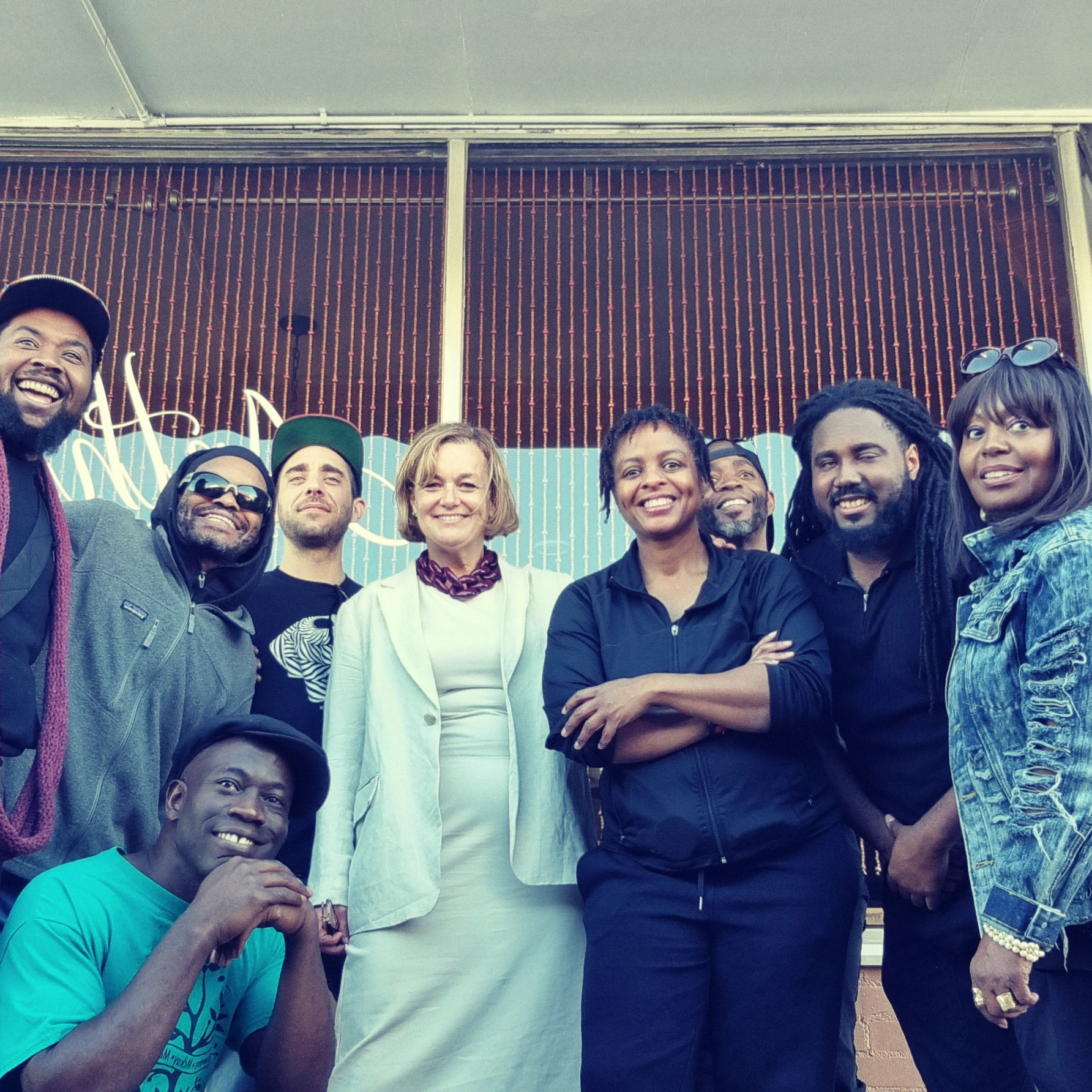
The brilliant musicians and creators of ISWHAT?! (+me) after the performance

A Nordic Perspective on Collections of Human Remains

Viewed from the outside, it often seems as if the Nordic countries are very similar in terms of culture and values. But despite their entangled political and cultural histories, and their cultural similarities, a closer look reveals interesting differences, and this is certainly the case for their professional attitudes to the ethics of collections of human remains.

The Nordic Network for Collections of Human Remains is an informal forum that organises different stakeholders in human remains collections, predominantly collection managers, but also researchers and museum professionals across the Nordic countries . The purpose of the forum is to provide a space for reflection and support in professional discussions and development of ethical practices. The Network organised a conference at Arkivcenter Syd, in Lund on October 26-27, 2023 (for full disclosure, Liv Nilsson Stutz has been a member of the steering group during the period 2020-2023, and was part of the organising committee for this conference). The purpose of the conference was to come together for the first time after the end of the pandemic, update one another on the state of the field in the different Nordic Countries, and strengthen both formal and informal ties and relationships throughout the community.

The conference invited speakers from several large collections across the Nordic countries to share their perspectives and experiences. Unfortunately the participant from Norway (Julia Kotthaus from De Schreinerske samlinger, at the Medical Faculty at the University of Oslo) had to cancel last minute, since she needed to prioritise her presence at a repatriation from the collection she manages. These presentations were inspiring in the sharing of protocols and experiences, but also showed the differences in approaches between countries.

Careful storage of human remains in a Swedish museum. Photo by Liv Nilsson Stutz (intentionally blurred).

The Danish model is interesting since it clearly separates ownership from deposition and curation. The former is held by local museums, while the latter is managed by essentially two centralized collections: ABDOU at the University of Southern Denmark (presented by Dorthe Dangvard Pedersen), and The human skeletal collection at the University of Copenhagen (presented by Niels Lynnerup, Marie Louise Jørkov, and Kurt Kjaer). This arrangement has interesting consequences for the management of processes. The facilities are all highly adapted for the preservation and study of human remains, and the research facilities support, track and assist in access to the collection by researchers, students, and even the public. It can be argued that this system that separates the human remains from their otherwise historical and archaeological context in order to prioritise preservation, control, and documentation, implicitly or explicitly categorises the remains almost exclusively as Objects of Science. It appears to be a very clear, but also unproblematising approach. The division has interesting consequences for the most significant case of repatriation of human remains in Denmark, Utimut – the repatriation of human remains and culturally significant objects to Greenland. The ownership of the human remains is now held by Greenland, but Greenland has elected to follow the same system for the management of collections of their human remains as that practiced for remains found on Danish soil, keeping them in Copenhagen. This case is always interesting to bring up in debates about repatriation since it is clear here that the Greenland side appears to share the same concerns for these remains as their Danish counterpart, and also feels that a practice that protects them as Objects of Science is valuable for them. But that does not mean that nothing has changed. There is a significant shift in the attitudes on behalf of the collection managers who do not claim control or ownership, but take the role as mediators and assistants. In this sense then, the Danish system is arguably more inclusive and progressive than in the rest of the Nordic countries, where ownership tends to be associated with the institution that holds the remains.

The Swedish system with decentralised practices and control was illustrated by presentations from two Swedish collections. The Historical Museum at Lund University was represented by Jenny Bergman and Sara Virkelyst who presented a newly established flow chart to systematically support repatriation processes in order to make them transparent and predictable for all stakeholders. The collections at the National Historical Museums were presented by Elin Ahlin Sundman. The issues of ethics appear to be top of mind for the Swedish institutions, but the decentralised practices result in great diversity in protocols and processes – which stands out as quite a contrast to Denmark.

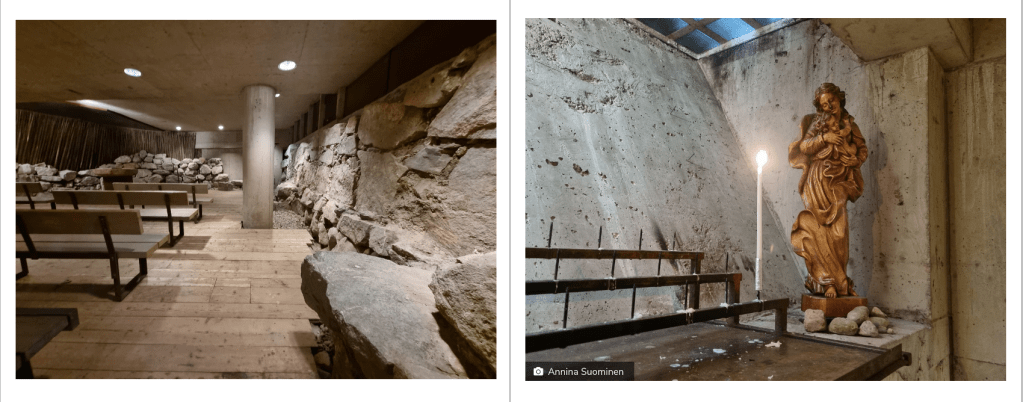
Images from inside the Chapel of the Holy Ghost in the basement of the Casagrande House in Turku, a semi private place of worship that also serves as a resting place for excavated human remains from the later medieval and early modern period. Photos by Annina Souninen, and published by Åbo Underrättelser.

Finland seems to have the least regulation and formalised processes for the care of collections of human remain at the moment. With a law that currently calls for decisions of future reburial to be made before an excavation has even started, human remains, in Finland, appear to be treated more toward the end of “Lived Lives” than in the other countries. They are often reburied immediately – sometimes even before osteological study. It should be added, however, that this position in reality is almost directly dependent on the chronological age of the remains, with prehistoric remains being systematically collected, and historical remains more often reburied. The decision is often made by local parishes who hold a lot of the power in these negotiations. Liisa Seppänen from the University of Turku presented a hybrid solution with the case of the contemporary chapel in the Casagrande House in Turku. The historic building, previously known as Ingmanska huset, was built in the 17th century at the previous location of a Graveyard of the Holy Ghost Church in Turku. After being threatened with demolition in the 1980s, the architect Benito Casagrande purchased and renovated the building under supervision of the Finnish Heritage Agency, and it now includes businesses, shops, and restaurants. The remains of the people buried in the underlying churchyard (from the 14th century and to 1650) were excavated in consecutive projects from the 1960s and through the 1980s, and were collected by a dentist at the university who kept them as a teaching and research collection (predominantly the crania). After extensive lobbying, Benito Casagrande, managed to have the remains transferred from the university to a newly built chapel in the basement of the house, where they can both rest in a sacred space and be accessible for research. The chapel is not open to the public, but can be visited upon request. A small working group, of which Casagrande is a part, oversees the collection and makes decisions with regards to access and curation. The impact of a private citizen is, to say the least, quite extraordinary in this case – but perhaps this is not as difficult to reconcile in a system with a tradition of consultation with the leadership of local parishes. From a more traditional collection manager point of view, Risto Väinölä discussed he human remains collection at the University of Helsinki (LOUMUS) which is a heterogenous collection with a long and diverse history of collection, with potential for research but with limited manifested interest both on behalf of researchers and calls for repatriation.

In addition to the presentations of the state of the field in the respective countries, I also want to highlight two more conceptual papers. Karin Tybjerg from Medicinsk Museion in Copenhagen presented an interesting paper on historical medical collections as a foundation for amemnesis – the clinical medical process of recovering the medical history, usually referring to patient history, to understand medical states in the present, but here expanded to include a broader investigation into the field of medical science, medical history and medical humanities (she has published these ideas in an interesting paper in Centaurus 65(2), in 2023). Equally interesting was Eli Kristine Økland Hausken‘s paper Adressing Bare Bones and Human Remains about her work with exhibitions at the University Museum of Bergen and the underlying ethos of their activities to engage the local community by “lifting the curtain” on the process knowledge production and the history of institutions. I was somewhat surprised at the choice to exhibit a shrunken head, a South American Tsansta (an issue that has also been debated by curator Åshild Sunde Feyling Thorsen from the same intitution), and while I am personally not convinced, I was interested in the arguments in favour of making such an unconventional choice today.

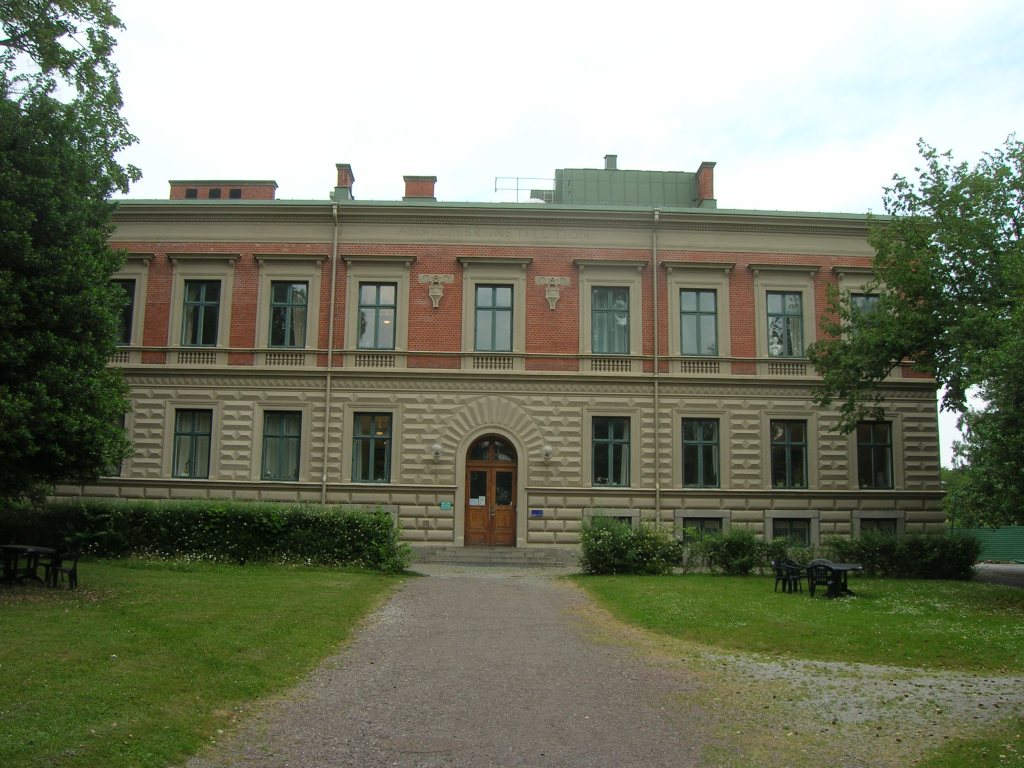
The Old Department of Anatomy at Lund University. Image by Väsk, licensed under CC BY-SA 3.0.

During the course of the conference, three panel talks explored several fundamental issues for the care of collections of human remains. The following topics were explored:

  • Panel 1: What is the value of collections of human remains? This panel explored the broader topic of the value of these collections for science, pedagogy and history in a time when they are increasingly questioned. Are they valuable? And if so, how?
  • Panel 2: How to make the collections accessible (including perspectives on digitalization, exhibition, and access for researchers). Should we? And how best to do this?
  • Panel 3: Accession and deaccession. What are our current challenges? This panel talk will discuss the responsibility (and cost) of accession and deaccession, and discuss the connections to repatriation and (re)burial.

Throughout these conversations it became clear just how entangled these issues really are. The final discussion, on accession and deaccession, also linked up the the local history of anatomy in Lund where a large part of the old and seemingly “worthless” or “problematic” collections from the Department of Anatomy were unceremoniously discarded in 1995 when the department was closed down permanently. Some remains were transferred to the Historical museum (the institution that received most of the skeletal remains) and to other institutions that had previous ownership of remains in the collection, but a shocking amount of wet specimen, ended up in containers to be destroyed or haphazardly collected from the street by private people, potentially to take on another life, now even more in the shadows and even further removed from ethical care. The date, 1995, serves as a reminder that it is not that long ago that these issues were hardly problematised at all.


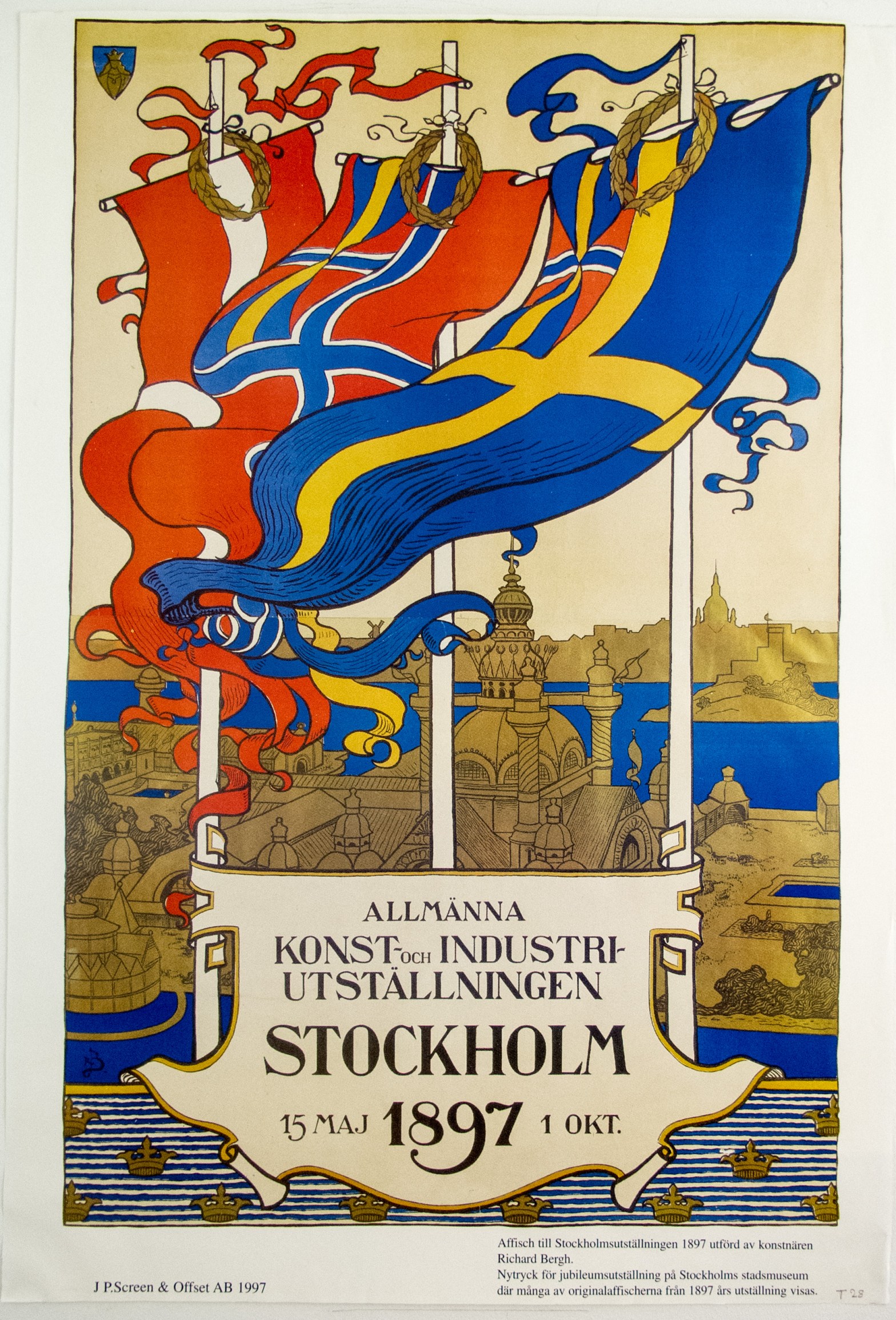
Featured image: Poster for the General Art and Industry Exhibition in Stockholm 1897 (licensed CC BY-SA 4.0). While this poster from the 19th century shows a different political reality, it can be veiwed as a good illustration of the continued entanglement of the Nordic nation states.

The privacy of old human remains

Should we consider the privacy of people in the past? Is the concept relevant, or applicable? Is privacy only a concern for the living in our contemporary moment – so obsessed by the boundary between the personal and the private in a constantly marketing and sharing economy, or is privacy a more universal human right? What duties do we have to past persons (to paraphrase the excellent PhD thesis by Malin Masterton)?

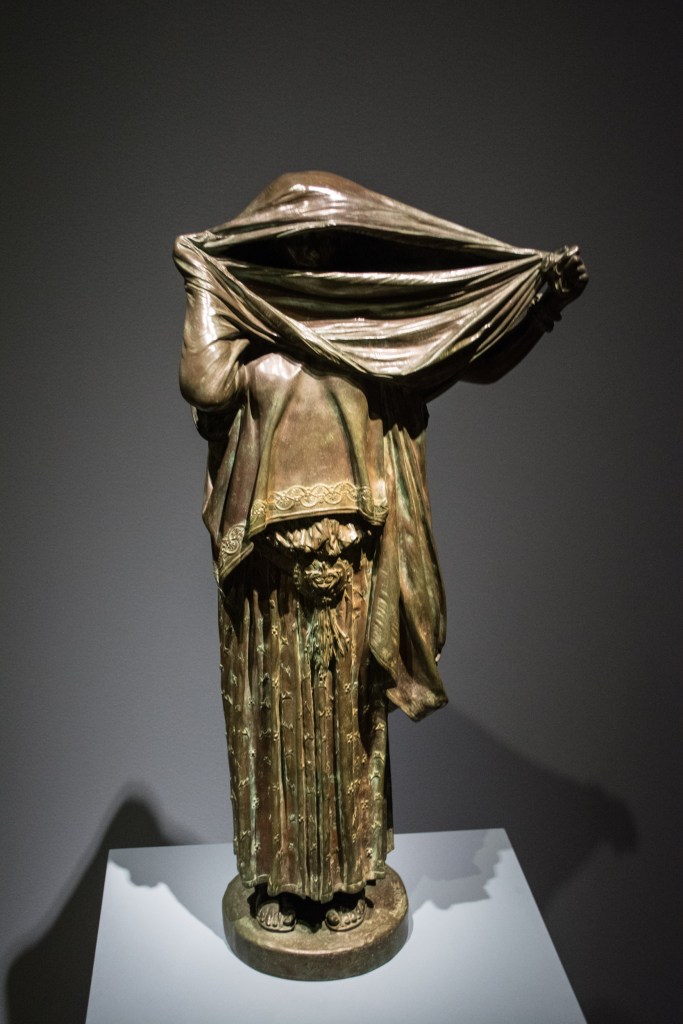
Woman With Veil – Cleveland Museum of Art (33666109413).jpg” by Tim Evanson from Cleveland Heights, Ohio, USA is licensed under CC BY-SA 2.0. 

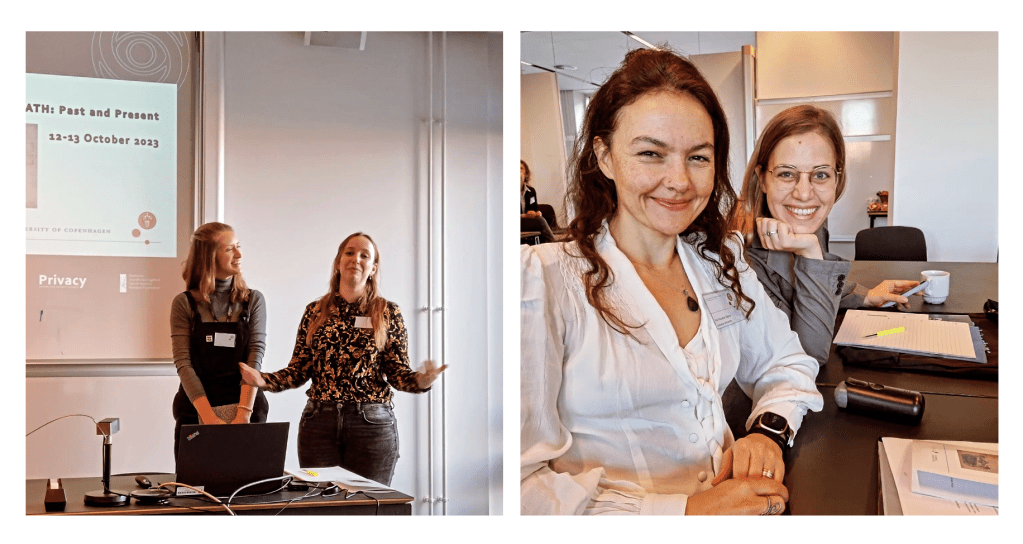
October 12-13, 2023 Ethical Entanglements participated in a conference at the Center for Privacy Studies at the University of Copenhagen, called Privacy and Death: Past and Present. The conference was interdisciplinary, with contributions from history, classics, archaeology, theology, law, and ethnography, and explored a range of issues touching on the broader issues of privacy and death. Ethical Entanglements contributed with two papers: Nicole Crescesnzi presented the paper: Human Remains and Privacy – a Contemporary Bias? and Liv Nilsson Stutz and Rita Peyroteo Stjerna presented The New Frontiers of Postmortem Privacy: Negotiating the Research Ethics of Human Remains in the Era of the Third Science Revolution in Archaeology.

Left: The organisers of the conference Felicia Fricke and Natacha Klein Käfer welcome the attendants. Right: Rita Peyroteo Stjerna and Nicole Crescenzi before their presentations. Photos by Liv Nilsson Stutz.

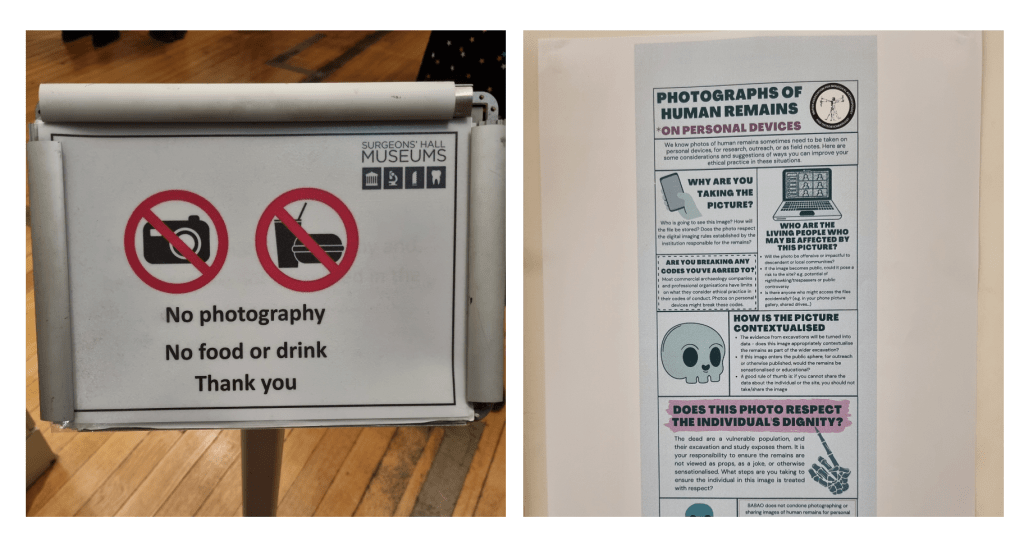
The privacy of old human remains is an issue that tends to lie at the periphery of our debates. There is rarely any explicit discussion about it, but we increasingly see the emergence of professional practices that may indicate a growing consideration, albeit almost invisible. One example of this is how human remains today, sometimes, are blurred in public presentations. If you are a regular reader of this blog, you may have noticed that we also do this from time to time. Another is the signage that is becoming more common, especially in anatomical and pathological exhibitions, of a no photography policy. It is quite possible that there are multiple reasons for this, and it is rarely explicitly stated that this is to protect the privacy of the dead, but it speaks of an awakening sensibility. In some rare cases, as shown below (right) in the signage at the Anatomical Museum at the University of Edinburgh, the sign elaborates on the reason, and in the process, it triggers reflection and raises awareness. In this context it is an explicit and integrated part of the university training of future professionals working in the field, but perhaps this would be useful also in more public exhibitions.

Signeage restricting photography of human remains. Left: at Surgeon’s Hall in Edinburgh, and Right: in the Anatomical Museum at the University of Edinburgh. Photos by Liv Nilsson Stutz.

These types of signs are much more rare, and perhaps even non existent in archaeological exhibitions, demonstrating yet again the gradual move on the spectrum of lived life toward object of science with the age, state of preservation, and disciplinary categorisation of the specimen. Sometimes a sense of respect and dignity is alluded to in the ways in which the human remains are exhibited also in archaeological museums, for example through separation to a reserved space, and dimmed lighting. However, the topic is very rarely addressed head on, and if anybody’s sensitivities are considered in archaeological and historic exhibitions, it is in general the contemporary visitor’s. Nicole Crescenzi’s work on the public’s reception of these types of exhibitions across Europe shows that there are multiple ways in which the exhibition is experienced.

The conference raised many important issues, and several fascinating talks on topics from problematic collections to contemporary mourning practices, that all led to stimulating discussions. For Ethical Entanglements is was especially interesting to see the overlaps of concerns and shared challenges in the keynote address by legal scholar Edina Harbinja entitled An Uneasy Relationship Between Post-mortem Privacy and the Law. She defines post-mortem privacy broadly as the right of a person to preserve and control what becomes of his or her reputation, dignity, secrets, or memory, after death (see also Edwards and Harbinja 2013). While Dr Harbinja’s work is focused on the contemporary digital world, the fundamental questions it raises concern, in our opinion, also the long dead and research ethics in our fields. She proceeded to introducing the term of post-mortal privacy which protects informatised bodies expressed, stored, mediated, and curated through technology – as an immortality by proxy. In our contemporary world this refers to images shared and data stored online and in cloud services and on platforms held by private companies. But, what about the research data we extract from old human remains and share as part of our research activities? These issues relate immediately to the presentation by Liv Nilsson Stutz and Rita Peyroteo Stjerna on the attitudes to postmortem privacy in bio-molecular archaeology, and where Rita’s work, collecting data through interviews with scientists working in the fields, shows both a need and a desire for more thorough professional ethical development in this emerging and constantly changing field.

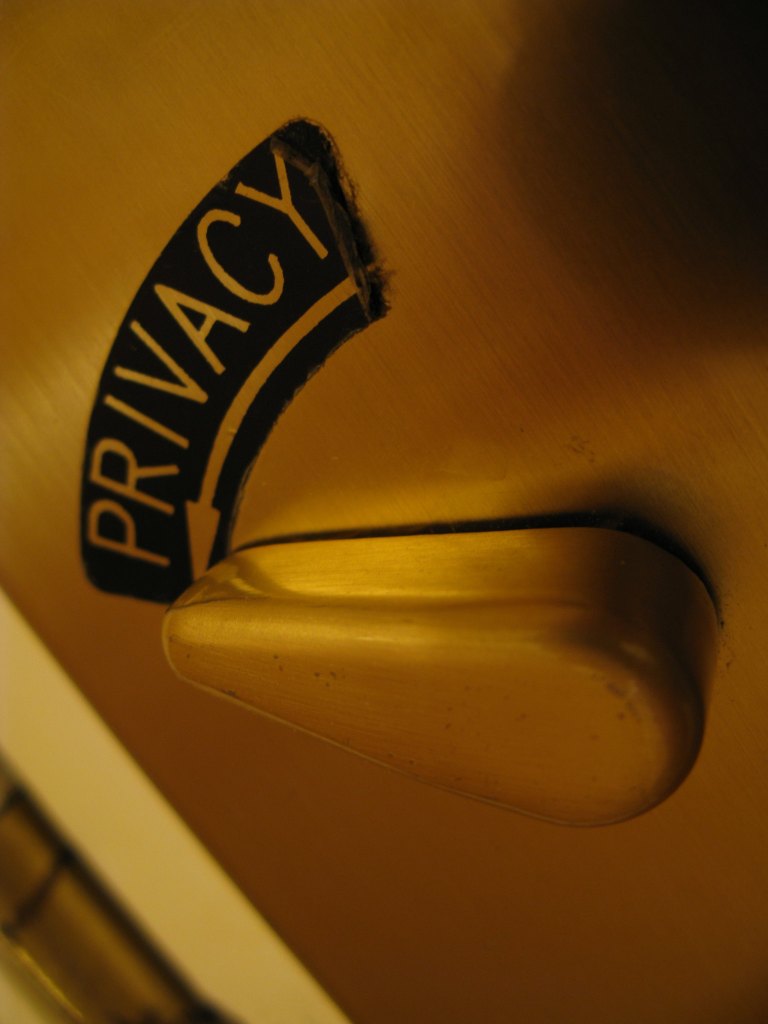
Can we turn the key to protect private data from spreading – and if we do, does that not violate standards for good scientific practice?

Can we turn the key to protect private data from spreading – and if we do, does that not violate standards for good scientific practice? The challenge, of course, is to determine what such a new practice might look like. With multiple ethics at stake, and with best practices sometimes in complete conflict with one another – for example Open Data vs respect for post-mortem/post-mortal privacy, the challenge is complex. Ultimately we come back to the same question: who still counts as a person enough to deserve this kind of consideration. The answer is not obvious.

“Privacy” by rpongsaj is licensed under CC BY 2.0. 

The work also has interesting relevance for thinking about museums. Through her research, Dr Harbinja could see that a lot of the progress to think through and identify solutions on behalf of social media platforms such as Facebook, with regards to post-mortem privacy, emerged ad hoc. Somebody in the company started to think about this as they experienced the death of a client who was also a loved one – for example a parent. It struck me that there is a similarity here between the social media giants and museums: they both store sensitive and valuable things, they have inward facing and outward facing responisbilities, and – they both react ad hoc. It is a learning process, but it is also one that in the very moment teaches you to be better prepared the next time if you want to be able to serve your stakeholders well.

Featured image: “PRIVATE NO ENTRY” by Brad Higham is licensed under CC BY 2.0.

Exploring the Ethics of Human Remains at the Annual Meeting for the European Association of Archaeologists in Belfast .

The European Association of Archaeologists convened at Queens University in Belfast for their annual meeting, August 30th to September 2nd, 2023.

Conference mood. Photo: Liv Nilsson Stutz

Two events immediately touched on the ethical dimensions of human remains, and Ethical Entanglements was present at both of them. The first was a session entitled “From What Things Are to What They Ought to Be: Ethical Concerns on Archaeological and Forensic human remains, organized by Clara Viega-Rila, Angela Silva-Bessa, and Marta Colmenares-Prado. The session included 11 papers with contents ranging from the ethical considerations at the the molecular level of human remains, to the ethics of repatriation, museum practices and contract archaeology.

Aoife Sutton- Butler discussed her survey of visitors to museums with anatomical and pathological collections with regards to “potted specimen.” The survey demonstrated that an overwhelming majority of people tend to both accept and value the opportunity of viewing these human remains on display. The general representation of the study can be discussed since it only included people who had elected to visit these museums, but among the interesting insights was that many said that the experience allowed them to identify with the the person in the past – thus challenging assumptions often made that potted specimen automatically are a form of objectification. An interesting detail in the study was that the use of potted specimen in teaching helped students in osteology to think more carefully and intentionally about the personhood of the individual, and about pain and suffering. 

Example of “potted specimen” [File:Fig-1-Photograph-of-the-teratological-collection-in-the-Museum-for-Anatomy-and-Pathology-of-the-Radboud-University-Medic.gif, by Lucas L. Boer, A. N. Schepens-Franke, J. J. A. Asten, D. G. H. Bosboom, K. Kamphuis-van Ulzen, T. L. Kozicz, D. J. Ruiter, R-J. Oostra, W. M. Klein is licensed under CC BY 4.0.]

Constanze Schattke and colleagues form the Natural History Museum in Vienna presented another study that looked at public opinion, in this case with regards to repatriation of human remains from non-European contexts. Their approach to the topic was to analyse newspaper articlas and their online comments section, and code pro and con attitudes. They concluded that while there is are still different views on the topic, over all, the public is more positive to the repatriation of human remains than to the return of objects, which indicates – once again, that human remains are not perceived as neutral objects.

In her thoughtful and problematising paper “Sentenced to Display,” Ethical Entanglements member Sarah Tarlow prompted the room to question the ethics of the display of the human remains of known historic criminals. While the encounter with these infamous bodies in surrounded by a certain level of glamour and thrill, we must also ask to what extent the display of these bodies in museums today simply prolongs the abandoned practice of punishment by display.

I (Liv Nilsson Stutz) presented a paper – “Handling Liminality” – on the results of the survey of the handling of human remains in Swedish museums (also recently published in the International Journal of Heritage Studies) with a focus on the theoretic model of viewing old human remains on a spectrum between objects of science and lived lives.

Ethical Entanglements member Rita Peyroteo Stjerna presented a thought provoking paper entitled “The Multiple Ethics of Biomolecular Research on Human Remains: Researcher’s Perspective” on the emerging ethical challenges relating to the new methods for analysis often associated with the Third Science Revolution in Archaeology – including issues relating to the privacy of the dead, the unbalanced relationship in knowledge production, and curation and preservation. Her paper presented insights gleaned from interviews with laboratory based scientists, and advocated for the a more proactive engagement with the development of professional ethics that also includes these researchers in the conversation.

Ina Thegen and Clara Viega-Rilo both addressed the challenges of contract archaeology in Denmark and Spain respectively, with lessons learned and thoughts about and how to best engage with multiple and embedded stakeholders including the public, the media, descending communities, and communities of faith.

Three papers engaged in different ways with the legal regulation and process of professional ethics. Sean Denham presented the Norwegian model where research on old human remains, and while recognising the multi-disciplinary character of the research, is included under the broader umbrella of the National Research Ethics Committee, and a special advisory committee. Angela Silva-Bessa problematised the double standards for body donations and the handling of the dead before and after death, with a special focus on the cultural context of Portugal where the cultural practice allows for exhumation of burials as soon as 3 years after death – with teh assumption that the family cremates the remains or moves the remains to an ossuary. But the family is not always able to care for the remains, and they can also be donated to osteological collections. Silva-Bassa asked several important questions: Can this practice be better regulated? Should cemeteries have access to donation registers to be able to see if the person buried would object to being used in this way. Should there be another registry? Nichola Passalacqua and colleagues shared current American standards for forensic science.

Nicole Crescenzi getting ready to present at the Roundtable on illicit trade. Photo: Liv Nilsson Stutz

Ethcial Entanglements affilliate Nicole Crescenzi presented her work in a Round Table Session on illicit trade, where she focused on unforeseen ethical challenges of the new EAA recommendations to increase the use of 3D-copies of bones and other human remains. While this at first glance appears to be a convenient short cut around the growing critique against exhibiting authentic human remains, she argued, the technology itself opens up a whole new Pandora’s box of ethical issues, including ownership, control and reproducibility.

Approaching the Ethics of Human Remains from a Medical History perspective. Report from the AAHM meetings.

May 11-14, I attended the annual meeting for the American Association for the History of Medicine at the University of Michigan in Ann Arbor. I chaired a roundtable entitled “Historical Medical Collections, Human Biomaterials and Remains” which explored the multiple ethical challenges surrounding historical medical collections, a category that is problematized also in Ethical Entanglements.

By historical collections the round table referred to the medical museums and anatomical and pathological cabinets that from the mid 18th century that all played a central role in medical research and pedagogy. At the time, and in the century and a half that followed, they functioned not only as reference points for medical knowledge production and reproduction, but also as shrines to medicine, the science, its men and their achievements. In the 20th and 21st centuries however, they are being perceived in new ways. Now the darker sides of their origin is coming into focus: unregulated trade, theft, and ethically dubious collection practices permeated the practice before institutional, professional and state governance and the development of professional ethics centered on bioethics and informed consent reshaped medical and anthropological practice. Nobody can contest the important contributions these collections made to our medical knowledge, our understanding of the human body, its biology, and the pathways to healing it. However, the dark past that looms over the legacy of these collections ties them to structures of classicm, racism, sexism, colonialism, and authoritarianism, that all facilitated their coming into being. 

It is – without a doubt – a troubling legacy. 

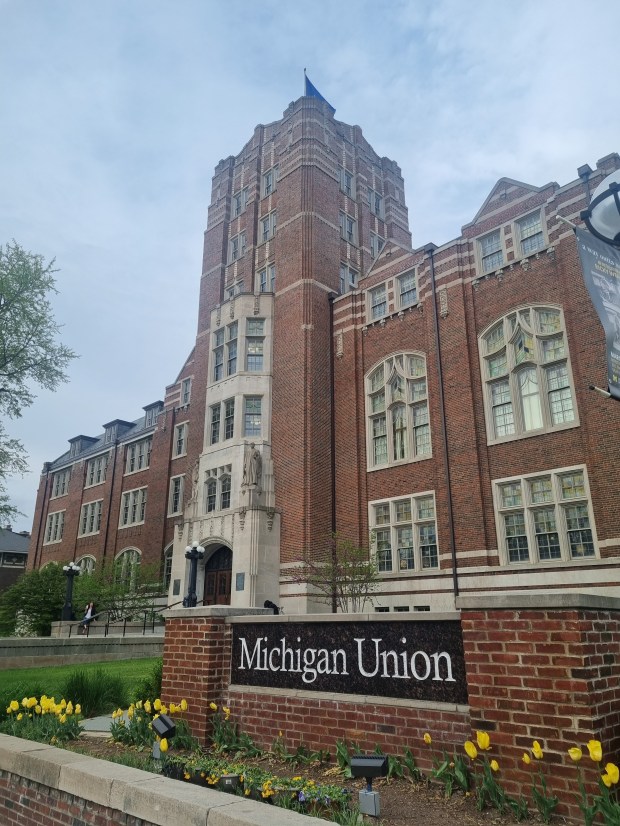
The Michigan Union at University of Michigan campus in Ann Arbor was the venue for the annual conference for the American Association for the history of Medicine, May 2023. Photo by Liv Nilsson Stutz.

Today, new methods and technical advances have made these collections less relevant for teaching medical students and for carrying out research on human biology, anatomy, and pathology. As their “value” for medicine has decreased, they have come under increased scrutiny and criticism with their troubling legacy casting longer and darker shadows, to the point of calling into question their continued existence. We are starting to hear more and more voices calling for their destruction, deaccessioning, and limitations in terms of both public access and research. 

While recognizing the importance of the criticism and the dark legacy, this panel problematized this development and asked: Are there multiple and competing ethical claims to consider when exploring the theoretical, political and practical challenges facing these collections and the institutions that care for them? What are the possible futures for these collections? What role should they play for medical professionals, for scholars, in education, and for the public? As these collections no longer hold the status of shrines, can their role be redefined in productive and ethical ways, for example as public facing centers of historical research and exhibition – and if they are, can these centers be imagined in a way that also considers their dark history to operate as democratic, inclusive institutions in a way that adhers to the contemporary role of museums (as defined by ICOM)? What are the best ethical policies and practices when we approach these complex issues? 

While recognizing the ongoing debate, which for the sake of simplification can be characterized as postcolonial debate, and that tends to be centered on specific categories of remains, and without trying to ignore or suppress it, the round table sought to explore additional questions around value, use and multiple ethics that tend to be marginalised in the current conversations. We came to this conversation from different experiences – from the fields of medicine, history and archaeology – all with various experiences of debating these issues on a theoretical level, carrying out research on human remains, and managing museum collections with human remains.

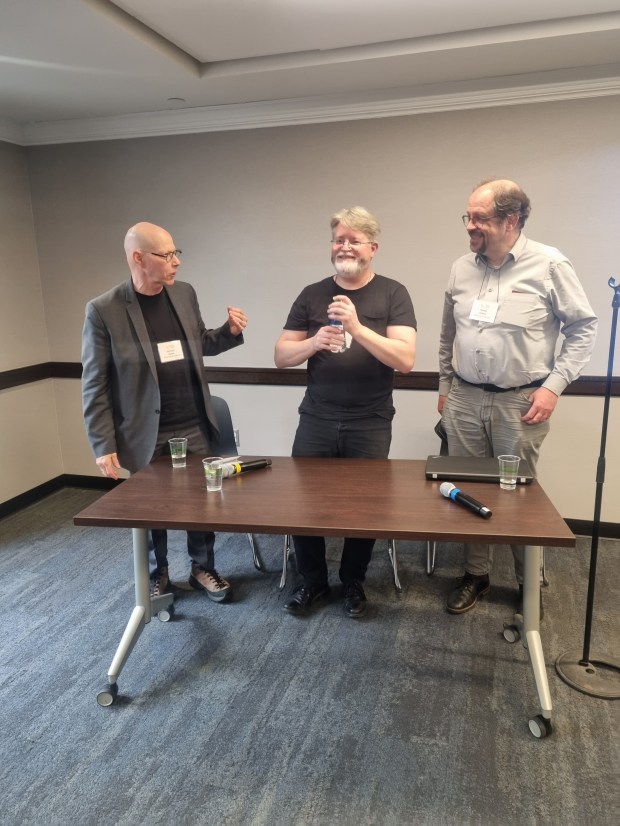
Speakers at the Roundtable on Historical Medical Collections, from the left, Mike Sappol, Olof Ljungström, and Rainer Brömer. Photo by Liv Nilsson Stutz.

The speakers at the roundtable were:

Mike Sappol – a medical historian based at Uppsala university with a significant experience as an exhibition curator and at the National Library of Medicine, and the author of several important books. His work focuses on the history of anatomy, death and the visual culture of medicine and science, the body, the history of museums and queer studies. His paper entitled “Endangered specimens. Historical Human remains and derivatives: competing claims, meanings, critiques, and practices” interrogated and explored the debates surrounding these historical collections and their different and complex values through the case of the Museo Morgagni di Anatomia in Padua: as materiality, artifacts, and perhaps even as a form of “relics of an extinct medical civilization.”

Olof Ljungström – a historian at Karolinska Institutet in Stockholm, where he oversees the anatomical collection. His work focuses on the history of medicine, including 19th century anatomy, race science and the history of research at KI. His paper The Body Politics in the Anatomy Collection: Where the politics of the past meets the politics of the present, contextualized the history of the Finnish crania at the KI collection and the contemporary claims surrounding them.

Rainer Brömer from the Institute for the history of Pharmacy and Medicine at the Phillips University in Marburg, where his research focuses on Anatomy and Pharmacy in the Ottoman Empire, Medical and research ethics, and the body, and where he has also been involved with the Marburg university anatomical collection, its Museum Anatomicum and the conception of a future museum in Marburg. His paper, Gazing at human bodies – epistemology, ethics, and aesthetics discussed the ethical challenges of this project.

After the presentation the room engaged in discussion that included voices form colleagues currently working with historical medical collections in museums across the United States who shared their perspectives and experiences.

“It is always more than one thing”

Lisa Harris in the opeing roundtable “Being a Public Scholar Now” on the subject of abortion

Personally I felt inspired as I made connections between what I was hearing in the room and what I had heard at the opening round table session for the entire conference earlier that day entitled “Being a Public Scholar Now: Obligations, Opportunities, and Dangers” chaired by Susan Reverby with Angela Dillard, Alice Dreger, and Lisa Harris. In her address Lisa Harris, who is an OBGYN, holds a PhD in American Culture, and is an activist for women’s reproductive rights, spoke about her role as a public intellectual and why it matters. Her thoughtful remarks were inspiring and, I believe, tie in with the conversation we were having hours later when discussing historical medical collections. She emphasised two dimensions that drive her work as a researcher and activist. First the presentism of history. “You learn from the past – about what was “bad” then, but you never distance yourself too much from the past, because the problems are still present.” She said, “you can biopsy any moment in American History and you can see similarities today.” The second dimension was her love of history and the ways in which its complexities reveal themselves through research. It is always more complicated than you think, she argued, and you need to embrace the complexity and hold the ambiguities. It is possible that something can be both good and bad, all at once – for example abortion: it is both a death and at the same time the opportunity for life and freedom for another person. “It is always more than one thing.” Given the subject of her research, it was also obvious that taking a stance that complicates the matters at first can be difficult, as many people who are engaged with a topic like reproductive rights may seek and want a more straight forward answer. But ultimately, the only way to really move forward and find the productive and real solutions requires a recognition of ambiguity and complexity. And here, in that recognition, the presentism of history comes back to enrich our sensitivities and our understanding of how phenomena like historic medical collections hold ambiguities and complexities that we need to embrace, not avoid, if we want to understand their potentials and their charge.

featured image: Baby Carraige” by Orin Zebest is licensed under CC BY-SA 2.0.

Report from “Encountering Human Remains: Heritage Issues and Ethical Considerations” in Cambridge

On May 11 and 12, 2023, the 23rd Cambridge Heritage Symposium took place at the McDonald Institute for Archaeological Research. The topic of these two-days symposium was “Encountering Human Remains: Heritage Issues and Ethical Considerations”.

Despite what one may think looking at the hosting place, archaeology was not the only point of view in discussing the human remains, nor was it the main one. On the contrary, many different approaches, methodologies, fields were presented and discussed in these two stimulating, interesting, and emotional days – as it is very well proved by the six sessions in which the days were divided: 1. European Conflictscapes and the War Dead, 2. Necropolitics and Commemorating the Dead, 3. Shifting the Narrative and Management of Human Remains, 4. Encountering Death in Museums: Ethics of Display and Public Perception of Human Remains, 5. Studying the Dead: Curation and Archival Research of Human Remains, and 6. Reflecting on Epistemology, Spirituality, and the Social Dead.

The Symposium was organized by Dr. Trish Biers, Elif Dogan, Leanne Daly, Dr. Miriam Saqqa-Carazo, Dr. Gilly Carr, Dr. Paola Filippucci, and Ben Davenport.

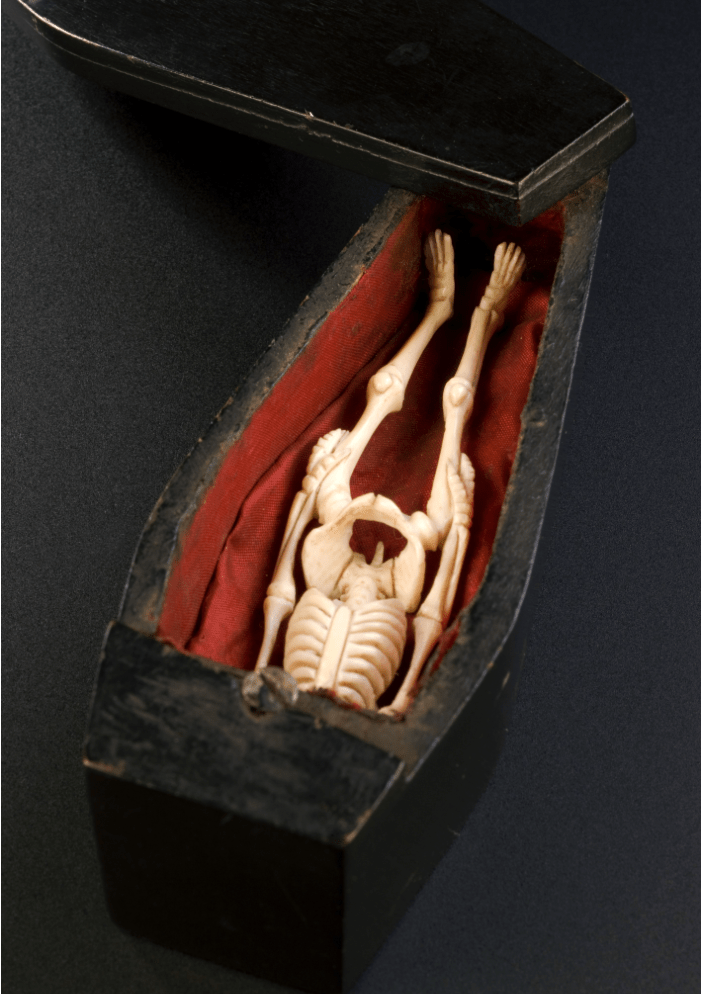
File:Ivory model of a human skeleton, suspended in a case with op Wellcome L0058603.jpg” is licensed under CC BY 4.0. This file comes from Wellcome Images, a website operated by Wellcome Trust, a global charitable foundation based in the United Kingdom. Ref Wellcome blog post (archive).

Alongside the sessions, two keynote speakers presented their unique perspectives on two interesting themes: the first day Dr. Layla Renshaw explored the different dimensions of personhood sought by the living when a mass grave is exhumed, bringing case studies of contemporary exhumations of Republican mass graves from the Spanish Civil War; on the second morning, George Gumisiriza used the lens of migrant corpses to explore potential individual and collective ways of encountering human remains in society. The registration of these interesting and moving intervention are available on the site of the research center.

After Dr. Renshaw keynote, Dr. Gilly Carr kicked-off the first session with a question that everyone working with human remains – and ethics in general – asked themselves at least once in their life: “What is an inappropriate behavior?”. The question pairs perfectly with the general recommendation of treating human remains “with respect”, when one encounters them. After Dr. Carr her colleagues in the session, Dr. Margaret Comer, Leonora Weller, and Dr. Magdalena Matczak beautifully interrogated regarding war and holocaust dead and on what the human rights of human skeletal remains are as heritage – and if human remains resulting from atrocities should be heritage at all.

The following session, with the talk of Dr. Daniel Gaudio, Oliver Moxham and Hyunjae Kim, explored the commemoration of dead and the connection with politics, from different perspectives, starting with the challenges of analyzing frozen remains in Northern Italy, going through the possible linguistic barriers in Japan and finishing with the interpretation of colonial deathscapes and local’s narrative in South Korea.

The last session of the first day explored new possible narratives around human remains, specifically shifting from the dominant Western approaches and discourses. Dr. Yunci Cai presented the case of the Monospiad Cultural Village in Sabah, East Malaysia, while Dr. Heba Abd el Gawad underlined the invisibility to which the contemporary Egyptian people are subject, when it comes to their discomfort towards the display of mummified Egyptian human remains in Western museums. Paloma Robles Lacayo proudly described the efforts undertaken in trying to identify the Mummies of Guanajuato, to eradicate their objectification, without hiding the difficulties encountered (and still encountering) and Dr. Guido Lombardi showed the possibility of carrying on the Ancestors’ legacy, respecting their body-preserving traditions and bridging them with modern education and local specialists.

Following the beautiful keynote lecture, the second day opened with the encounter of death in museums. To open the session, Dr. Katie Stringer Clary draw the history of the exploitation of the Indigenous or “abnormal”, sometimes living, bodies. She begun by discussing the very first freakshows up until today, pointing out that: “Museums no longer exhibit living people. Still, how far have they come?”. Olga Nikonenko focused instead on the complicated issues of the provenance, public display and repatriation of the multi-cultural Graeco-Roman mummified remains discovered in Egypt. More personal perspectives were those offered by Dr. Jody Joy, who told his experience in curating the Lindow Man, and by Cat Irving, who closed this session telling the stories “of those that you don’t find in history books”.

Since the beginning of the Symposium questions arose at the back on my mind, and they haven’t left yet: where do we draw a line, if we can draw a line at all?

The speakers of the second session of the day, Dr. Miriam Saqqa-Carazo, Dr Rachel Sparks, Jelena Bkvalac and Dr. Ayesha Fuentes, focused more on the curatorial aspects of handling human remains in museums, as well as on the archival research.

To conclude this full, thought-provoking two-days Symposium, the last session tackled a more epistemological, spiritual and social perspective. The speakers, Prof. Shawn Graham, Ellie Chambers, and Dr. Svetlana Seibel, went from unveiling some (disturbing) sides of the trade of human remains on e-commerce and social media platforms, through their exploitation on online news platform as clickbait, to showing literary encounters with ancestral remains. Closing the session, Prof. Charles Clary (see also his IG) moving talk guided us towards his personal exploration of death, mourning and healing through his art, which also provided the beautiful cover of the Symposium’s programme.

Since the beginning of the Symposium questions arose at the back on my mind, and they haven’t left yet: where do we draw a line, if we can draw a line at all? Should politics be allowed to objectify the remains, using them for its own purposes? What’s the distance in time that determines whose ancestors are worthy of asking for repatriation? And is this distance really sufficient, to ignore this type of concern? And should professionals working with human remains be completely detached and unemotional, as usually required to scientists, to be considered professionals?

As for all the best encounters, these two days left me with more new open questions than answers. Unfortunately, it is not possible to see all the amazing talks that have been delivered in those two days, but the online poster session is still available and showcases very interesting researches.

by: Nicole Crescenzi

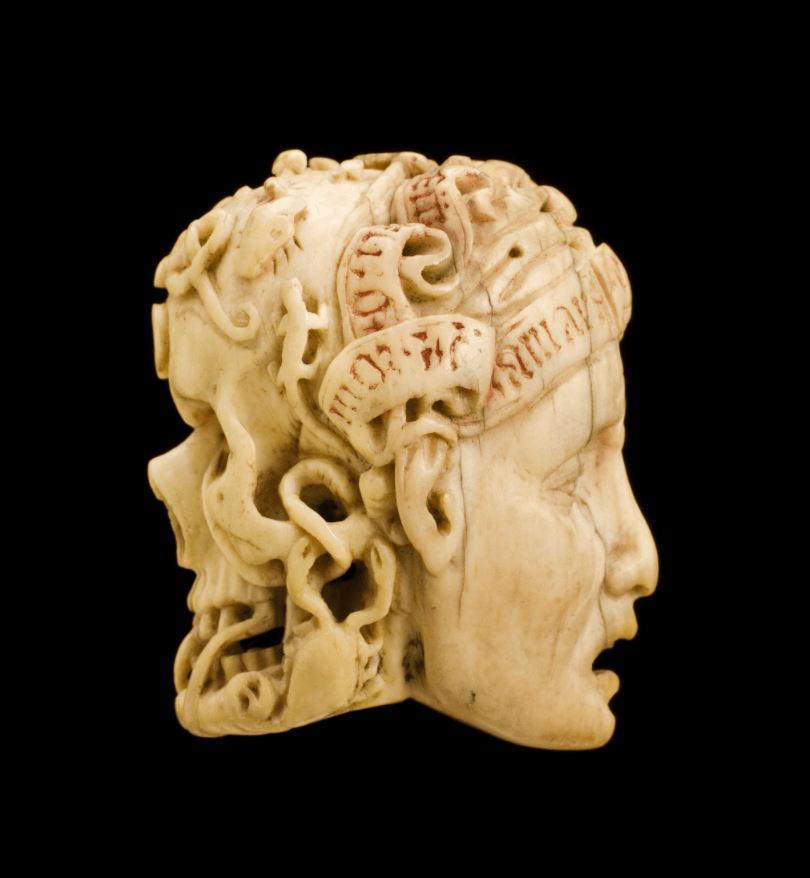
featured image: File:Ivory model of half a human head, half a skull, Europe Wellcome L0057081.jpg” is licensed under CC BY 4.0. This file comes from Wellcome Images, a website operated by Wellcome Trust, a global charitable foundation based in the United Kingdom. Ref: Wellcome blog post (archive).

The Anatomical Collection at Karolinska. Report from a seminar.

On March 29, 2022, Karolinska institutet organised a seminar on their anatomical collection. The purpose of the seminar was to present the history of the collection, and to discuss possible ways forward as the institution grapples with a problematic history. This work is part of a broader engagement on behalf of Karolinska with regards to its history, and in particular its past connections to research on “race”, and the place the collection of crania had in this history. As a first formal step of this process of reckoning with the past, the institution raised the issue of honorific names on its campus – a topic already discussed in this blog. The second step is now to handle the collection of human remains.

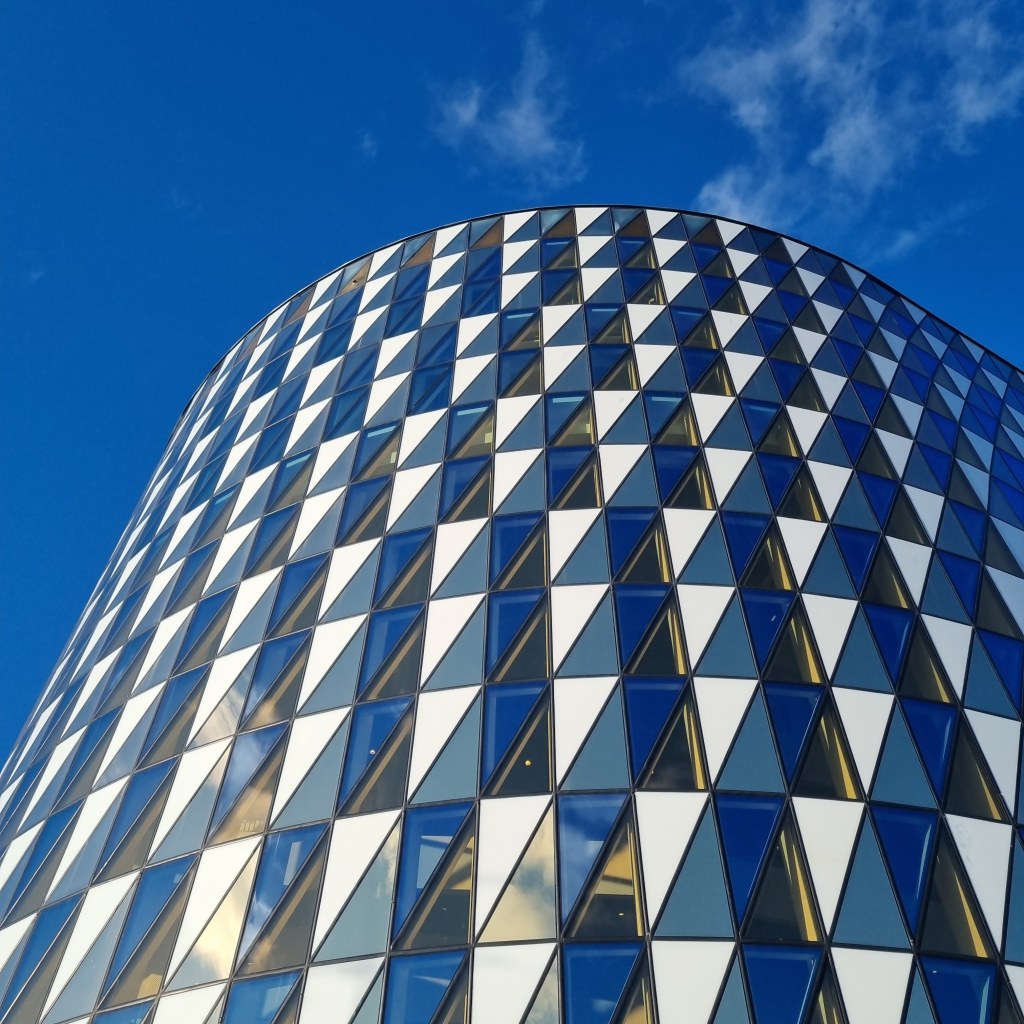
Biomedicum, Karolinska Institutet – location for the seminar. Photo: Liv Nilsson Stutz

The seminar was introduced by the University President Ole Petter Ottersen who welcomed all to the newly inaugurated lecture hall named in honor of Eva and Georg Klein, both Jewish immigrants from Hungary after the Second World War, and viewed as representing the value of civil discourse and academic conversations also about difficult topics. To me, this introduction rightly framed the collection of human remains as such a difficult topic, as one worthy of civil discourse and academic exchange and – perhaps most importantly, as a topic around which we need to start by listening to one another.

The seminar was not uncontroversial and had received criticism even before it started, for example by Amnesty Sápmi. The critique focused on the fact that the speakers were identified as majority population seniors, and as such not able to speak on behalf of the remains themselves, or on behalf of descendants. This is true. But then again, the participants did not claim to do this, but rather participated to explore the topic from historical, anthropological and legal perspectives and expertise.

As the first speaker, Dr Imelda Helena Ek (Karolinska Institutet), presented her report on the history of the collection and placed it within a broader 19th century context in which race biology was an inherent component. The history of the collection is complicated by the fact that it was partially destroyed by a fire in 1892, during which the archives that today would have allowed researchers to retrace a lot of the history of individual remains, were lost. Typically, as the collection became obsolete for medical science and eventually also problematic, it has circulated between different institutions including Stockholm Univerity, Gutavianum and the Medical History Museum. In 2015 the collection returned to Karolinska and once more became its responsibility. Since the remains were returned they are not available for research and are not exhibited. Several international repatriations have been completed following international praxis. A sensitive part of the collection constitutes the remains of 70 individuals, a majority represented only by their cranium, that were taken from graves (both from prehistoric sites and from abandoned historic cemeteries) in Finland, during an expedition in 1883. While these remains were dug up, they were not part of any regular archaeological excavation, but must be viewed as collected for anatomical purposes. The motivation to collect these remains was to obtain specimen of what was considered to be “Finnish types” for the comparative anatomical collection. There is thus a direct line here between both race science and Sweden’s colonial history. It is generally felt that this collection is problematic, but according to KI any repatriation must be negotiated between the Swedish and the Finnish states. All KI can do is to inform about what they have in their care.

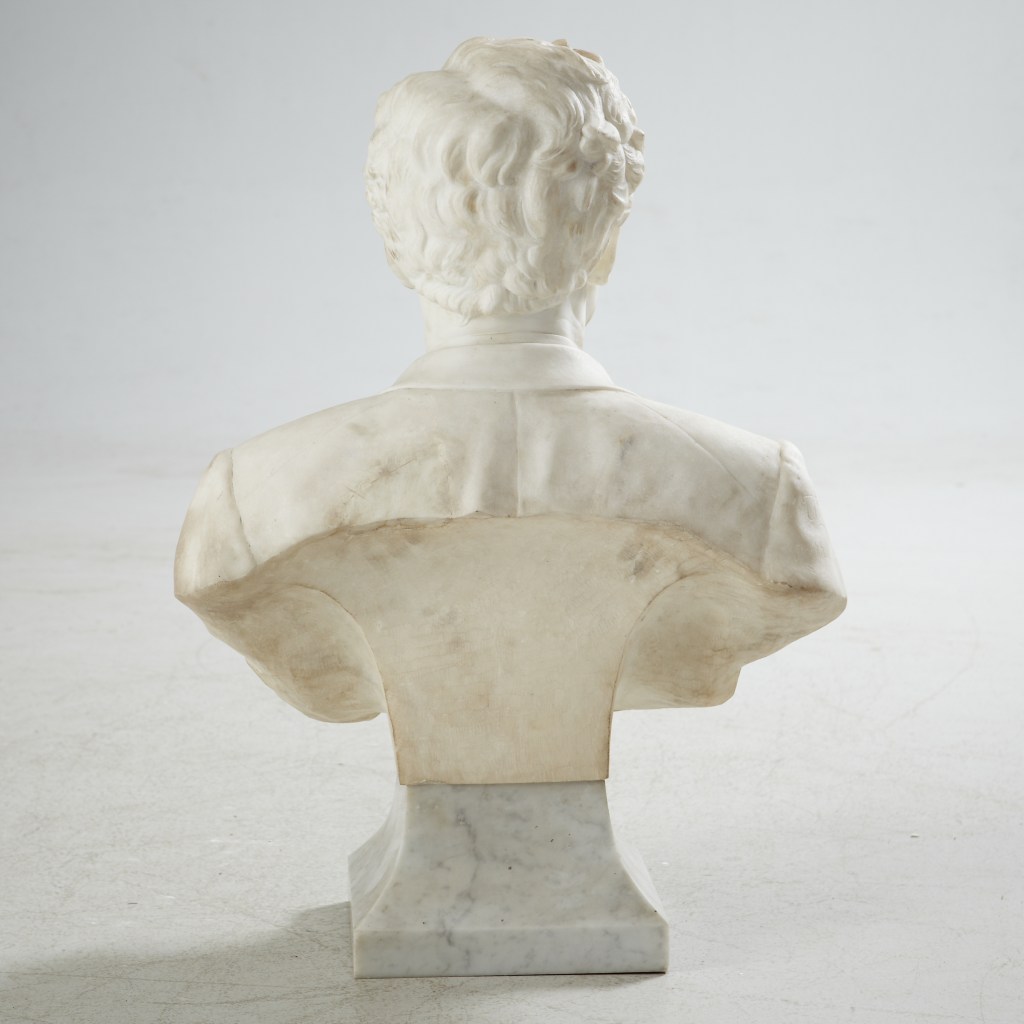
Back of bust of Gustaf Retzius. Source: Stockholms Aktionsverk

The second speaker was me (Liv Nilsson Stutz), and I focused on problematising one of the main ideas of the project Ethical Entaglements, i.e. the way in which human remains are situated on a sliding scale between objects of science and lived lives, and how the ways in which we perceive them depend on their state, character and history, and on external factors such as social and cultural awareness. As a suggestion of consideration for the future I also proposed that instead of rushing to clean out the closets, we approach the responsibility from a perspective of ethics of care, and thus move beyond the idea of formulating strategies based on the perceived value of the remains for science. An ethics of care perspective also means that institutions may have to take long term responsibility for remains that will never be claimed for repatriation, and also for its history and heritage – even when dark and uncomfortable.

The final speaker was professor emerita Kirsti Ström Bull who presented her experiences as a legal scholar involved in the legal cases leading up to the repatriation of Sámi remains from institutions in Norway. These cases have had a long term impact on the handling of ethical evaluation of research on human remains in Norway, where currently a national ethcis committee (Skjelettutvalget) reviews all requests for research on human remains. In cases of Sámi remains, the Sámi parliament is always included in the consultation. This kind of mechanism might be very valuable also for Sweden to consider as we build a more solid research ethics on human remains from all contexts – going beyond the immediate considerations of the Karolinska collection. Professor Bull underscored the importance of allowing the process to take time and be an opportunity to build trust and understanding.

“While we’ve had an academic discussion today on complex issues in which different opinions and criticisms have been raised, what we’ve also discussed concerns the concept of the equal value of all humans.”

President of KI, Professor Ole Petter Ottosen

After the presentation the floor (and online chatroom) opened for questions and comments. Natte Hillerberg from the organisation Sträva at Karolinska (an organisation of students and alumni at Karolinska organising for equal care for all) called out the lack of representation on the panel. She drew attention in particular to the human remains collected in Finland. The Q&A with participants in the auditorium and online explored issues relating to what might happen to the collection in the future, what kind of research questions may be explored, possibilities and experiences of repatriation of human remains from the collection, and what KI can learn from good experiences of repatriation from, for example Norway.

President of KI, Professor Ole Petter Ottosen concluded: “While we’ve had an academic discussion today on complex issues in which different opinions and criticisms have been raised, what we’ve also discussed concerns the concept of the equal value of all humans.”

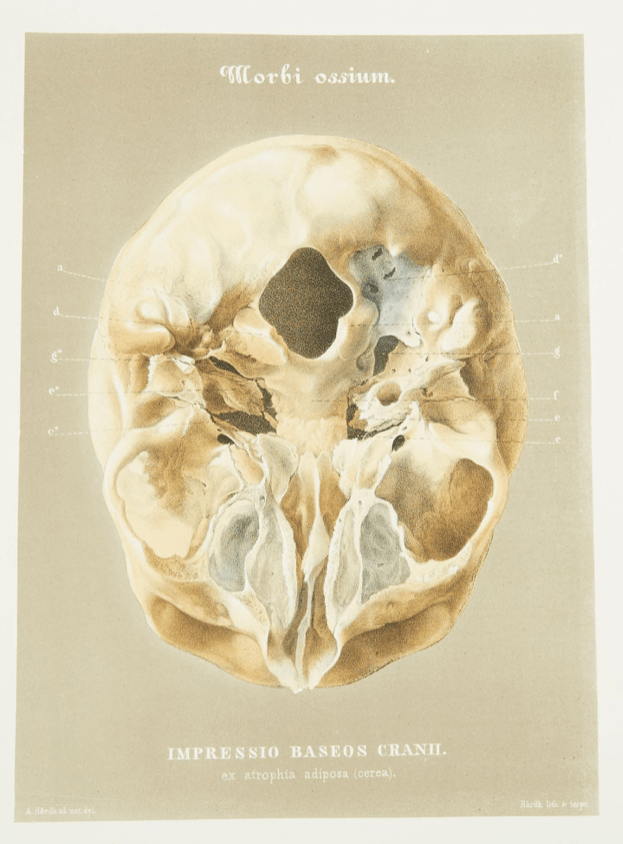
FEATURED IMAGE: ANATOMICAL PLATES 1855. RETZIUS, ANDERS et al. Museum anatomicum Holmiense quod auspiciis augustissimi regis Oscaris primi ediderunt professores Regiae Scholae Medico.Chirurgicae Caroliensis. Sectio Pathologica.


Exploring Sustainable Collection Practices. Report from a workshop.

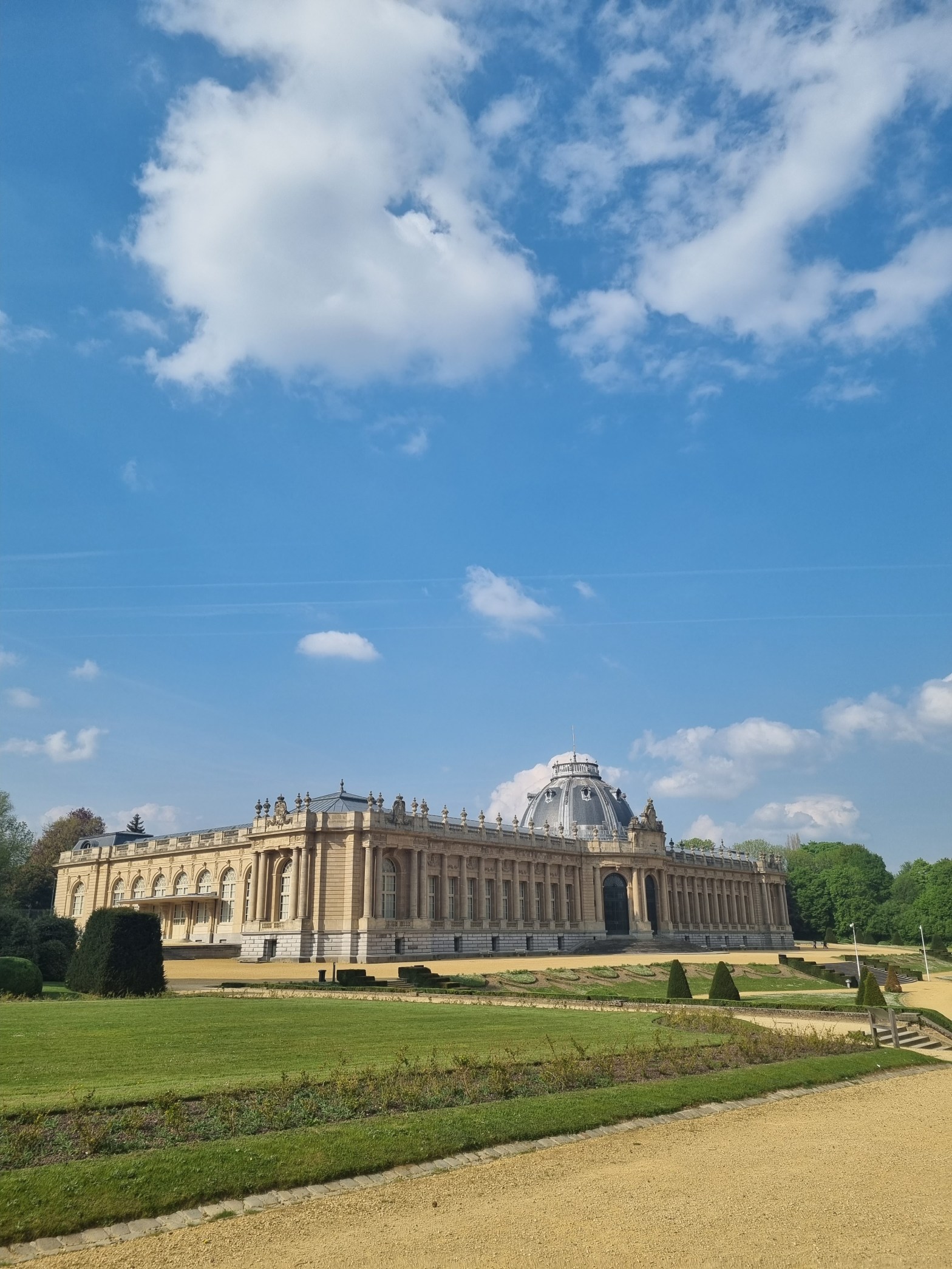
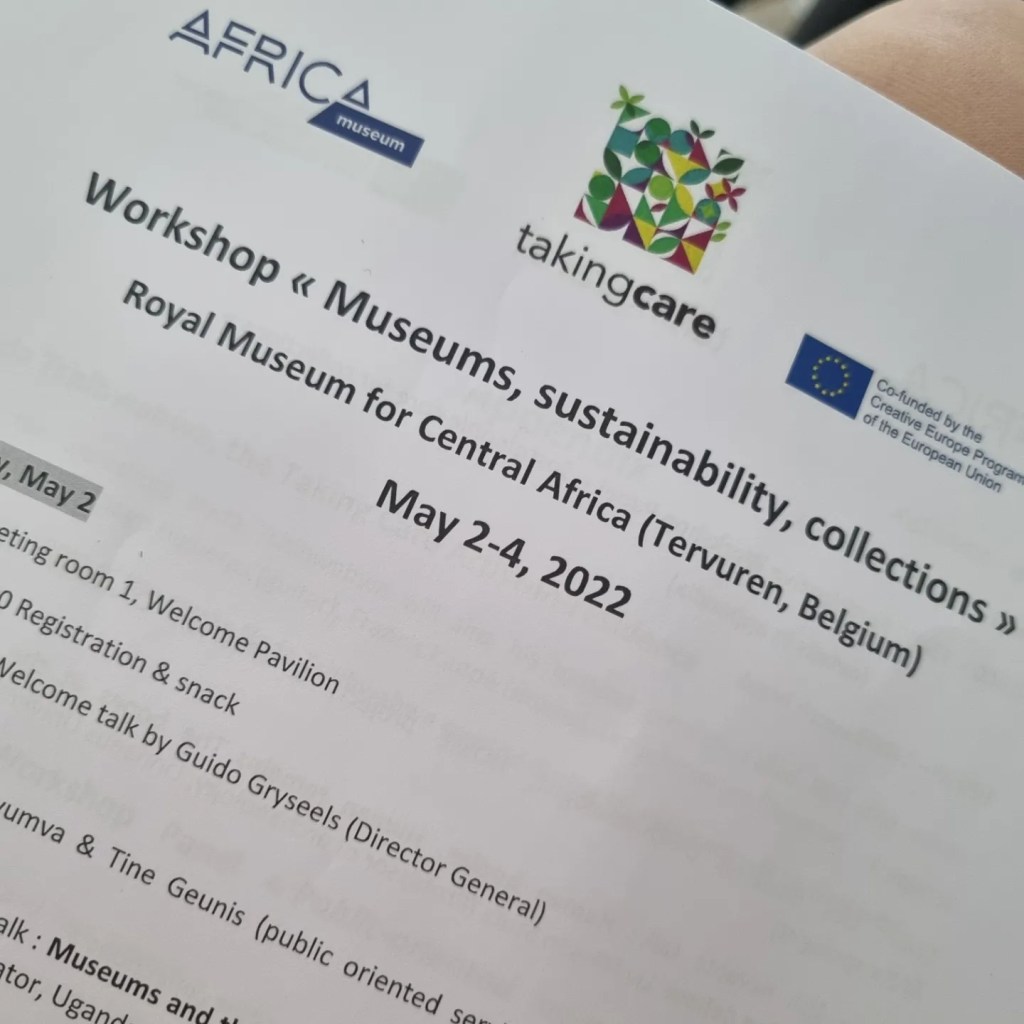
On May 2-4, 2022, I participated in a workshop “Museums, sustainability, collections” at the Africa Museum / the Royal Museum for Central Africa in Tervuren, Belgium. The workshop was organised within the European cooperation project “TAKING CARE – Ethnographic and World Cultures Museums as Spaces of Care” and included curators, conservators and other museum professionals from ethnographic museums from across Europe and Africa. A central focus of the TAKING CARE project is the climate crisis and the Anthropocene with a particular focus on entanglements with colonial histories and their reverberations in our contemporary world.

Glimpse of the workshop program. Photo: Liv Nilsson Stutz

The workshop included three keynotes that in different ways addressed sustainable collection practices. Chris Ssebuyungo (Conservator at Uganda National Museum) discussed the relationships between the museums and their publics from his experiences in Uganda. André Ntagwabira (Researcher in Archaeology at the Rwanda Heritage Academy) and Siska Genbrugge (Objects Conservator at the Royal Museum for Central Africa) explored challenges relating to collections care of African collections weighing conflicting interests such as accessibility, cost, environmental impact, and health risks relating to, for example, exposure to pesticides used in conservation practices. My talk on the care for human remains discussed the ethical entanglements of different collections with a range of power structures, including those of colonial histories, and explored alternatives for ethical care practices for these sensitive collections. The talks were all followed by extensive collaborative workshop discussions where participants shared their experiences and perspectives with these issues. It was clear that we are in a moment when museums across Europe are all grappling with the challenges of how to best deal with their history, their role as contemporary inclusive and safe spaces, and their role as agents for sustainable futures.

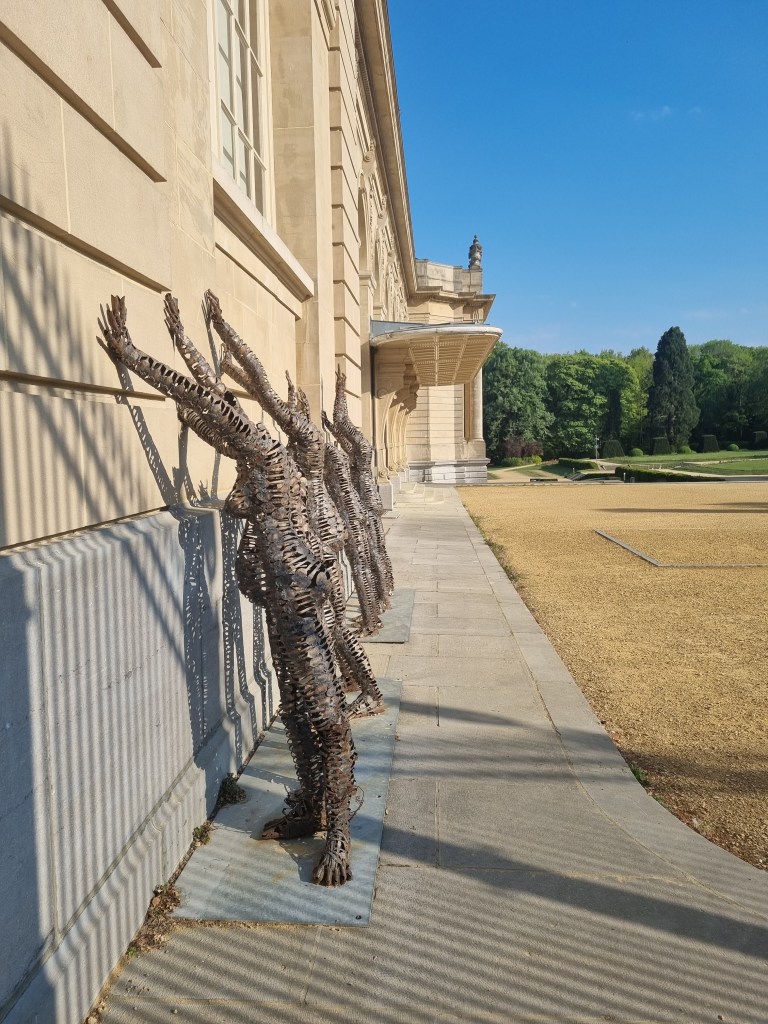
Freddy Tsimba “Centres fermés, rêves ouverts” Tervuren, 2016. Tsimba’s sculpture is made from materials recovered from the building site during the new constructions of the museum in 2016. The sculpture gives form to his experiences in a closed center in Belgium and is a tribute to refugees being interrogated across the world. Photo: Liv Nilsson Stutz

In the segment of the program devoted to discussing sensitive collections we discussed different strategies used by museums to tread the difficult balance between accessibility and respect – for example the ways in which searchable databases can include specific protection for sensitive materials, or only be accessible from within the museum by researchers, descending communities, and curators. Participants also discussed what ethical engagement might look like in the work with human remains – and one participant shared how many bioarchaeologists and biological anthropologists systematically talk to the human remains as they study them to maintain the connection to and acknowledge their humanity. The discussions also raised new questions emerged in relation to new museology techniques. As auditory elements become increasingly incorporated in museum exhibitions, we could for example ask ourselves whether the documented sound of a voice should be included in the category.

The TAKING CARE project involves museums with ethnographic collections, and this means that the focus of any ethical exploration will be rooted in a critical analysis of colonial research and collection practices. In this discussion human remains is only one of many categories of sensitive collections. But there is nevertheless significant overlap in the challenges we all face, and many of the ethical considerations are very similar. In 2013 The Royal Museum for Central Africa closed to accomplish a complete overhaul of its exhibitions. The ongoing work on provenance and restitution is currently central to the mission of the museum.

 Sculpture in openwood work by Aimé Mpane representing the Skull of Chief Lusinga which was taken by the Belgian officer Emile Storms as a trophy (the Chief was killed and beheaded) during a raid on the on the village of Lusinga in 1884. The cranium was part of the collections of the Royal museum for Central Africa until 1964, and was then passed on to the Royal Belgian Institute of Natural Sciences. The cranium has not been repatriated. Photo: Liv Nilsson Stutz

While the theme of human reamins was not central for this workshop, it is relevant when thinking about decolonisation and collections. Currently a large scale project called HOME (Human Remains Origin(s) Multidisciplinary Evaluation), to inventory all human remains collected abroad and currently located in museums, research institutions and private collections in Belgium has been initiated. The interdisciplinary project will identify “the individual people, the conditions under which their remains were collected and in some cases, will try to better understand past lifestyles, both from a cultural and biological point of view.”

“In Belgium, there are currently no guidelines for the conservation and management of human remains, nor a legal framework for the return of human remains to family members, institutions or countries of origin. “

Reinout Verbeke, http://www.naturalsciences.be

The project will also study Belgian and international legal frameworks for repatriation and restitution. Just like in, for example Sweden, “there are currently no guidelines for the conservation and management of human remains (in Belgium), nor a legal framework for the return of human remains to family members, institutions or countries of origin. A large inventory supplemented with archive material should help to identify more individual people and better understand the circumstances in which they were acquired.” This is in and of itself not unusual. What stands out in the case of Belgium however, is that up to today, Belgium has never repatriated any human remains to another state. This is perhaps especially striking given the well known colonial history of Belgium.

Human Remains in Contract Archaeology – report from a workshop

The Ethical Entanglements project mainly focuses on collections of human remains in museums, but a significant process by which they get there today is contract archaeology. In contrast to the scientific practices that resulted in many of the older collections in museums, including ethnographic, anatomical and archaeological collections, these new additions to archaeological collections are dominated by a practice driven primarily by development (such as the constructions of roads, schools and railway stations) – where archaeology is inserted as a measure to record and document cultural heritage before the destruction of these contexts for other purposes, rather than driven purely by scientific aims. To an extent this shifts the discussion. This means that it is not the scientific practice that is the root to the excavation and collection of these remains, but development. It also makes archaeology and collection into a protective practice, rather than an exploitative one. That being said, the ethical challenges remain the same, and the field, just like with the case of museum collections, lacks a clear regulation.

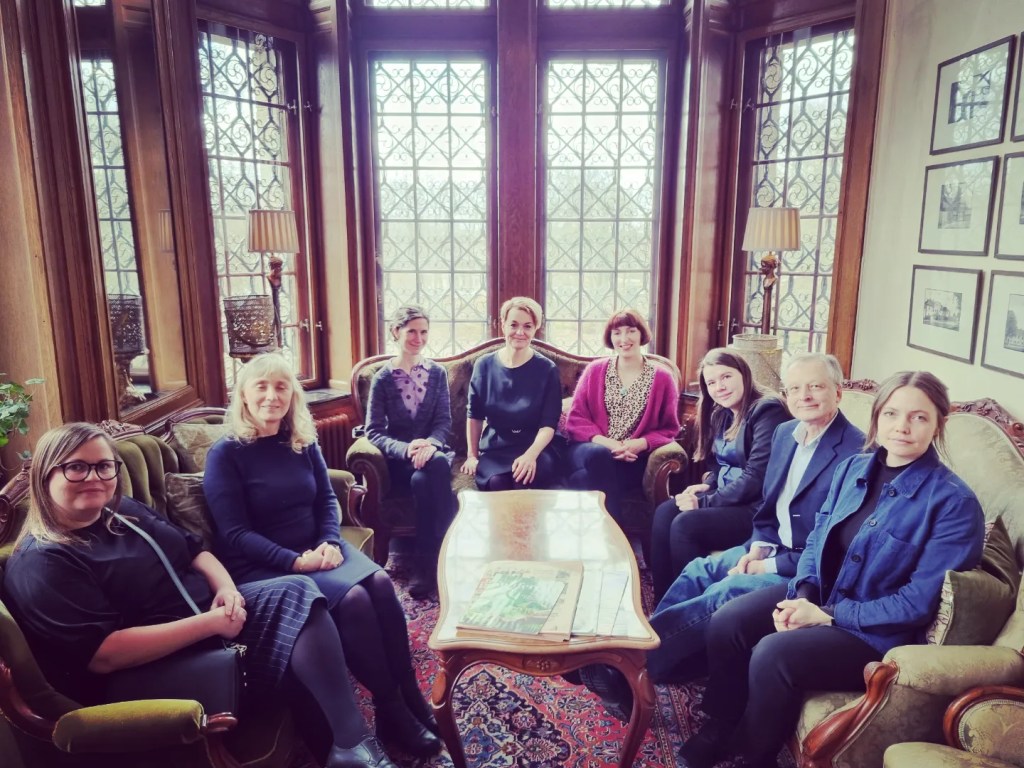
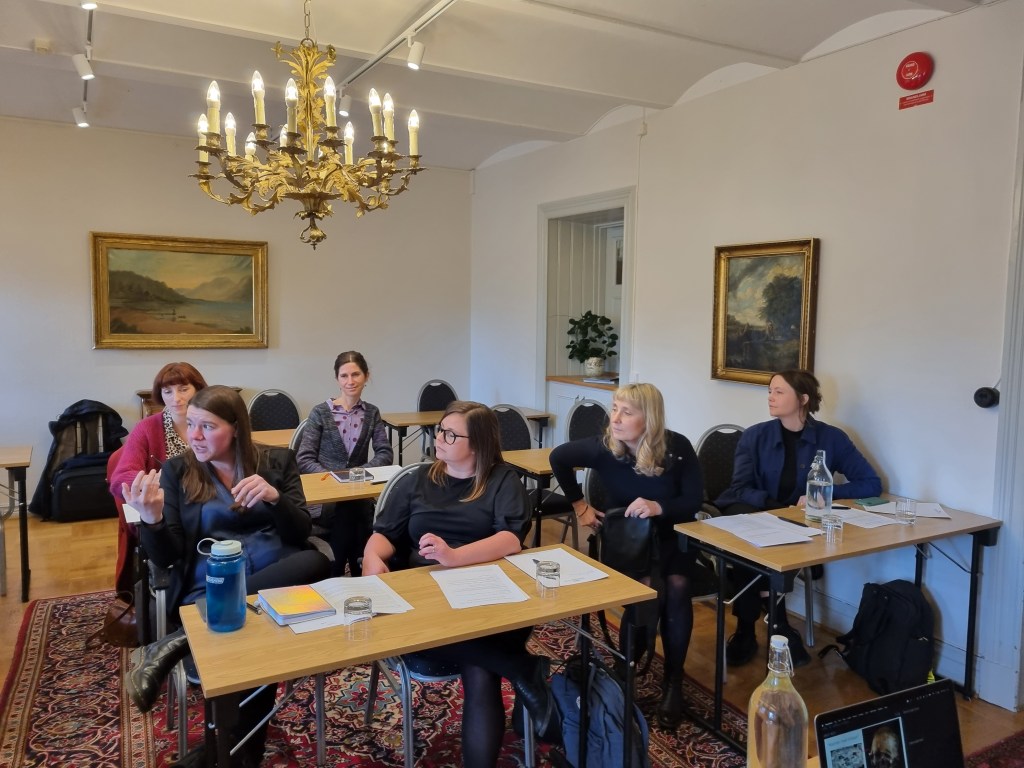
Participants in the workshop (from the left): Anna Tornberg, Caroline Ahlström Arcini, Lisa Hartzell, Liv Nilsson Stutz, Hayley Mickleburgh, Ina Thegen, Niels Lynnerup, and Clara Alfsdotter.

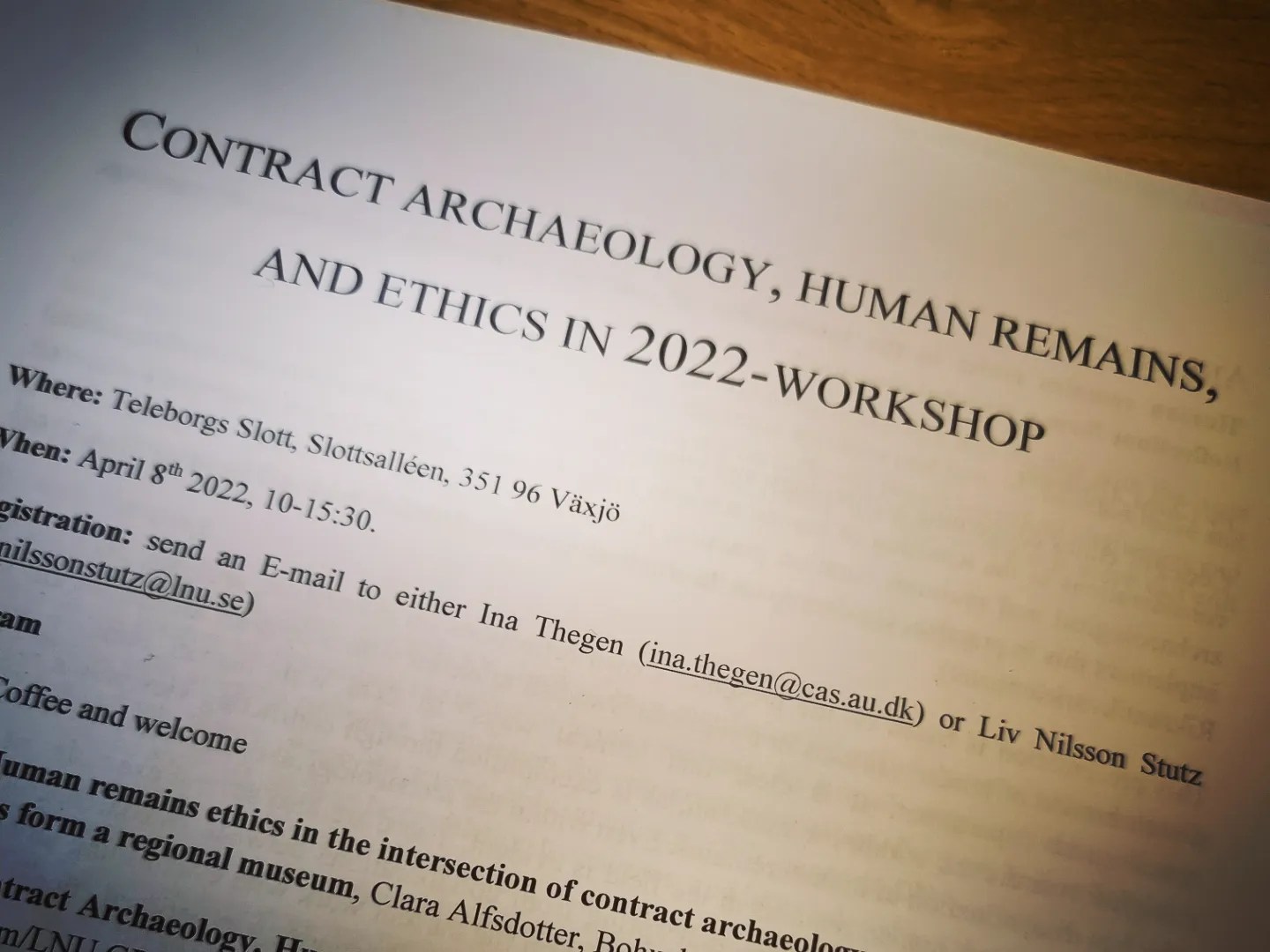
To explore these complex issues Ina Thegen, a guest researcher at at the Linnaeus University Center for Concurrences in Colonial and Postcolonial Studies, and a graduate student in Archaeology at the Department of Archaeology and Heritage Studies at Aarhus University, and I organised a workshop on the theme of Contract Archaeology, Human Remains, and Ethics in 2022, at Linnaeus University, April 8, 2022. The workshop was generously sponsored by LNUC Concurrences.

The workshop gathered experts and colleagues working with human remains from contract archaeology contexts in Sweden and Denmark. While presenting a broad view, the different perspectives all highlighted both a concern for ethical issues and an awareness of the importance of professional ethics, and a lack of clear structures, which results in a variation in practices and decision making.

Dr. Clara Alfsdotter, osteologist at Bohuslän County Museum presented the view from a regional museum in Sweden, and highlighted how, despite the existence of guidelines and recommendations, the interpretation of these very guidelines can vary and often depends on the single museum or, even individuals. These issues were discussed around two examples. In one case there were very different views within the museum whether it would be ethical to create an exhibition on the topic of syphilis in historic times using human remains in the mueusm collectons. The other example discussed how priorities in the field could favour the documentation of architecture over human remains. This example was especially problematic as it concerned a medieval monastery, where human remains can be expected.

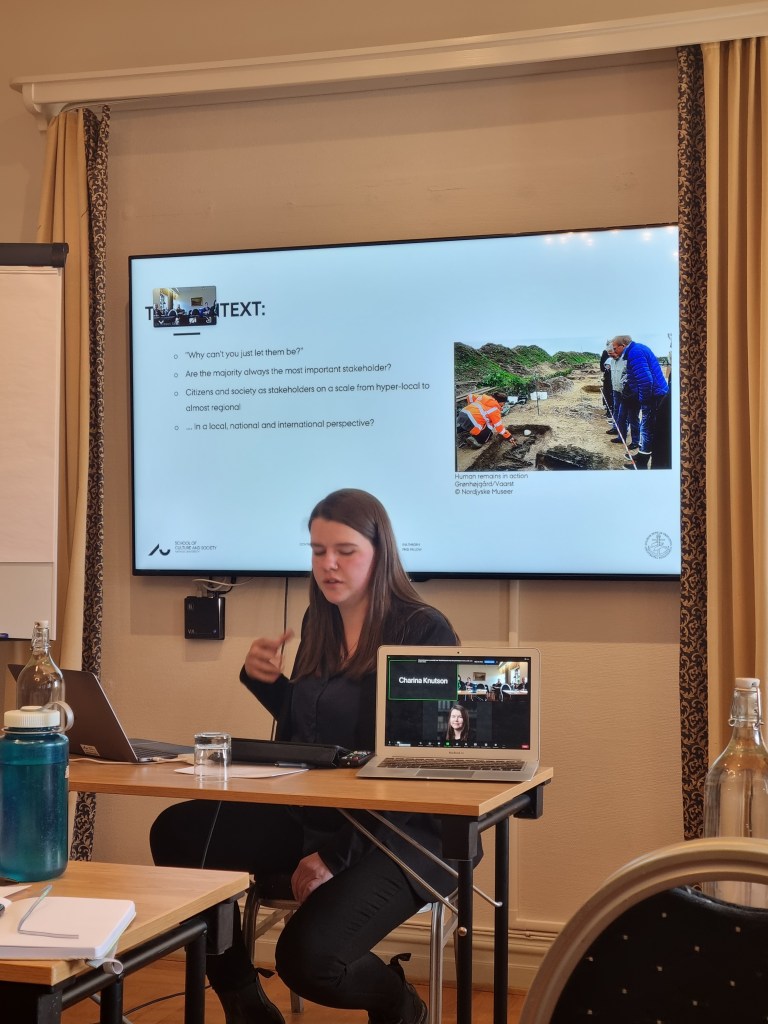
Charina Knutsson, archaeologist at the museum Jamtli, and graduate student at the Linnaeus University Graduate School in Contract Archaeology (GRASCA) discussed the issue from the perspective of contract archaeology in Sápmi. Her previous research, published in her licentiate thesis Conducting Archaeology in Swedish Sápmi: Policies, Implementations and Challenges in a Postcolonial Context has demonstrated the lack of consultation with the Sámi communities in contract archaeology, and this disconnect potentially also affects how human remains are treated in the process. In her presentation she discussed that museums in the region all have policies regarding the handling of human remains, but there are no special recommendations for Sámi remains. The topic is current, but also still, to an extent sensitive.

Dr. Carline Ahlström Arcini, osteologist at the contract archaeology firm Arkeologerna opened her presentation with a moving account of how childhood visits to the paediatric ward at the hospital in Norrköping where her father worked as a physician, initially drew her to the field of osteology. This presentation reminded us of the importance of compassion as a key feature of a discipline that not only allows us to come face to face with an individual of the past, but also allows us to glimpse their lived experience, including pain and illness. Her presentation discussed how different stakeholders have different voices in the Swedish context, and that the Swedish church tends to be among the most critical, while the public ususally are mostly interested in the results. Who, we might ask, are the most important stakeholdes here?

Ina Thegen presents her paper on Danish contract archaeology.

A similar concern was raised by Ina Thegen, graduate student at Aarhus University, who placed these questions in the frame of her thesis that maps and problematises the connections between the legal frameworks, practices, and stakeholders in Danish contract archaeology. She too, points to the Church as a vocal stakeholder along with the media. But she also asked us to problematise if a stakeholder is less valid only because they do not represent the majority. She also discussed how human remains are categorised as movable objects and do not have a clear caretaker within Danish archaeology per se, but rather is under the purview of other disciplines (predominantly medicine), which may create a series of ethical challenges as they are not prioritised by the contract archaeology praxis.

Dr. Niels Lynnerup, head of the Forensic Department at the University of Copenhagen which holds the vast majority of human remains collected in Denmark by contract archaeology (the second depository is at the University of Southern Denmark / Odense), spoke on behalf of this other side of the Danish equation. From the perspective of a vast experience with a range of different contexts he underscored the importance of communication with all stakeholders as a fundamental step toward ethical practice – a theme that was echoed in the other presentations as well, thus highlighting a crucial arena for progressive and constructive work.

Discussion and exploration of concepts during the workshop.
All eyes on Niels Lynnerup – who is out of frame.

Dr. Anna Tornberg, osteologist at the Department of Archaeology and Ancient History at Lund University, discussed the ethical implications of the Third Science Revolution on research. Her presentation highlighted the importance of keeping an eye on how funding agency priorities and publication strategies impact the research process by imposing a top down perspective on human experience in the past. While these new methods offer a lot of possibilities, they also present new ethical challenges that we must consider.

The workshop was very dynamic and inspiring, as the different presentations offered complementary views on a very current and clear professional challenge. We left feeling that we have only started to explore these complexities and are looking forward to more exchanges of ideas and experiences in the near future.

“We are the heart, you are the brain”. Report from a seminar on repatriation to indigenous communities

On April 28, 2021, Professor Helene Martinsson Wallin (Uppsala University) and Dr. Olaug Andreassen (National Museum of Oslo) organised a webinar on the topic of repatriation of human remains to indigenous communities.

While the main focus of the seminar was on Rapa Nui, the heritage of Nordic colonialism was present as an important backdrop to the discussion, a reminder to Swedish scholars working with repatriation that there is no “Nordic exceptionalism” when it comes to colonial history, and the Nordic countries were a part of these global processses in all their various forms. Ulrika Persson-Fischier (Uppsala University) used her study of the crania collected by Nordenskiöld’s Vega Expedition to discuss the challenges of working with old colonial records when trying to establish “provenience.” She pointed out the paradox that despite good intentions, we risk reproducing colonial ideologies through the practice of repatriation if we use old records and categorisations. Mikael Jacobsson from the Lycksele Museum of Forestry shared his experiences of the repatriation and reburial of crania collected in from an old cemetery in Sápmi in the 1950s and returned for reburial in 2019. He showed moving images of the ceremony and discussed the difficulty in getting museums to really understand that human remains are not just archaeological and historical artefacts. Finally, the agreement to repatriate thousands of objects and human remains from the Kon Tiki Museum in Oslo, collected by Thor Heyerdahl and his team during his travels in the Pacific in the 1950s and 1980s, provided an immediate connection to the main focus of the webinar – the experiences of the repatriation of human remains to Rapa Nui.

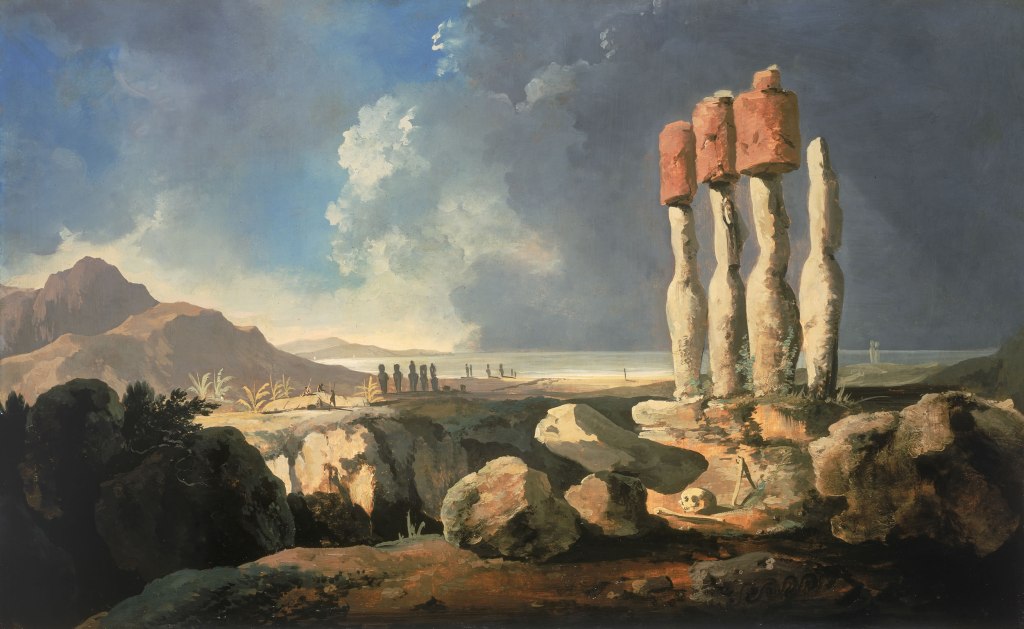
A View of the Monuments of Easter Island, Rapanui, c. 1775-1776 by William Hodges.
Public Domain

Rapa Nui constitutes an interesting example to discuss repatriation. It is caught in complex layers of colonialism and relationships to the state of Chile. Known more widely by the name “Easter Island,” a name given by the Dutch explorer Jacob Roggeween who accidentally “discovered” the island on Easter Sunday in 1722, the island is wrapped up in colonial history. In the decades that followed Roggeween’s short visit, several other expeditions landed on its shores, marking the beginning of a deep and painful colonial history including disease, structural violence, black birding, slave trade, and exploitation. The island was annexed to Chile in 1888. It holds the status of special territory since 2007, but the relationship to the Chilean state has not been without conflict.

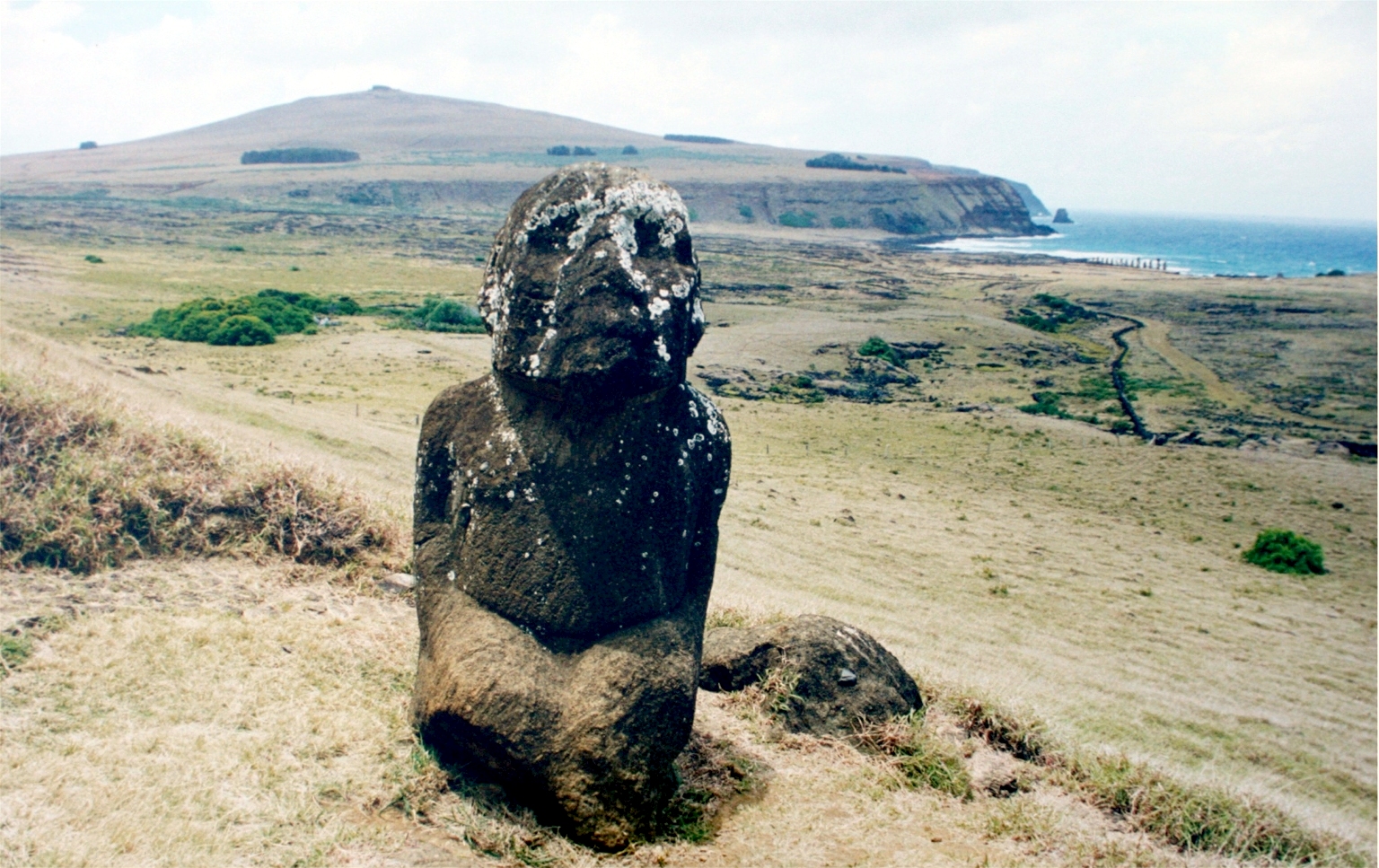
From a cultural heritage point of view Rapa Nui is renowned for its monumental Moai, the sculptural heads that line its shores as “the living faces of deified ancestors.” But beyond these striking sculptures, the island is the home of an impressive cultural and archaeological heritage of monumental architecture, petroglyphs, and wood carvings that all can be traced back to the indigenous Rapa Nui. Given its painful history with colonialism, it is not surprising that calls for repatriation of both cultural objects and human remains play an important role in current debates, with the most highlighted example being the call to repatriate the Moai called Hoa Hakananai (lost or stolen friend) from the British Museum. In the process Chile has become a powerful player. Under Chilean law, the Moai are not regarded simply as art or artefacts, but deemed an “integral part of the land”, and in 2017 the control over them, along with other archaeological sites, was symbolically handed over, from the Chilean National Forest Corporation to the Rapa Nui by President Michelle Bachelet.

At the webinar, we would hear several voices engaged in the movement for the recognition of the right of Rapa Nui to gain control of their heritage including the human remains of their ancestors deposited in museums all over the world. Biological Anthropologist Associate Professor Felipe Martinez (Pontifica Universidad de Católica de Chile) discussed the importance of viewing human remains, not only as biological specimens but also as a part of cultural heritage, and stressed the need for a developed legal framework that recognises the rights of indigenous people in this context. Dr Jacinta Arthur (Pontificia Universidad de Católica de Chile), who has worked as the coordinator for the repatriation program in Rapa Nui, introduced the concept of patrimonialization of indigenous culture to the discussion, and discussed how legal instruments can protect cultural heritage for the nation without considering the needs of the indigenous communities to which it belongs.

This becomes especially interesting when unpacking the complexities of international repatriations of indigenous human remains and heritage. Who does this belong to? To where should it be repatriated? Who decides on the future of these remains? Here the relationship between the descending community, be it a majority population, a minority population, or an indigenous population, becomes central. As nation states come to agreements, the opportunities for descending communities may look very different depending on their relationship to the nation state that may or may not recognise their right to control their cultural heritage. Here the issues raised by both Dr Jacinta Arthur and Ulrika Persson-Fishcier (albeit in a different context) come back into focus.

“We are the heart, you are the brain”

These issues are without a doubt complex and difficult. What is the way forward? Curator Sr. Mario Tuki (Museo Antropologico Padre Sebastian Englert MAPSE Rapa Nui Repatriation Program Ka Haka Hoki Mai te Mana Tupuna and Hare Tapu Tu’u Ivi) offered a pathway. In his presentation and in the discussion, he stressed not only the importance of collaboration between scientists and indigenous communities, but also the importance of academic actors to recognise the emotional dimension of the process. Indigenous communities, with a lived experience of trauma from a violent colonial history, will bring a consideration for this emotional dimension. This should not be seen as a complication, but as an asset in the work toward mutual learning and understanding. Academics, on the other hand, will bring a problematizing and intellectual approach to the situation. We need both. “We are the heart, you are the brain,” he declared, proposing a wonderful metaphor for all of us who are seeking a productive way forward. Recognising that both the heart and the brain are vital organs, and that they sustain each other, Mario Tuki’s words leave me inspired and humbled.

image credit banner: Tukuturi, Brocken Inaglory, CC BY-SA3.0