Dead Bodies are Not Neutral Objects. Report from a conversation about dead bodies and their place in museums.


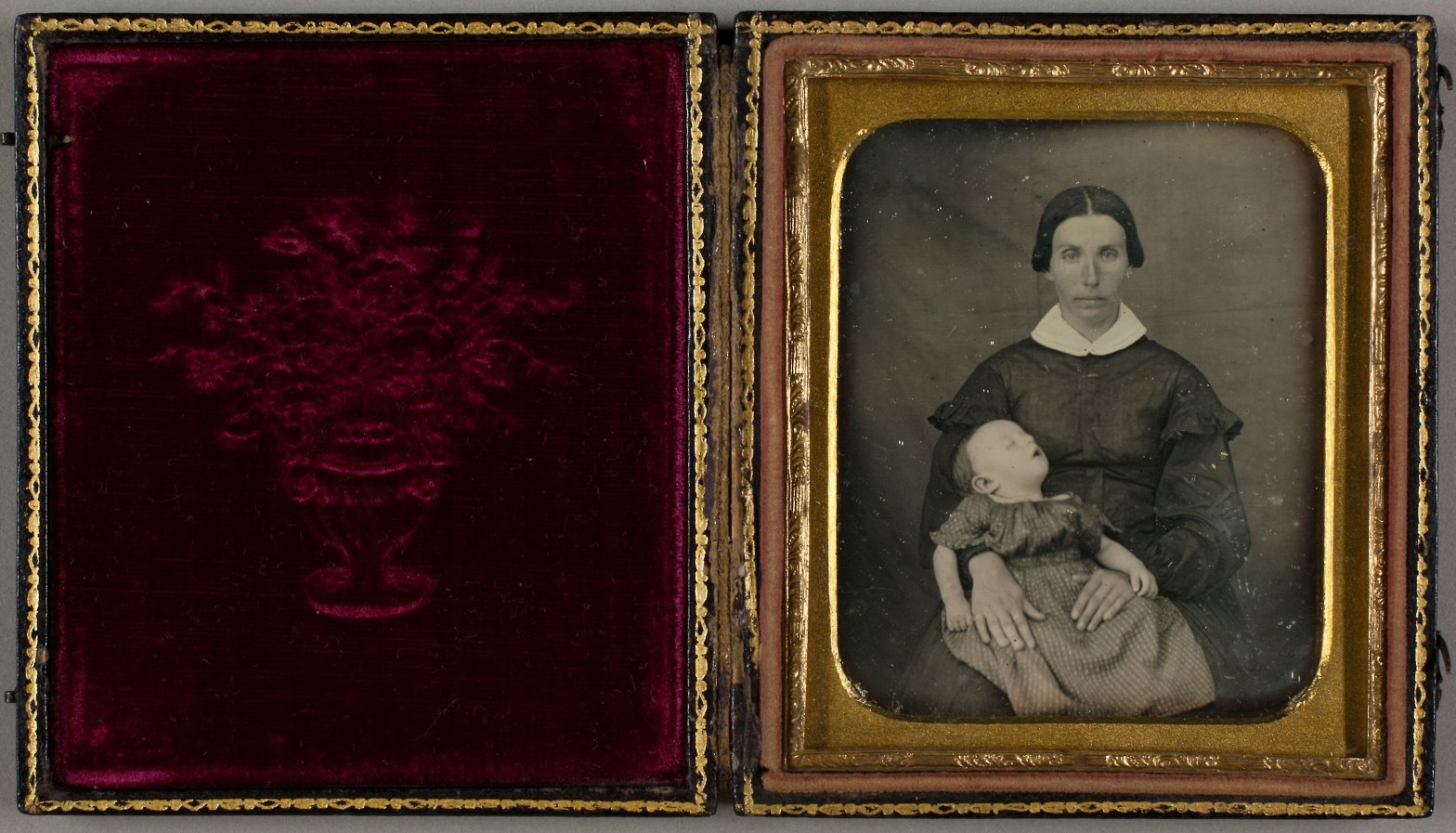
The old photograph shows a mother, looking straight at us, with a child in her lap. The small face of the child is turned upward and the mouth is sightly open, embodying that deep and completely relaxed baby sleep every parent learns to recognise as the body of the child suddenly becomes very heavy your arms. Only, this child is not sleeping. This child is dead. Photographs like this, a last memento of the child before burial, were common in the 19th century and are still made today (although today the practice of taking and showing these photos is no longer as public, nor is it as socially acceptable). Photographs like this remind us that dead bodies are not neutral objects, and that separating from them can be emotional, painful and problematic. Photographs like this also remind us of how our attitudes to the dead are culturally shaped and experienced. Photographs like this can help us untangle why some people feel that it is problematic to keep human remains in museums.

“The body of the dead, is something onto which people project meaning and emotion, and it is culturally varying how that projection happens and at what stage that projection changes. So when we talk about repatriation and reburial, what in the eyes of an archaeologist or a biological anthropologist may be material for research may still very well be perceived by other stakeholders as an individual to which they owe the duties of a proper burial.”

This fundamental realisation was one point of departure for a K-samtal – a structured conversation – on the topic of repatriation organised by The Swedish National Heritage Board on Dec 18th 2020 and led by Kicki Eldh and Ingela Chef Holmberg. The conversation was part of a continuing effort to support Swedish Museums in their work to develop policies and practices for curation and repatriation that live up to “an exemplary international standard.” Part of this effort has also been the development of support documents for the care for human remains in museum collections and in how to handle repatriation cases.

The conversation between Estelle Lazer (University of Sydney), and Liv Nilsson Stutz (me), was led by Kicki Eldh (for a sound file of the full conversation in English, please click here) and drew on international examples to unpack the complex issues of repatriation, indigenous rights, identity politics, the history of science, colonialism and research. The conversation came to circle back to questions such as “What does it mean to keep to an exemplary standard?”; “What can we learn from international experiences?”; and “What theoretical inquiries can help us problematize the issue, and how can we move from academic discourse to action and solutions?

Estelle Lazer shared her experiences from both Australia and Pompeii, and I drew on my work studying and analysing the repatriation debate in the US and NAGPRA (the Native American Graves Protection and Repatriation Act)

“We need to stop thinking about repatriation as a problem to be solved and instead approach it as an opportunity to learn.”

Both Estelle and I agreed that while we can learn from the international experiences, there is not a golden standard that easily can be transferred from one cultural, historical and political context to another. Instead we must educate ourselves and approach the issue with flexibility. To aim for an exemplary standard must be to learn from experiences and competences, and work toward developing legal instruments that are at the same level as international standards, but that are also tailored to fit the Swedish context.

We must also learn how to be critical. Repatriation cases are not always unproblematic. When approaching these complex issues it is important to be aware of this. But first of all we need to become better listeners, because a successful repatriation is not a process that strives only for closure, but one that is approached as an opportunity for collaboration. In other words, we need to stop thinking about repatriation as a problem to be solved, and instead approach it as an opportunity to learn.

Liv Nilsson Stutz

Caption to figure: Mother with dead child, 19th century, probably American. Art Institute of Chicago, CCO Public Domain
Ethics take center stage at conference on the Archaeology of Death in the Digital Age

This year’s edition of the University of Chester Archaeology Student Conference on the Archaeology of Death, DigiDeath 2021, on January 27-28 (for a complete program as well as links to several of the presentations, please see entry on professor Howard Williams blog Archaeodeath), was dedicated to the public archaeology of digital mortality. The event was clearly framed by the global pandemic. The ever looming themes of death and mortality are not new to the yearly conference devoted specifically to these topics, but the changes in how we die and how we mourn in the time of Covid-19 probably brought the themes of mortality, mourning and commemoration even closer to home this year. In addition, the closure of museums and universities, and the cancellation of conferences, workshops, and other meeting spaces for academic exchange and learning, brought digital tools and social media into focus, and of course, the event took place online.

The papers were presented by students as well as researchers in a range of formats, from live papers presented digitally, to twitter papers and video recordings, all engaging new forms for communication and archiving of academic production.

When summing up the many presentations, several themes around public archaeology and digital tools come into focus, all relating in explicit and implicit ways to broader considerations of ethics – professional and personal.

“Sharing is not always caring”

Several papers on different aspects of public archaeology raised interesting questions about accessibility, education and multi-vocality. While images of archaeological remains and virtual tours of exhibitions serve the important goal of opening up museums, collections, and even the archaeological research process to all, they also pose new questions. Where do we draw the line regarding what to share and how? “Sharing is not always caring” – as stated by Erin Munro in her paper on virtual exhibition tours and mortuary heritage. But how can we tell when we cross the line? Does the showing of human remains become less respectful when it leaves the museum context and moves out on the web – in a virtual exhibit or an instagram post – and if so, why? By asking ourselves these questions we get the opportunity to examine our culturally shaped understanding of museum spaces, and in that process we must also realise that what may be a respectful place in our eyes may be perceived very differently by others

New technologies bring new possibilities – and ethical challenges. The reproduction of 3D models of human remains (paper by Campanacho and Alves Cardoso) invites us to reflect over post mortem privacy and integrity in new ways. This is a growing and unregulated field that has not yet found its ethical footing.

Other ethical issues that were raised related to the ways in which engagement with the public also entails sharing the power over the narrative. Powerful narratives of the past that are presented in the press, in movies, TV series and video games, often take great liberty with the creative license, focusing on the spectacular or gory, highlighting male elites at the expense of others, and reproducing stereotypes about the past. The digital era and its many and various tools intensifies this engagement through online communities, comment sections, an approach to lived experiences through gaming, and so on. What is more important, we may ask: that the past is represented in a “correct” way, or that people engage with it at all? The consequences of misrepresentation might be even higher in the ways in which the press and social media often present archaeology and anthropology, reproducing colonial and ethically questionable images of treasure hunters and grave openers. While these images appear to still attract a part of the public, they are offensive and disrespectful to others and threaten to undermine the work of making archaeology a more respectful and inclusive practice.

In our contemporary digital era, images play a central role in how we communicate with each other and how we draw attention to our work. Online presences on blogs and social media pose new questions about both personal and professional ethics. It is important at this moment to not be satisfied with easy formulaic answers to our ethical dilemmas, but to view our task ahead as one of constant questioning and examining of the ethics of the discipline – and most importantly, of ourselves in our roles as archaeologists and fellow human beings.