On November 5th, 2025, the Fondazione Professoressa Carla Barbati awarded Nicole Crescenzi for her PhD thesis “Exhibiting Human remains: an issue at the intersection of ethics, museology and law” defended at IMT Lucca on June 11th, 2025.
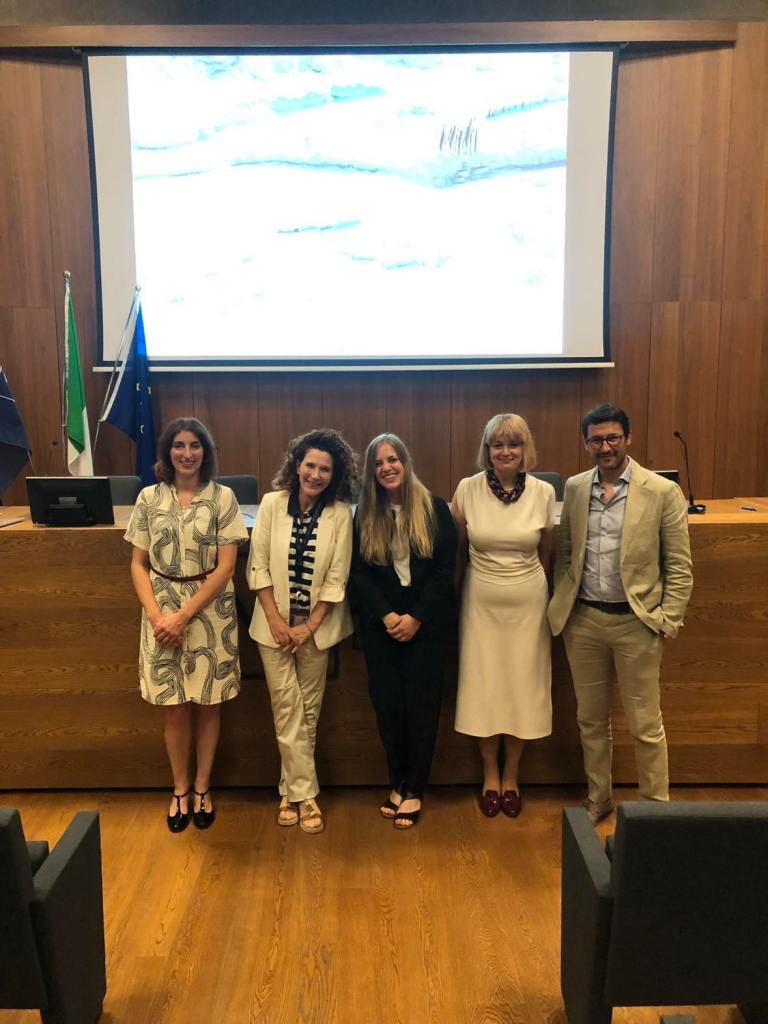
Afetr the very successful defense, from the left: Dr Hayley Mickleburgh, University of Amsterdam, Professor Marialusia Catoni, IMT Lucca, Professor Liv Nilsson Stutz, Linnaues University, and Professor Ricardo Olivito. Absent from this photo due to digital participation: Professor Melanie Giles, University of Manchester and Dr Christian Greco, Museo Egizio, Turin.
In her thesis Nicole explores the exhibition of human remains as a contested and controversial subject. She discusses different perspectives related to understanding the practice of exhibiting human remains in museums. The project collected information on the handling of human remains in museums and investigated the perspectives of both museums’ visitors and professionals through surveys and interviews, and compared the results obtained for different European countries. She also applied an ancient historical perspective to a debate that was so far mostly focused on modern and contemporary history. Doing this also meant that, in the line of Ethicakl Entanglements, all human remains, including the archaeological ones, that scholars had, up until now, left on the side, with very few exceptions were included in the discussion. The thesis includes a synthetic catalogue of regulations museums and states adopt in exhibiting human remains, a first catalogue of European museums hosting human remains in their collections, and a broad investigation of museums visitors, covering European and non-European countries. The thesis will be published by Oxbow.
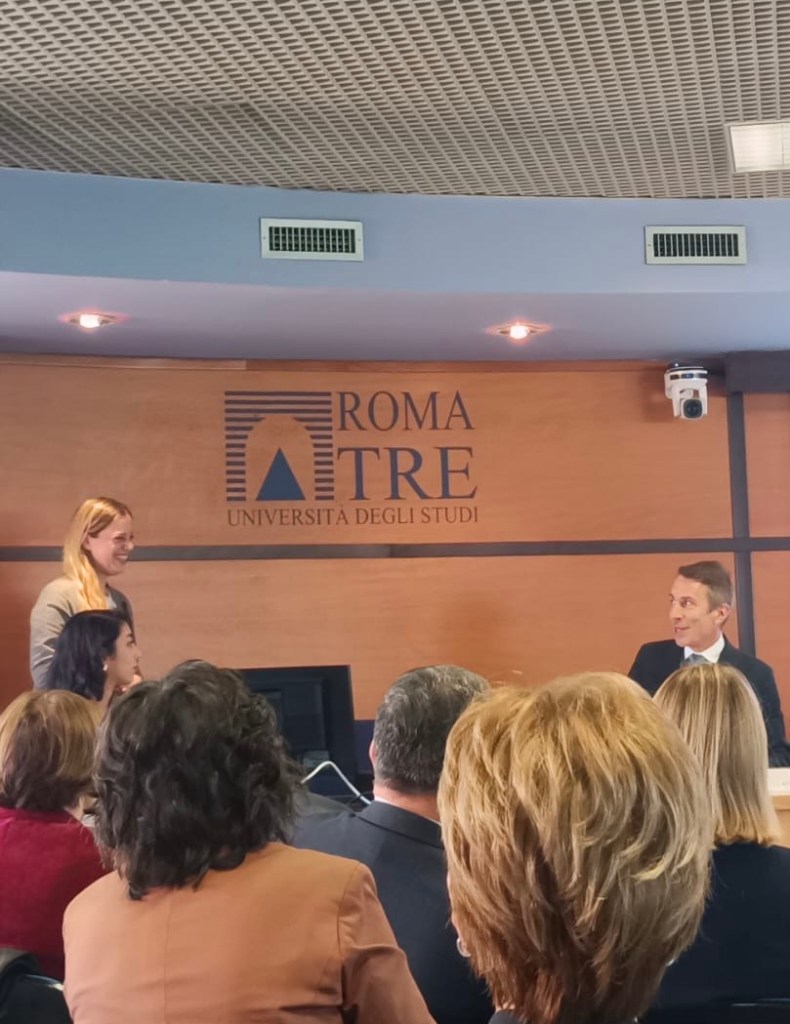
Nicole Crescenzi at the award ceremony, the 5th of November, 2025.
The Fondazione Professoressa Carla Barbati is a non-profit organisation established to honour the memory and continue the work of Professor Carla Barbati, an eminent scholar of cultural heritage. Its mission is to promote the study of cultural heritage in all its tangible and intangible forms, from an interdisciplinary perspective rather than an exclusively legal one. The Foundation awarded prizes for theses that explore the theme of cultural heritage in all its tangible and intangible forms, from an interdisciplinary perspective. Liv Nilsson Stutz who acted as co-advisor to the thesis together with Professor Marialuisa Catoni is incredibly proud of Nicole for receiving this distinguished award for her work, as is the whole The Ethical Entanglements team
On 29 August, Rita Peyroteo Stjerna (Uppsala University) and Mari Tõrv (University of Tartu) chaired the roundtable “Academic Feudalism”: Research Ethics and Sustainability in Biomolecular Archaeology at ISBA11 in Turin. The session focused on ethical and sustainable approaches to cultural heritage research through the lens of biomolecular archaeology.
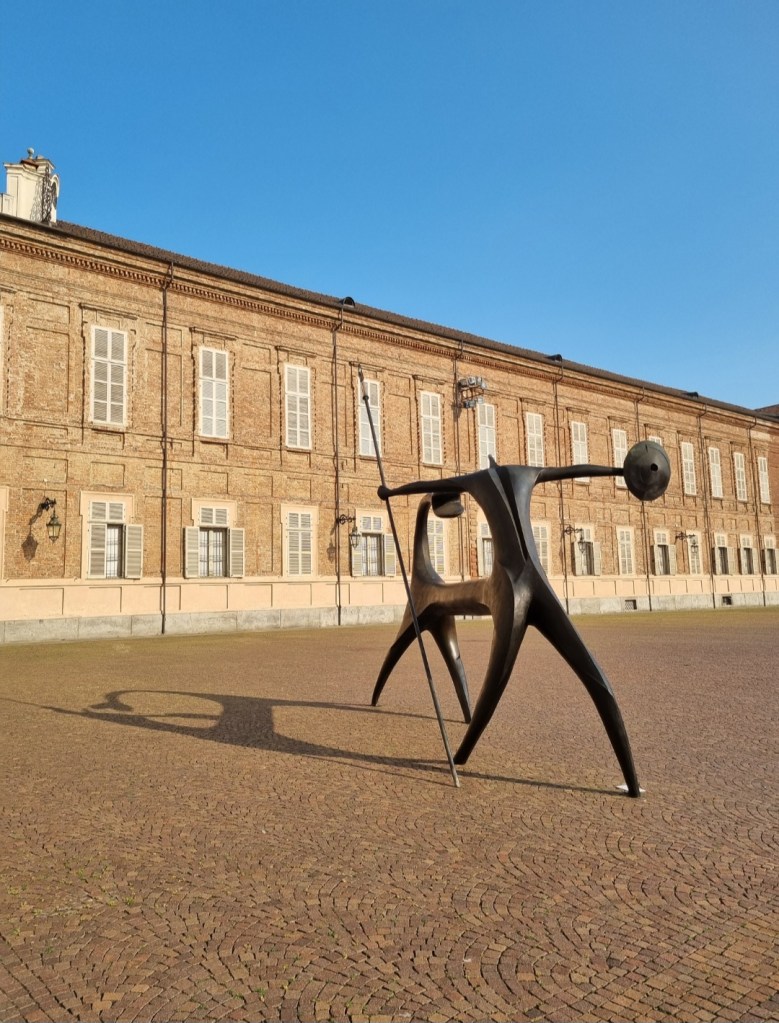
Turin. Photo by Liv Nilsson Stutz
“Instead of a regular session, we proposed a roundtable with guest panelists from diverse backgrounds and career stages. Roundtables allow more time for discussion and sharing experiences. They’re a great way to openly address complex topics, and we believe we fostered a critical yet constructive dialogue on how the field can evolve by confronting ethical dilemmas at key stages of research.”
When ethics in biomolecular archaeology are discussed, the usual concerns often include destructive sampling – especially of human remains – and the role and rights of present-day communities. While these issues are essential and must remain part of ongoing conversations, professional ethics in our field extend far beyond them. This broader scope was the focus of our roundtable.
This year’s panel was structured around two inward-looking themes that examine our discipline and daily professional practices:
Unbalanced Relationships in Knowledge Production
Sustainability and Equity
We had over an hour for panel discussion, followed by audience questions and comments. The conversation could have easily continued much longer – audience engagement was high, and it was clear that many are eager to improve professional ethics in our field.
We’re deeply grateful to the six panelists who accepted our invitation – and our challenge – to share their insights and experiences:
André Colonese (Universitat Autònoma de Barcelona)
Audrey T. Lin (American Museum of Natural History)
Selina Carlhoff (Max Planck Institute for Evolutionary Anthropology)
Katerina Douka (University of Vienna)
Matthew Collins (University of Cambridge, University of Copenhagen)
Beatrice Demarchi (University of Turin), head organizer of ISBA11
We hope this session was as inspiring for participants as it was for us. Ethics is not a checklist – it’s a continuous, evolving process that demands attention, reflection, and engagement. As professionals, it’s our responsibility to keep this dialogue alive and confront the dilemmas that shape our field.
Mari Torv and Rita Peyroteo Stjerna. Photo by Liv Nilsson Stutz
We also hope this roundtable is just one of many, sparking ideas for how the community can carry this conversation forward – within departments, research groups, and future conferences. Whether through workshops, roundtables, or case discussions, it’s vital to learn from each other’s experiences – both the successes and the challenges.” – Rita & Mari
This initiative is part of Rita’s subproject “Researchers’ Perspectives” within the Ethical Entanglements project. She also served on the ISBA11 Scientific Committee, contributing to the Ethics subsection.
Turin, like many other Italian University cities, has a long, illustrious, and sometimes problematic legacy of anatomy. Here, some of the largest anatomical collections were formed in the 18th and 19th century, and Italy is also the place of origin for the development of wax models used to teach anatomy and medicine.
A Cathedral to Science
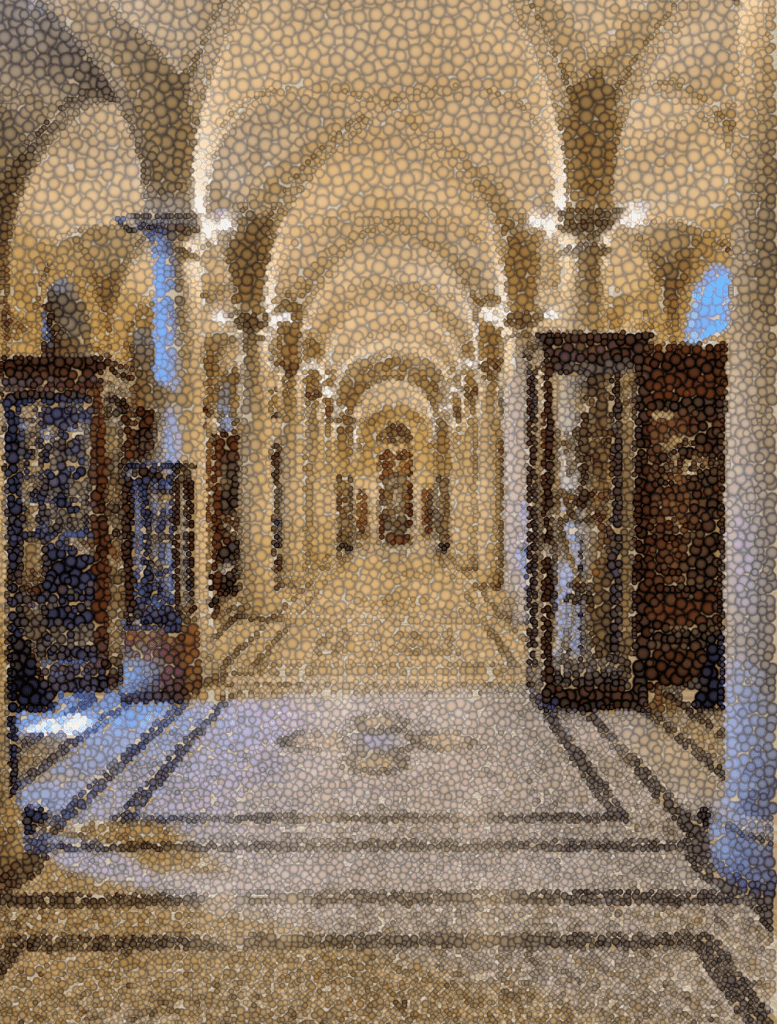
Named after the anatomist Luigi Rolando, the Museum of Human Anatomy is still on the premises that University of Turin built for it in 1898. It is referred to as “a Cathedral to Science,” and its basic outline recalls the shapes of a basilica. When you enter the museum, you step into a central nave, stretching out in front of you in a unilinear direction, guiding your gaze and movement toward a room at the far end that reminds us of an apse, the place dedicated to the main altar and the holiest part of a cathedral. We will return to that space later. Pillars separate the nave from the aisles, where large wooden cabinets divide the space to form cells of exhibitions devoted to different anatomical parts or functions of the body. Behind glass, human remains, models in wax, wood, ivory, and papier mâché, dried specimens, and mummified remains make up a remarkable collection that once provided invaluable teaching materials to study the function and diversity of human anatomy.
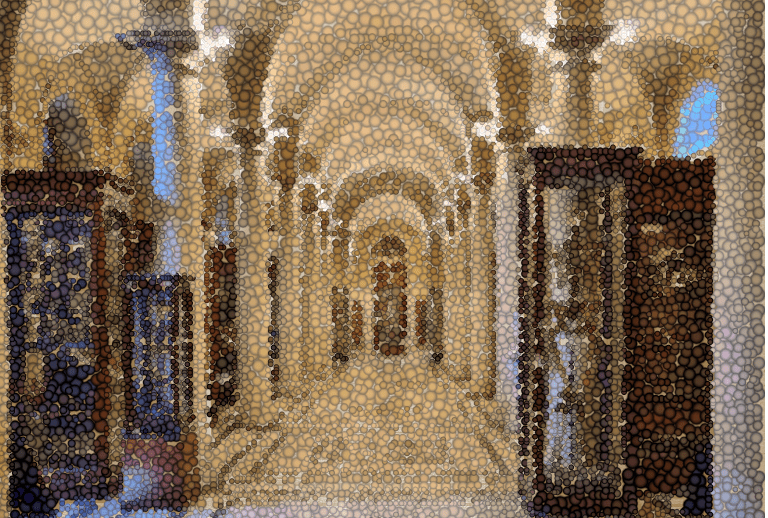
View of the museum. The photograph has been manipulated to blur the human remains exhibited here without their consent.
At the very entrance of the central nave, two individuals are placed to frame your path: “the dwarf” (sic!) and “the giant” (sic!). They are placed there to illustrate the drive to understand human variation. When you scan a small QR code on the side of the cabinet you learn that the individual with giantism was in fact Giacomo Borghello. Born in 1810, he would have experienced exceptional growth and, probably, related health problems linked to his condition. He worked in a circus and passed away at the age of 19. The individual with dwarfism is of unknown identity. On the walls, just under the vaults, frescos depict famous scientists, anatomists and anthropologists, including Andreas Vesalius, Realdo Colombo, Marcello Malpighi, Charles Darwin, and others. It really does feel like a sacred space devoted to the worship of scientific knowledge. It is beautiful, and as preserved cultural heritage of 18th and 19th century knowledge-production, it is sublime. It is also, of course, highly problematic.
Here, in the temple to science, the human remains appear to be firmly moved to the object-of-science end of the spectrum. Perhaps the most salient illustration of this can be seen in the treatment of two mummified bodies from Bolivia and Peru. The Peruvian mummy is a woman holding a small child in her arms. To the contemporary visitor this would seem quite emotional, but it is hard to make out the shape of these two individuals as they lay behind the glass, placed like objects on an elevated shelf, their surface transformed not just through mummification but also by some form of preservation technique that has left a hard and glassy surface on the skin. They almost look like obsidian lumps: hard and shiny. The shape of the woman’s cranium was modified according to Inca practices during her life time, and to show this phenomenon, the anatomists in the 19th century removed and anatomised her skull. It is now on display, detached and skeletonised, next to her body. None of this would have raised an eyebrow in anatomical circles in the 19th century. But it is still strange that the ethics of the choices made at the time are not addressed or commented on at all in any of the text materials that accompany the exhibition – not even in the online materials accessible through QR code.
Carlo Giacomini’s last will and testament
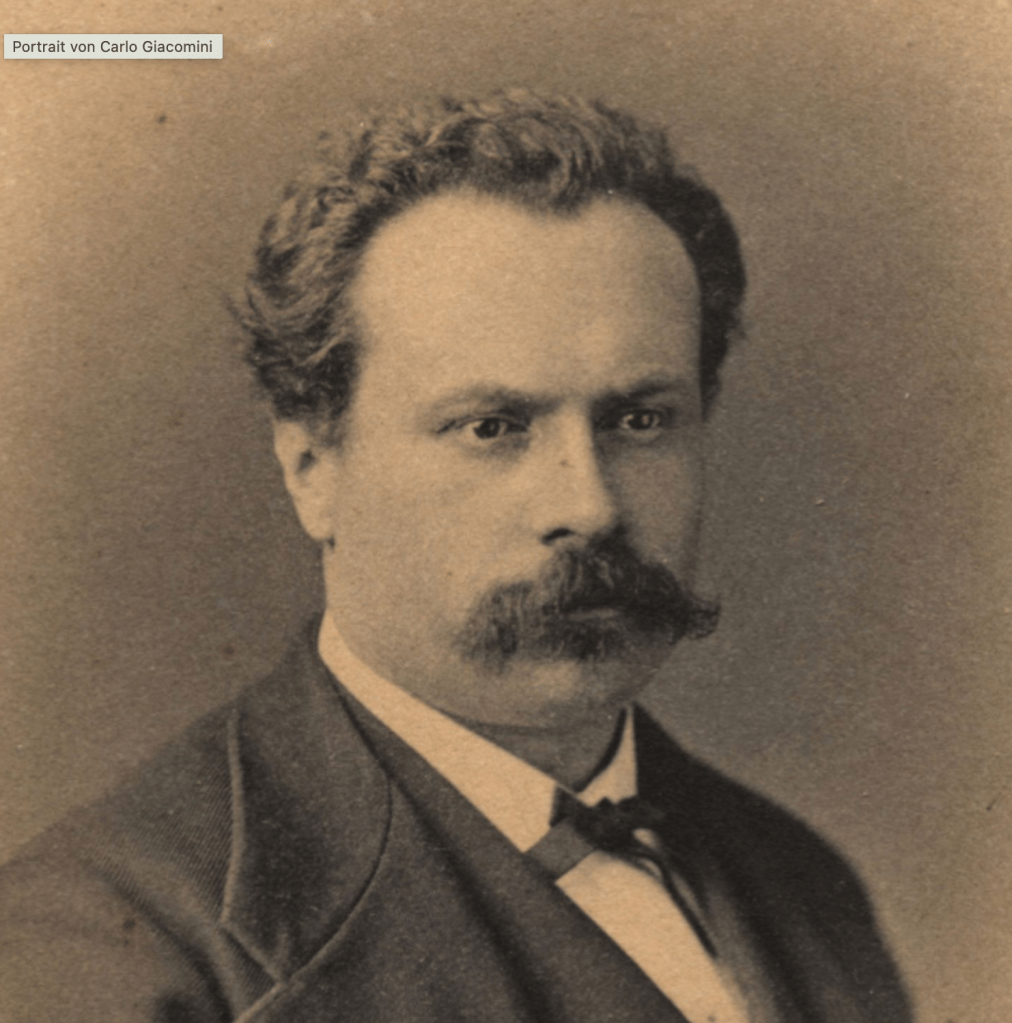
Portrait of Carlo Giacomini (1840-1898), Professor of Anatomy at the University of Turin and director of the Museo di Anatomia Umana Luigi Rolando.
The room at the end of the nave, which I referred to as an apse above, the “holiest part” of the museum, is dedicated to several collections devoted to the brain, its functions, and variations. The field was of central interest to many researchers associated to The University of Turin, which has even been credited as the place of birth of modern neuroscience. During the 19th century, Carlo Giacomini who was professor of Anatomy at the University of Turin and the director of the Museum of Anatomy from 1876, together with Luigi Rolando, dominated the field in Turin. Giacomini devoted a significant part of his career to describe and understand the surface of the cerebral hemispheres and their variation. He also developed a method to preserve brains by drying them using chloride of zink, alcohol, and glycerine. The preservation technique allowed him to collect 800 brains in a comparative research collection, which is now on display in this part of the museum. In this room we also find a part of his collection of crania (over 1,000) of individuals of known age and sex. The information in the exhibition is scarce (even when using the QR codes provided), and it never speaks of context of acquisition, only about the science these “specimens” were collected to support. In the same area there there is also a phrenological collection which once belonged to Joseph Gall, the founder of the discipline, and his pupil Johann Gaspar Spurzheim. It was donated to the museum in 1913.
Cabinet with a part of the collection of crania. The picture is published by the museum but has been intentionally blurred for this blog.
When considering the exhibitions of the mummified individuals and the ones with dwarfism and giantism described above, it would be easy to conclude that the human body was simply an object of science to be collected and studied. The disciplines represented in the museum seem to objectify the “Other” – the disabled, the poor, and the colonised. Context does not seem to matter, and the identity of the individual is only important as it helps establish scientifically significant variables such as biological sex and age of death. But, then, I encounter the anatomised remains of Carlo Giacomo himself, in a display case in the centre of his own research and teaching collection, and I start to wonder if, perhaps, the ideology extends into other, less scientific realms of perception as well.
When he died, Carlo Giacomo donated his body to the museum to be anatomised so that his skeleton and brain (treated according to his specific instructions) could be studied and displayed. The language of the will specifying this donation to the collection is included in the exhibition. At first it might seem like a straightforward donation to science, but the wording of the text reveals additional layers. It reads:
“Being neither an advocate of cremation nor cemeteries, I would like my bones to be laid to rest in the Anatomical Institute,” (—) “I would also like my brain to be preserved with my method and placed in the Museum together with the others.”
It thus appears that this was not simply a donation to science but an actual “laying to rest.” For Carlo Giacomo, the museum appears to have been a more pleasant place for his body than the traditional places of disposal. Did he feel this way due to the fact that the university was so familiar to him that it provided a sort of “home,” or was it that he felt more at ease being surrounded by science, order and hygiene? If so, did he actually think actively that the others his text actually mentions also were included in this type of care? Or were “the others” simply specimens whom he would now join, providing variation and measurements, growing the comparative sample by one? Here, the position on the spectrum all of the sudden starts to move in interesting, surprising, and potentially contradictory ways. The “Cathedral to Science” revelas itself not just as a place of worship and teaching of a new gospel, but also as a place where the dead rest in a privileged place.
The cabinet containing the skeleton and brain of Carlo Giacomo. The photo published by the museum has been intentionally blurred for this blog.
Given the many triggering aspect of the current exhibition, some of which have been discussed above, it would, of course, be absurd to propose this museum as a model for how to think ethically about human remains. But the example of Carlo Giacomo’s will still invites us to reflect not only on the complexity and contradictions at work in the past, but also, perhaps on productive ways to rethink museums for the future.
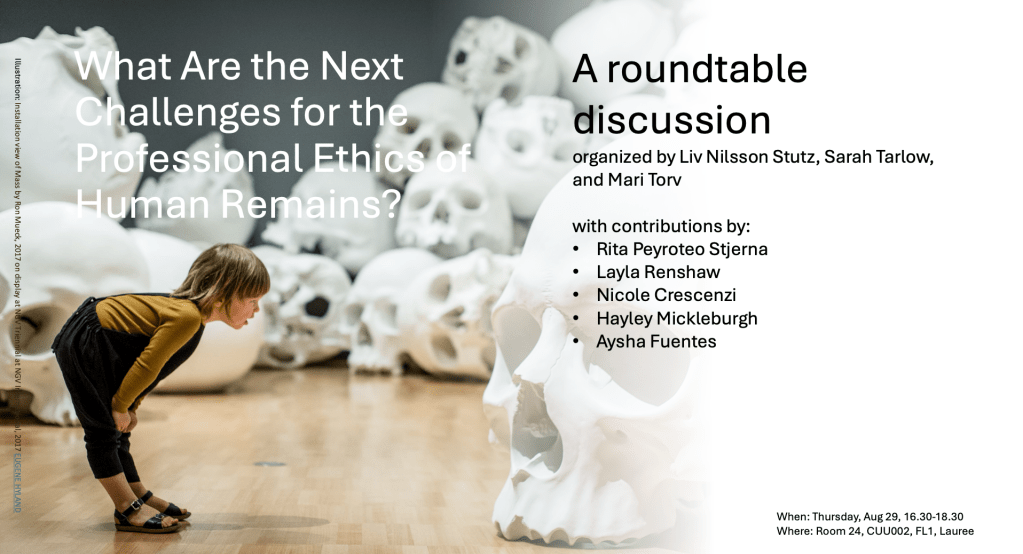
At the annual meeting for the Association for European Archaeologists at Sapienza University in Rome, August 28-31, 2024, Ethical Entanglements organised a roundtable discussion called “What are the Next Challenges for the Professional Ethics of Human Remains.” It might be relevant to note that when we submitted the proposal for the conference we were asked to merge with another session on ethics in biomolecular archaeology. We were happy to do this, but the fact that only two proposals to this year’s conference were focused on professional ethics is somewhat concerning. For perspective: this conference allegedly had 5000 delegates and, from a glance through the abstract book, over 1000 sessions (!). A keyword search of the final program revealed that this was indeed the only session devoted to ethics that ended up in the final program. Are we really, as a field, done with ethics? Are we fed up, or is the problem really considered to be solved?
Poster for the round table discussion.
To stimulate discussion and a freer from of exploration, we opted for a round table format this year instead of a regular session. The panel consisted of current and former members of the Ethical Entanglements team and invited speakers who in different ways have inspired our work in the past years:
Rita Peyroteo Stjerna, is an archaeologist of death and bioarchaeologist, and member of the Ethical Entanglements team where her research is focused on the ethics of the biomolecular dimension of human remains research. Her current affiliation is Linnaeus University and its Center for Colonial and Postcolonial Studies called Concurrences.
Layla Renshaw, Assistant Professor at Kingston University, UK, is specialised in the combination of forensic science and social science in her interdisciplinary research on mass graves, post-conflict contexts and Human Rights investigations. Her background brings unique perspectives on ethics, ranging from the political implications of the past, of memory, and loss in post-conflict contexts, to medical ethics in forensic science.
Hayley Mickleburgh, is an Assistant Professor at the University of Amsterdam. She is an archaeologist and biological anthropologist with a focus on archaeothanatology, forensic science, sensory archaeology, and digital archaeology. Hayley was part of the original Ethical Entanglements team, and her experience in forensic science has been an important inspiration for developing ideas that overlap with medical ethics and ethics of care.
Ayesha Fuentes, is an objects conservator at the Cambridge Museum of Archaeology and Anthropology, with a special interest in Asian material religion including the use of human remains in objects, and the ethics of museum practice. Her profile brought a much needed perspective from the museum side, but also an original understanding of the use of human remains as meaningful components of material culture.
Nicole Crescenzi, is a Ph D student at IMT Lucca, Italy. Her work investigates the care for human remains in museums with a focus on the experience of the public of the exhibition of human remains. Nicole is a member of Ethical Entanglements as she has become integrated into the group as a guest researcher and PhD student.
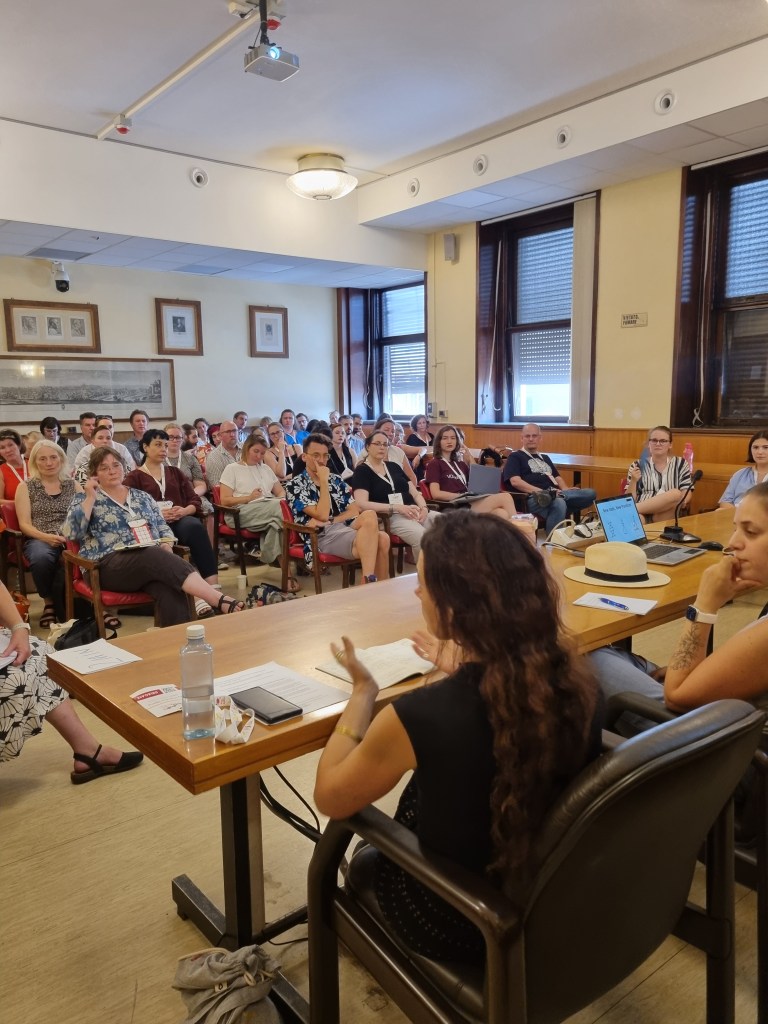
A full room for the panel discussion “What are the next challenges for the professional ethics of human remains?” at the EAAs in Rome, August 2024, Rome. Photo by Liv Nilsson Stutz.
The purpose of the roundtable was to provide a space for open exploration of emerging ethical challenges. The conversation started out with the specialist perspectives represented by the panel, but also engaged the audience. The discussion was future oriented and structured in three themes:
The first segment, New tools, New Practices explored how the very definition of human remains is changing rapidly with new research methods including biomolecules (including DNA, isotopes, etc), 3D-scanning and reproduction, and how new practices such as Open Science require completely new ethical considerations. It was pointed out that while some of these challenges are not entirely new (museums have long curated potentially sensitive photographs of human bodies), the current development calls for a more robust approach to the ethical challenges. We also noted that while we are aware of the problems we do not yet have any solutions to this issue, and the field keeps moving ever faster.
The discussion explored different options of solutions for museums, including community engagement, and repatriation. But it was also asked: is it not our professional duty to make museums a safe space for human remains?
A second segment, New Awarenesses, New Sensibilities started by discussing categories of vulnerablilities that are not often considered in the debate framed mostly by the postcolonial critique. Hayley Mickleburgh shared the example of a collection of crania from an orphanage in Amsterdam. How can we best care for the remains of these often very young and marginalised girls from 19th century? The discussion explored different options of solutions for museums, including community engagement, and repatriation. But it was also asked: is it not our professional duty to make museums a safe space for human remains? A topic that was further explored by Nicole Crescenzi and Liv Nilsson Stutz in a regular paper in a museum oriented session the following day.
Another significant theme broached in this segment was the disciplinary legacy of violence that permeates biological anthropology. Many of the methods and teaching materials we use today, and that have made their way into the disciplinary practice, were developed within a space of violence. How do we as a discipline address this legacy?
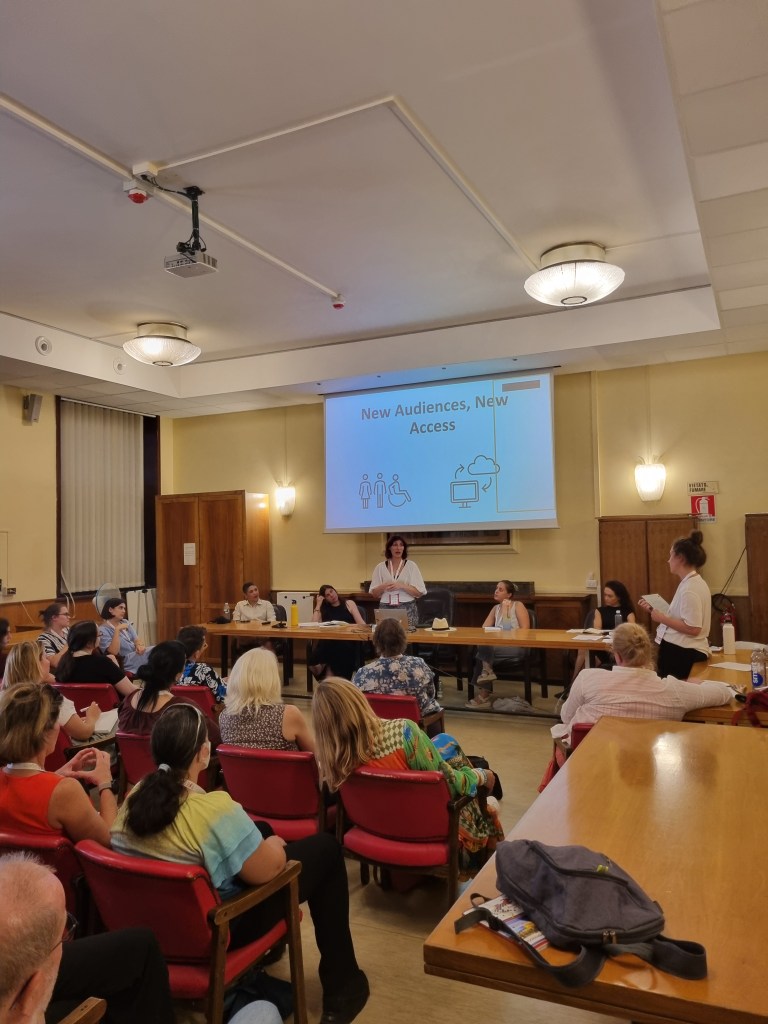
In the segment on “New Audiences, New Access” Hayley Mickleburgh brought up the importance but also the challenges of teaching ethics in a meaningful and engaged way. Photo by Liv Nilsson Stutz.
In a final segment called New Audiences, New Access the discussion focused on teaching and social media. Many raised the concern that despite the fact that the disciplines of archaeology and biological anthropology are clearly both aware of their ethical complexities, we still have a very limited engagement with these issues in universities across Europe. Teachers struggle with the difficult challenge of providing meaningful, engaging, and long term learning opportunities for students with limited time to cover more and more material. All agreed that it is important to include ethics continuously through the process, but all also struggled with how to make this happen in an increasingly austere university context. At this point the audience, who had been impatiently waiting, started to spontaneously participate and we decided to open up the floor for discussion.
Despite the late hour of the day (16.30-18.30), the sweltering heat of Rome in August (35°C), and the limited air conditioning in the room, the audience was active and engaged in brilliant conversation. Among the interesting points made in the audience I noted Sofia Voutsaki’s (Professor of Greek Archaeology at the University of Groningen, the Netherlands) point about how ethics can be weaponised, and that we need to be aware of that dimension in our work as well. On a related topic, Megan Perry (professor of anthropology at East Carolina University, USA) discussed the difficulties of a one size fits all approach to what it means to be ethical. What do you do, she asked, if you work in a region where community engagement is difficult simply because the community is not really that interested? Does that mean that you are not being ethical, or do you need to force something just to qualify as “ethical”? (I paraphrase). And if you do – is this not unethical?
It was also suggested that we may underestimate how much we as archaeologists and biological anthropologists actually engage with professional ethics. One voice in the audience pointed out that we in fact have a robust reflective literature, that at least makes us aware of the issues, in particular regarding the political dimensions of our field. I agree to an extent. It is true that archaeologists and anthropologists for decades have engaged with their disciplinary history, and, to some degree, professional ethics – perhaps more than colleagues in other disciplines with whom we now often collaborate.
I agree that as a field we have a tradition of being reflexive and we have resources and tools to act ethically. But even so, what is lacking, in my opinion, is a deeper and more critical engagement with ethics. One that is not limited to a list of “what not to do,” but consists of a thoughtful reflective attitude that engages professional ethics as dynamic and ongoing practice. One that keeps conversations like the one we were having in that room going, allowing the reflexivity to permeate our professional practice.
A good illustration of this was an audience member working with DNA analysis. He shared that as a biologist he had received no training in the history of his discipline. In comparison, it would seem that archaeology, museology, and anthropology are doing OK. I agree that as a field we have a tradition of being reflexive and we have resources and tools to act ethically. But even so, what is lacking, in my opinion, is a deeper and more critical engagement with ethics. One that is not limited to a list of “what not to do,” but consists of a thoughtful reflective attitude that engages professional ethics as dynamic and ongoing practice. One that keeps conversations like the one we were having in that room going, allowing the reflexivity to permeate our professional practice.
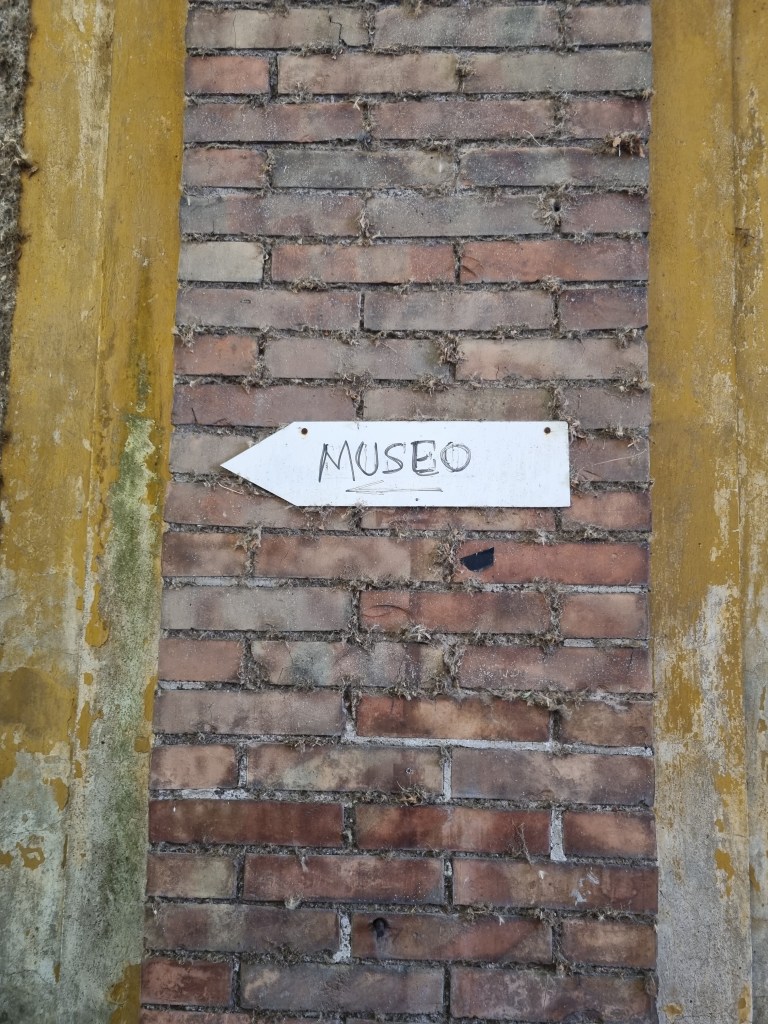
A humble sign directing visitors to one of the many museums in Rome. Among the themes the panel discussed was how we can make museums safe spaces for human remains as new sensibilities emerge in our understanding of them. Photo by Liv Nilsson Stutz.
When the session ended at 18.30 we left the room, not only with more questions (being a cliché it is also often true), but also with the feeling that the field is buzzing with energy and desire to discuss and explore these issues, and the realisation that with colleagues like the ones in this room, from all across Europe and the US, and from a range disciplines, we are making progress toward more reflective professional ethics. The engagement, the willingness to explore and to share that characterised the discussion constituted a stark contrast to the lack of formal opportunities to do so at this conference. But while I initially had wondered if the field is fed up with ethics–if we are “done”–my worries were proven unfounded. Leaving the room that warm evening I could not help but thinking – yes, there is a lot of work to do, but we will be OK.
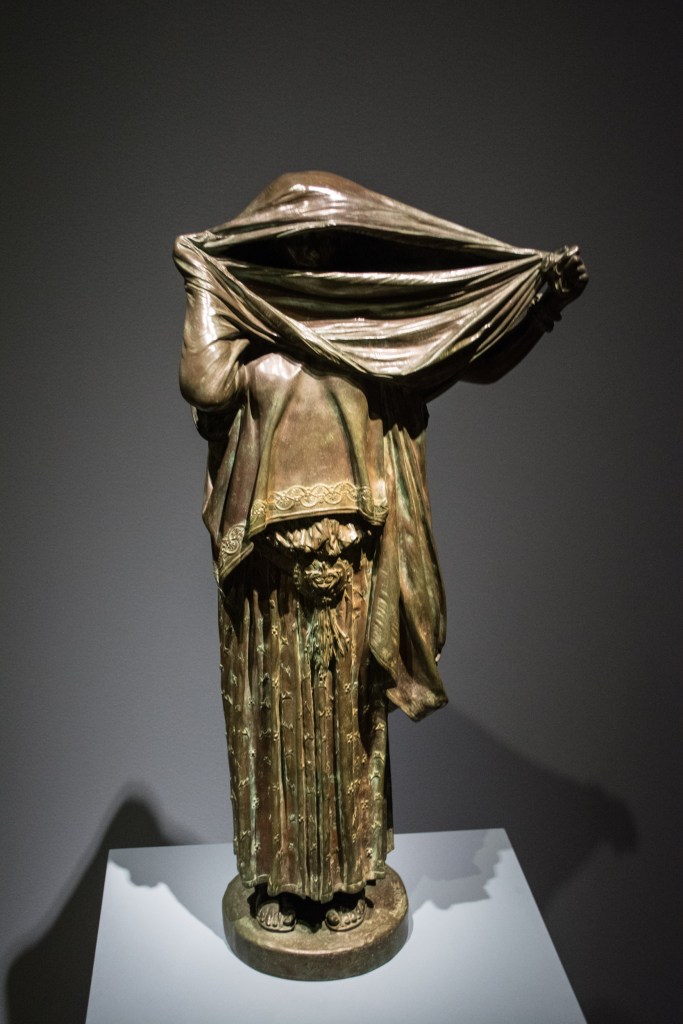
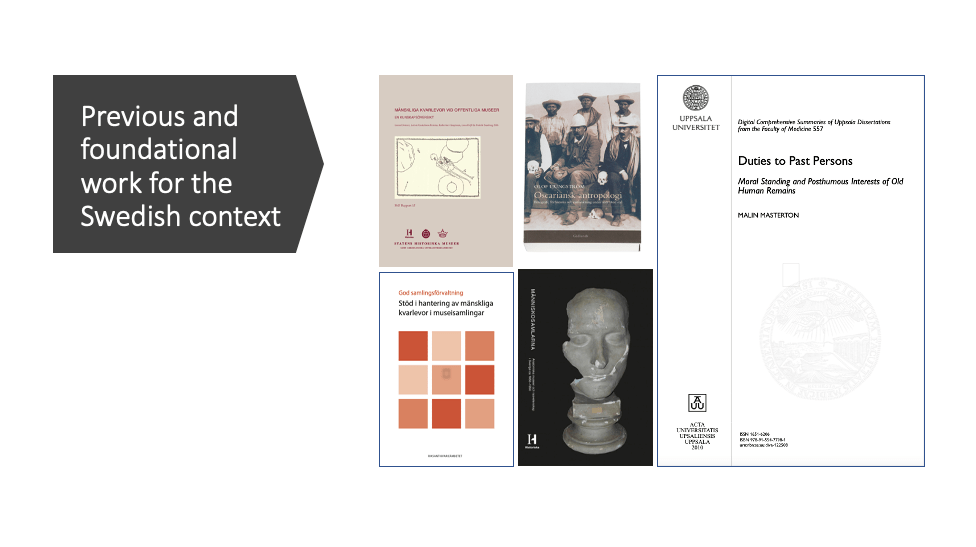
Should we consider the privacy of people in the past? Is the concept relevant, or applicable? Is privacy only a concern for the living in our contemporary moment – so obsessed by the boundary between the personal and the private in a constantly marketing and sharing economy, or is privacy a more universal human right? What duties do we have to past persons (to paraphrase the excellent PhD thesis by Malin Masterton)?
Woman With Veil – Cleveland Museum of Art (33666109413).jpg” by Tim Evanson from Cleveland Heights, Ohio, USA is licensed under CC BY-SA 2.0.
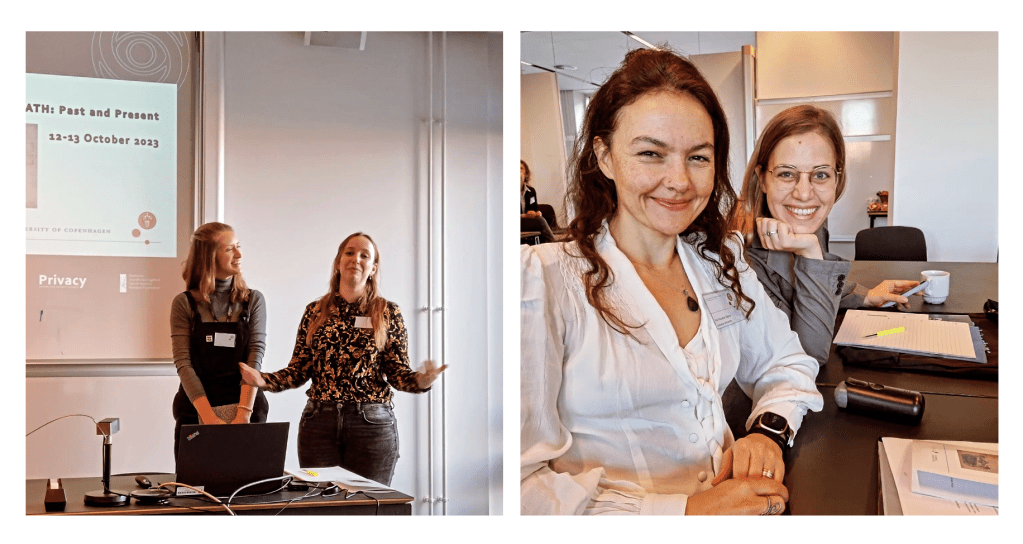
October 12-13, 2023 Ethical Entanglements participated in a conference at the Center for Privacy Studies at the University of Copenhagen, called Privacy and Death: Past and Present. The conference was interdisciplinary, with contributions from history, classics, archaeology, theology, law, and ethnography, and explored a range of issues touching on the broader issues of privacy and death. Ethical Entanglements contributed with two papers: Nicole Crescesnzi presented the paper: Human Remains and Privacy – a Contemporary Bias? and Liv Nilsson Stutz and Rita Peyroteo Stjerna presented The New Frontiers of Postmortem Privacy: Negotiating the Research Ethics of Human Remains in the Era of the Third Science Revolution in Archaeology.
Left: The organisers of the conference Felicia Fricke and Natacha Klein Käfer welcome the attendants. Right: Rita Peyroteo Stjerna and Nicole Crescenzi before their presentations. Photos by Liv Nilsson Stutz.
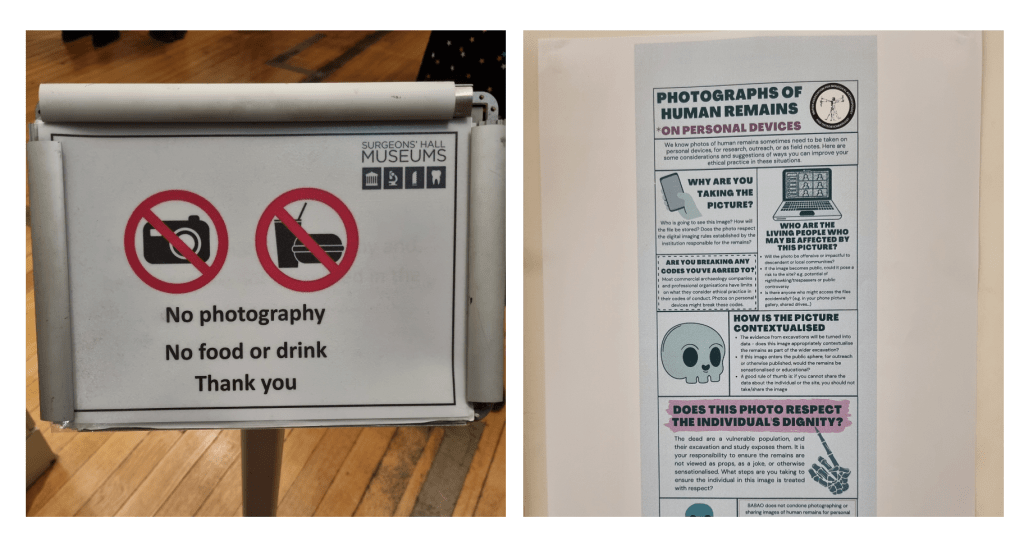
The privacy of old human remains is an issue that tends to lie at the periphery of our debates. There is rarely any explicit discussion about it, but we increasingly see the emergence of professional practices that may indicate a growing consideration, albeit almost invisible. One example of this is how human remains today, sometimes, are blurred in public presentations. If you are a regular reader of this blog, you may have noticed that we also do this from time to time. Another is the signage that is becoming more common, especially in anatomical and pathological exhibitions, of a no photography policy. It is quite possible that there are multiple reasons for this, and it is rarely explicitly stated that this is to protect the privacy of the dead, but it speaks of an awakening sensibility. In some rare cases, as shown below (right) in the signage at the Anatomical Museum at the University of Edinburgh, the sign elaborates on the reason, and in the process, it triggers reflection and raises awareness. In this context it is an explicit and integrated part of the university training of future professionals working in the field, but perhaps this would be useful also in more public exhibitions.
Signeage restricting photography of human remains. Left: at Surgeon’s Hall in Edinburgh, and Right: in the Anatomical Museum at the University of Edinburgh. Photos by Liv Nilsson Stutz.
These types of signs are much more rare, and perhaps even non existent in archaeological exhibitions, demonstrating yet again the gradual move on the spectrum of lived life toward object of science with the age, state of preservation, and disciplinary categorisation of the specimen. Sometimes a sense of respect and dignity is alluded to in the ways in which the human remains are exhibited also in archaeological museums, for example through separation to a reserved space, and dimmed lighting. However, the topic is very rarely addressed head on, and if anybody’s sensitivities are considered in archaeological and historic exhibitions, it is in general the contemporary visitor’s. Nicole Crescenzi’s work on the public’s reception of these types of exhibitions across Europe shows that there are multiple ways in which the exhibition is experienced.
The conference raised many important issues, and several fascinating talks on topics from problematic collections to contemporary mourning practices, that all led to stimulating discussions. For Ethical Entanglements is was especially interesting to see the overlaps of concerns and shared challenges in the keynote address by legal scholar Edina Harbinja entitled An Uneasy Relationship Between Post-mortem Privacy and the Law. She defines post-mortem privacy broadly as the right of a person to preserve and control what becomes of his or her reputation, dignity, secrets, or memory, after death (see also Edwards and Harbinja 2013). While Dr Harbinja’s work is focused on the contemporary digital world, the fundamental questions it raises concern, in our opinion, also the long dead and research ethics in our fields. She proceeded to introducing the term of post-mortal privacy which protects informatised bodies expressed, stored, mediated, and curated through technology – as an immortality by proxy. In our contemporary world this refers to images shared and data stored online and in cloud services and on platforms held by private companies. But, what about the research data we extract from old human remains and share as part of our research activities? These issues relate immediately to the presentation by Liv Nilsson Stutz and Rita Peyroteo Stjerna on the attitudes to postmortem privacy in bio-molecular archaeology, and where Rita’s work, collecting data through interviews with scientists working in the fields, shows both a need and a desire for more thorough professional ethical development in this emerging and constantly changing field.
Can we turn the key to protect private data from spreading – and if we do, does that not violate standards for good scientific practice?
Can we turn the key to protect private data from spreading – and if we do, does that not violate standards for good scientific practice? The challenge, of course, is to determine what such a new practice might look like. With multiple ethics at stake, and with best practices sometimes in complete conflict with one another – for example Open Data vs respect for post-mortem/post-mortal privacy, the challenge is complex. Ultimately we come back to the same question: who still counts as a person enough to deserve this kind of consideration. The answer is not obvious.
“Privacy” by rpongsaj is licensed under CC BY 2.0.
The work also has interesting relevance for thinking about museums. Through her research, Dr Harbinja could see that a lot of the progress to think through and identify solutions on behalf of social media platforms such as Facebook, with regards to post-mortem privacy, emerged ad hoc. Somebody in the company started to think about this as they experienced the death of a client who was also a loved one – for example a parent. It struck me that there is a similarity here between the social media giants and museums: they both store sensitive and valuable things, they have inward facing and outward facing responisbilities, and – they both react ad hoc. It is a learning process, but it is also one that in the very moment teaches you to be better prepared the next time if you want to be able to serve your stakeholders well.
Featured image: “PRIVATE NO ENTRY” by Brad Higham is licensed under CC BY 2.0.
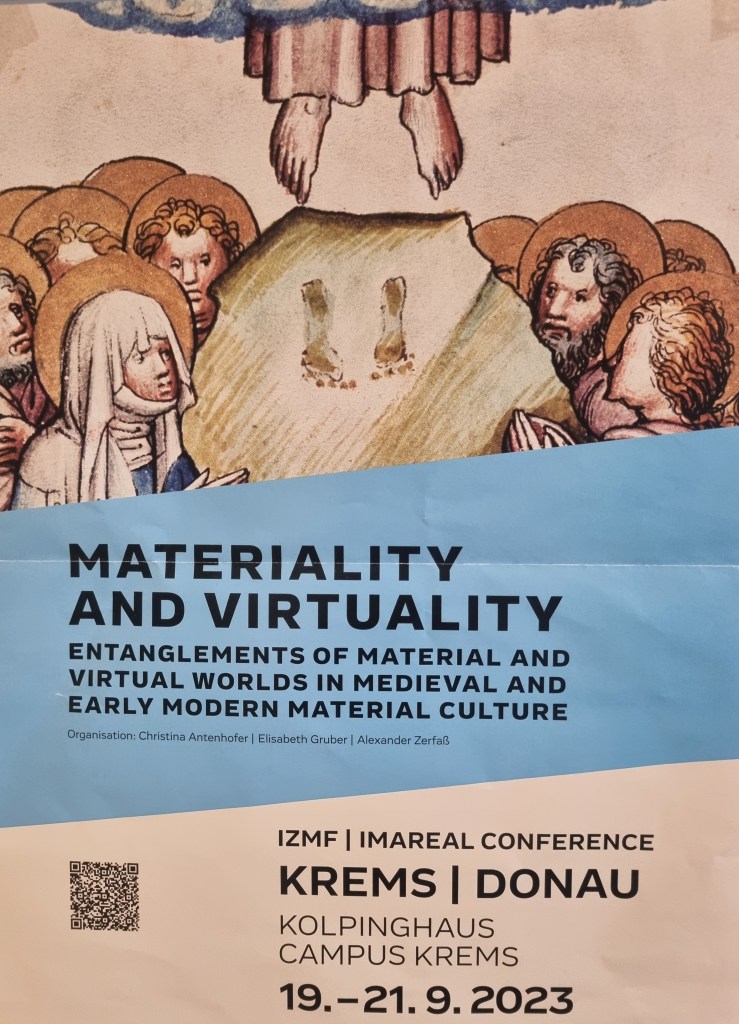
One basic principle of this approach is the Aristotelian meaning of virtuality as “capacity” or ‘”dynamis” that does not come to action, but nevertheless has an effect on reality.
“The virtual is not physically present, but it is ‘seemingly real’ (being a simulation that has real effects). It is not material, but nevertheless existent – the latter distinguishes it from fiction. The virtual has real effects, because it refers as potentiality to its actualization and is effective in this reference.”
IMAREAL
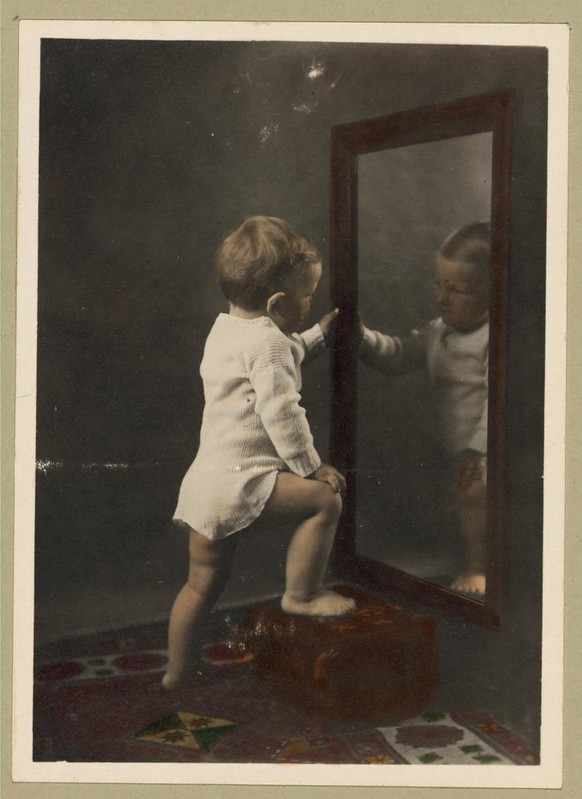
To clarify their position, IMAREAL uses the mirror as paradigm: here the virtual unfolds on the surface of the material – the reflection is the result of causal interactions at the material level. And while the virtual only unfolds on the surface of the material, it has real effects “because we actualize it on the reflecting body.”
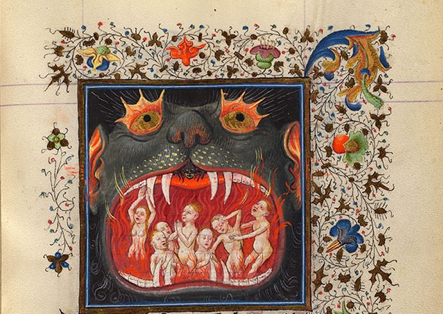
IMAREAL argues that this property – dynamis – capacity and ability to move, did not enter the world with postmodernism and contemporary virtual reality technology, but has probably always been a part of human culture, and one that can definitively be traced in medieval artwork, architecture, and material culture. In a medieval world, and in particular when considering the afterlife, the concept of the body/soul, creates an interesting paradox. The afterlife journey, potentially including heaven, hell, and purgatory, are transcendentary – not conceived of as material, but with long lasting effect on reality, and it is undertaken by the double corporeality of the dead – the physical remains, buried in the ground and left on earth, and the avatar soul that wanders on into the afterlife. Central to this world view however, is the soul’s maintenance of a certain corporeality – one that can be tortured in purgatory and burn in hell. The soul is thus not completely shedding its metaphorical skin – the avatar is a virtual, and while it no longer is understood as material, it still has “the capacity of the corporeal” (e.g. in the sensation of pain).
The immaterial soul/body that can still feel pain. Illustrated by Medieval Hellmouth 1. Cropped image of MS M.917/945, p. 180–f. 97r in The Hours of Catherine of Cleves.
When relating this to research ethics and human remains, it strikes me that the complex nature of the cultural understanding of the human body that we encounter in the debates about research ethics and reburial, resonates with this framework of entanglement between the virtual and the material. The dead body is simultaneoulsy striking in its materiality and the embodiment of a lived life. The virtual emerges from the surface of the bones (or other materiality). This is where the ethical dilemma presents itself as we seek to understand how to best care for them. We wonder if the human remains on the shelves in the museum storage still feel something – if they experience limbo and displacement. If they would consent to being there.
“Questions relating to subject and object, to their distinction and their union, should be put in terms of time, rather than of space”
henri bergson, matter and memory
Bergson’s idea of the relationship between the material and the virtual departs from the neural capacity of the human body, with the nervous system as a “material symbol” of the inner energy we call memory. The capacity for memory allows for humans to depart from their here and now, and in a way extricate themselves for a period of time. Although Bergson does not elaborate on rituals specifically, it appears that this model of the virtual can be connected to Catherine Bell’s concept of ritualisation as a strategic way to act to, in a sense, fire up a connectedness to the overall structure – a continuous whole, which in a Bergsonian sense is a continuity of material extensity in which each individual moves as connected parts of a whole. Yet, we as individuals also function in a time space continuum and through material bodies, and hence the material and the virtual is situated in time and connected to memory.
Building on Bergson, Deleuze elaborated on the term of virtuality, bringing it into closer contact with the real, arguing that it is an aspect of reality that is ideal, but nonetheless real. The virtual is thus not opposed to the real, but opposed to the “actual.” The “real,” he argued, is opposed to the “possible,” thus introducing a movement toward possible realisations, through the concept of duration.
While the conjoined twins previously on display at the Museum of Natural History in Gothenburg (and subsequently cremated) may not actually have felt anything, our encounter with their materiality moves us, and triggers associations in us that enters into a virtuality in which they do. Photo published by Swedish radio and intentionally blurred for this blog.
I am not a philosopher, and I no doubt simplify these complex thoughts in absurdum, but what I take form this is that the idea of elaborating with the connections between the virtual and the material may be fertile ground for further critical examination of the category “old human remains,” as situated in the space between the material and the virtual, between the object and the subject, between the past and the present. In this liminal space lies a multitude of dimensions to explore. To bring the issue back to a series of immediate and concrete challenges, this framework could be valuable as we explore the complexities of 3D-reproductions for display and researech. The relationship between the materiality of the original and the materiality of the copy passes through a digital and virtual space – like the metaphoric mirror, yet enters back into a the world in a materiality that potentially prompts all the ethical issues embedded in the original and authentic specimen – with added dimensions of ownership and control, no longer only of the original, but of the copy as well. But the concepts of virtuality and materiality also brings us back to the foundational questions of the project:
does the age of old human remains affect the relationship between the subject and the object?
can the materiality of the human remains ever be separated froheorym the virtuality that unfolds from our encounter with them, and to what extent is can this virtuality be separated from the cultural context of the encounter? Is there such a thing as an invariably essential virtuality, or can it only emerge in each encounter, making it potentially endlessly variable?
To what extent do we all feel compelled to enter into contact with the virtual as we encounter the materiality of human remains? Are they inhabited by some sort of universal quality that in this respect, transcends cultural difference?
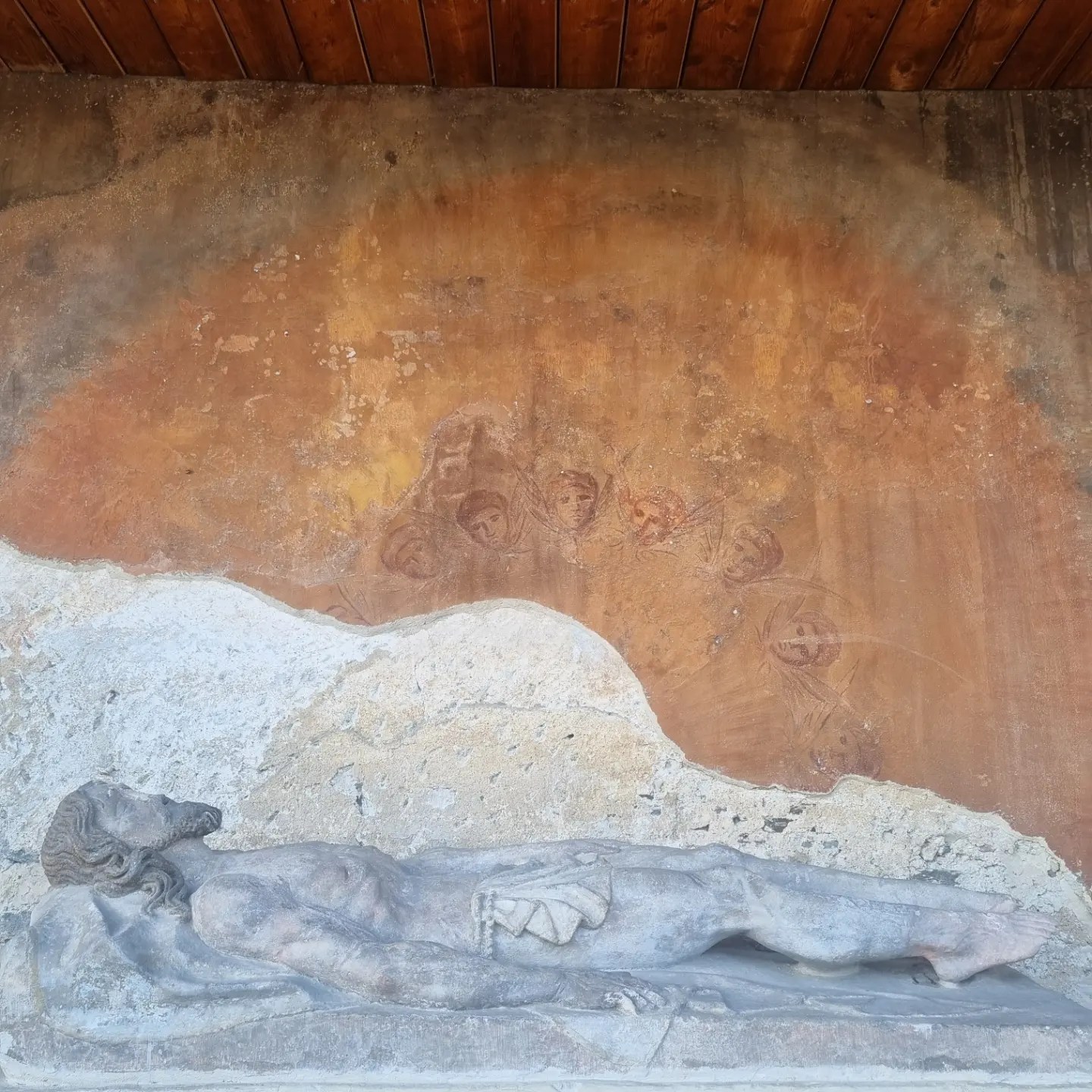
Featured image: the body of Christ. Piarist Church of Our Lady, Krems. Photo by Liv Nilsson Stutz
Museum collections and data management were the main themes, but other hot topics emerged, such as long-standing communication problems between geneticists, archaeologists, and museum curators, and the consequences of misinterpretation (or, overinterpretation) of history using aDNA evidence.
The webinar was chaired by Sean Denham from the University of Stavanger and the Norwegian Committee for Research Ethics on Human Remains. Guest speakers were Eske Willerslev (Lundbeck Foundation GeoGenetics Centre, Globe Institute, University of Copenhagen), Birgitte Skar (Norwegian University of Science and Technology University Museum), Martin Furholt (Institute of Pre- and Protohistoric Archaeology, Kiel University), and Kerstin Lidén (Department of Archaeology and Classical Studies, Stockholm University).
Misalignment of interests
Misalignment of interests was a common thread throughout the seminar, although not always explicitly. In my view, thinking more carefully about “misalignments” can be a useful way to reflect about aDNA “ethical entanglements” of research on human remains. By stepping back and allowing ourselves to think and observe, we may be able to unpack and start addressing the multiple dimensions that make this topic so challenging. More broadly, it allows us to reflect on the challenges of interdisciplinarity, the plurality of the past, and importantly: who sets the agenda?
Professor Willerslev kicked-off the webinar by outlining some of the multiple groups involved in aDNA research – the aDNA data producers (the labs), the data consumers (archaeologists, anthropologists, also the labs), those who control access to material, and those who curate the material (not necessarily the same as those who control the material) – and how different interests can collide.
One simple example is the sampling of archaeological human bones. While the aDNA researcher seeks to sample as much as possible to increase the chances of obtaining the best possible DNA, the museum curator has the role to conserve the specimen, while at the same time, the museum is in the service of society that researches heritage.
Are we doing these things because they are scientific relevant or just because we can?
Professor Kerstin Lidén
Misalignment issues can also emerge from different approaches to data storage and ownership, data access and reuse of results, or data commercialization, as highlighted by Associate Professor Skar. It may even include issues of authorship and dilemmas regarding open access. While open access has been the golden standard in the natural sciences, it may carry important ethical concerns regarding collections and data.
Another example of misalignment of interests, may not be as straightforward, but it is of fundamental importance not only when outlining research projects, but also on how scientists use and publish the data. When discussing the nature of aDNA research on the borderland between the natural sciences and humanities, Professor Lidén asked the important question: Are we doing these things because they are scientific relevant or just because we can?
Responsible ethical sampling
Expectations can also be misaligned. Finding common interests between the involved parties is a good start. However, it is also important to be clear about what can be achieved with the different methods and allocated resources.
Responsible sampling requires clear communication and understanding about what can and cannot be done with the different methods. aDNA data can be produced in different ways (i.e., mtDNA, genome wide capture, whole-genome shotgun sequencing), which in turn will set the boundaries about what can be investigated, now and in the future. As some of the speakers in the webinar highlighted, it is imperative to have a basic knowledge about what is at stake.
Even when applying the best possible methods, it is important to understand that some questions may require extra funding, highly specialized staff, and additional resources. As highlighted by Associate Professor Skar, in general museums are pleased to have the collections re-activated with new research, and aDNA projects can revitalize collections that have been sleeping in museum collections for decades. Alignment of expectations requires active participation in the research with critical input – but it may also be fruitful to collaborate by writing project grants together.
Responsible ethical sampling requires seeking the fine balance between the impact on collections and the outcome of knowledge. It requires willingness to apply interdisciplinarity at the highest level.
Some thoughts from a webinar
In just two-hours, this session addressed these and other important topics such as the Ethical dimensions of the use of aDNA data for archaeological interpretation and narrative building by Professor Furholt. If you read this far, I strongly recommend watching the full recording. I am hoping this can be the topic of a full-day conference sooner than later!
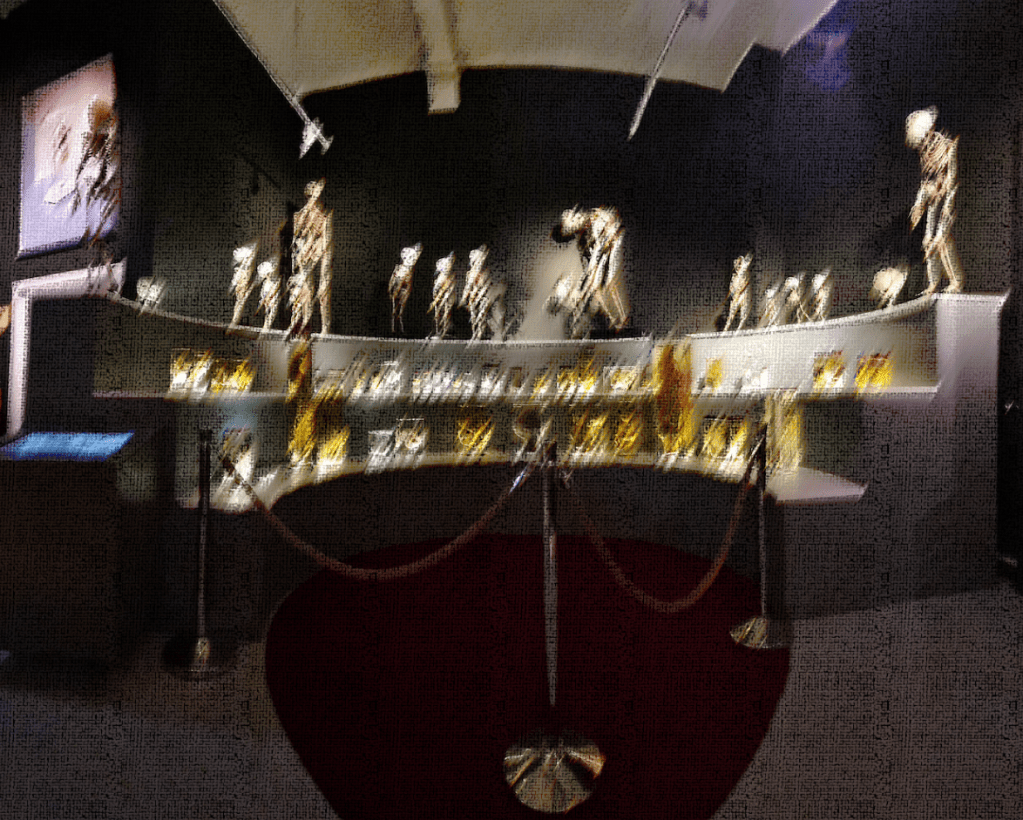
After our visit in Amsterdam I continued to Groningen which aslo has an anatomical collection on display in its University Museum. Here, the anatomical collection is part of the exhibition on the history of the university and its scholars, and it is thus clearly inscribed in the broader history of research and scholarship. A separate room is dedicated for this purpose. The anatomical display is arranged on stepped shelves organised in a semi-circle, with mounted skeletons on top and with preparations of body parts and organs on the lower shelves. The room has a claire-obscure quality with dimmed lights and spots illuminating the white bones, and the body parts almost glowing through the amber coloured liquid of the old preparations. The display is accompanied by an interactive screen where visitors can see close-up photographs of each displayed specimen and read descriptions about pathologies and preparations. The exhibition is extremely interesting, quite moving, and, I must admit, very aesthetic.
The anatomical collection arranged on stepped semi shelves organised in a semi-circle. Photo by Liv Nilsson Stutz (intentionally manipulated)
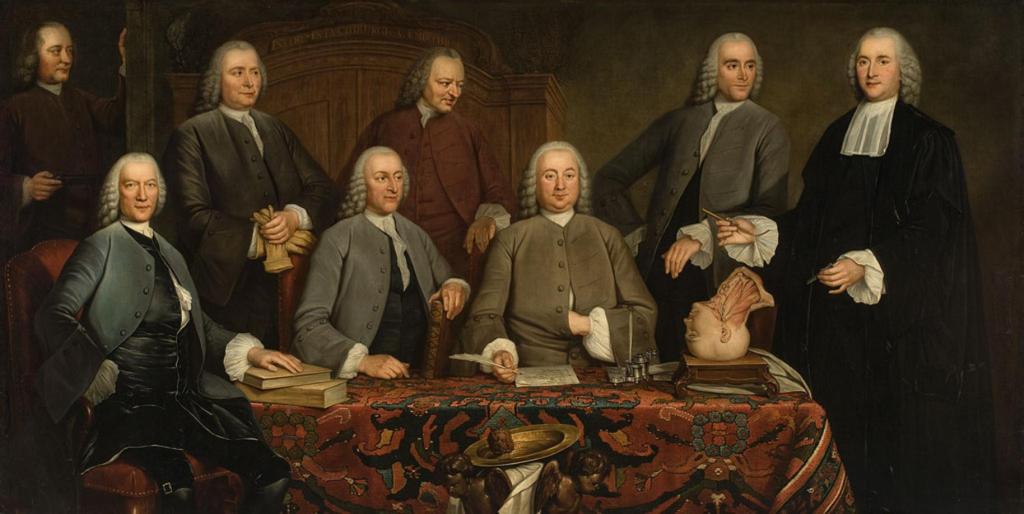
On the opposite side in the same room, an exhibition is devoted to the contribution of Petrus Camper (1722-1789). Camper was Professor Medicinae Theoreticae, Anatomiae, Chirurgiae et Botanicae at the University of Groningen from 1763 and to his death. He was an academic celebrity of his time and a leading scholar in many fields, including comparative anatomy.
Tibout Regters – De anatomische les van Petrus Camper. Amsterdam Museum, Public Domain.
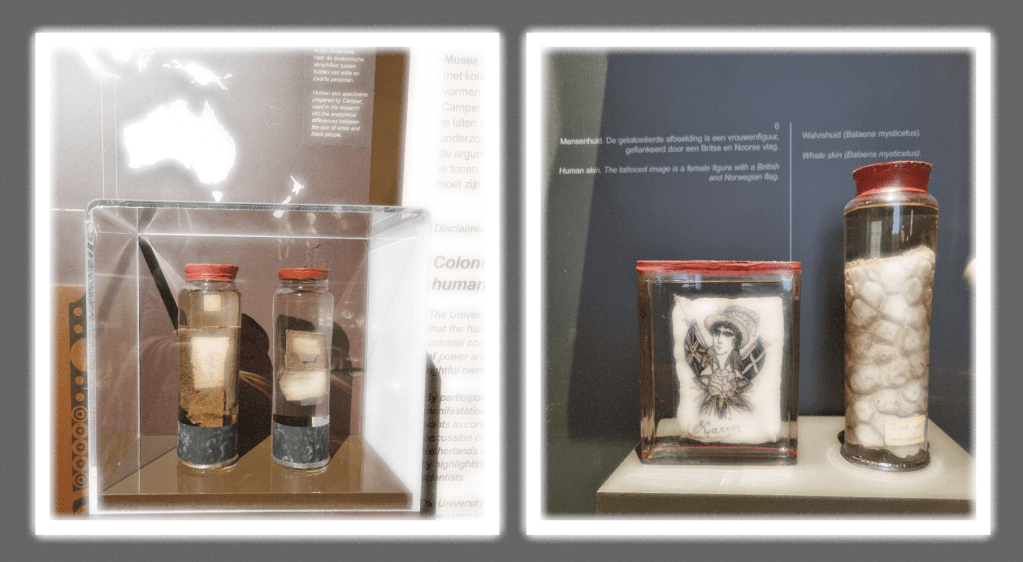
As part of his research, Camper studied the anatomical differences between humans and apes, in particular crania and larynxes. To address the context of this research, the museum signage both celebrates and problematises his legacy. The exhibition called “Bitterzoet Erfgoed” (Bittersweet Heritage) informs us that while Camper lived in a time of colonialism and slavery, he “did not accept this worldview” (i.e. slavery). That being said, the text continues “Camper’s work cannot be separated from colonial history,” as “he collected specimens (human and animal) from colonised regions including the skulls and skin specimens on display in this exhibition.” The next sentence sums up the central dilemma:
“This raises complex questions. We want to tell the story of Petrus Camper, but also treat the remains of people who did not choose to become subjects of scientific research with respect”
Text in the exhibition about Petrus Camper at the University Museum in Groningen.
Several human crania are on display in this part of the exhibition, and a color coded map indicates their provenance including Madagascar, Europe, Java, Russian Republic of Kalmykia, Angola, China, Jakarta, and Mongolia.
Display of skulls from different parts of the world. The crania wee collected by Camper for his research into comparative anatomy. Photo: Liv Nilsson Stutz, intentionally blurred.
The transparent and honest way in which the exhibition communicates about the content of the collections and their problematic history, is interesting and quite admirable. The display of remains such as skin samples brings the hot button topic of racism into focus. The exhibition strikes the balance between communicating that while Camper’s research was not seeking to support racism as an ideology and a “scientific” concept, he still worked within a context of colonialism and othering. And while not explicitly stated, the knowledgeable visitor can probably fill in the blanks as to how this research tradition came to be enmeshed with race science only a few generations later. While taking risk with this display, the museum paradoxically takes responsibility for its collections as it does not try to avoid confronting difficult issues or hide its collections.
Skin samples on display in the museum. To the left, skin samples form humans from different parts of the world, displayed in the Bittersweet Heritage exhibition. The samples were used by Camper to understand human variation between white and black skin. To the right, human tattooed skin (the face of a woman and the British and Norwegian flags) exhibited with the skin of whale to illustrate Camper’s work in comparative anatomy. Photos by Liv Nilsson Stutz, intentionally blurred.
Interestingly (and typically) the problematisation is limited to the anthropological research and exhibition, and does not discuss the medical collection displayed only a few meters away in the same room. The context of the “bitter sweet heritage” is not extended to include collection practices from other contexts (such as, presumably, maternity wards and other care facilities). This relates to a more general pattern that we can see in how different categories of human remains sometimes are treated with different consideration and levels of problematisation.
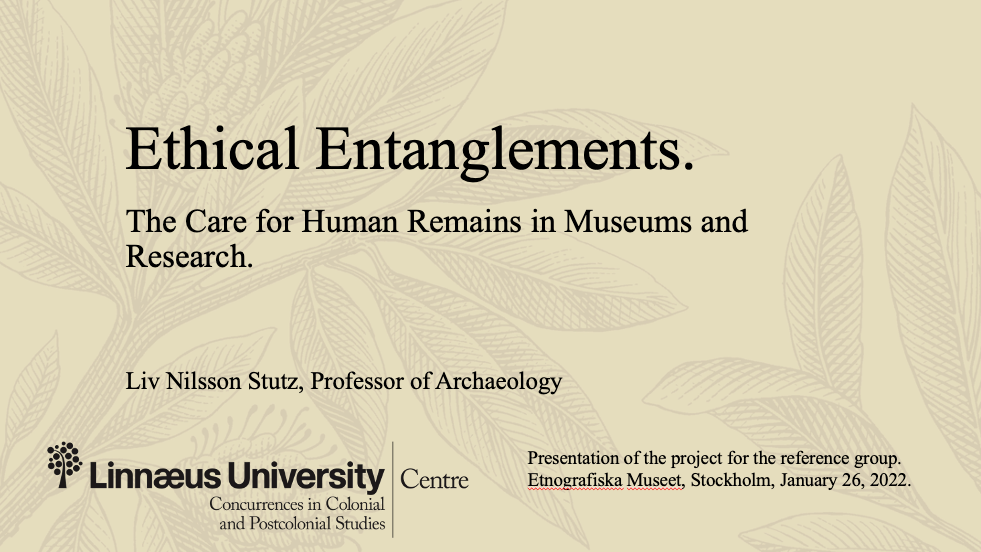
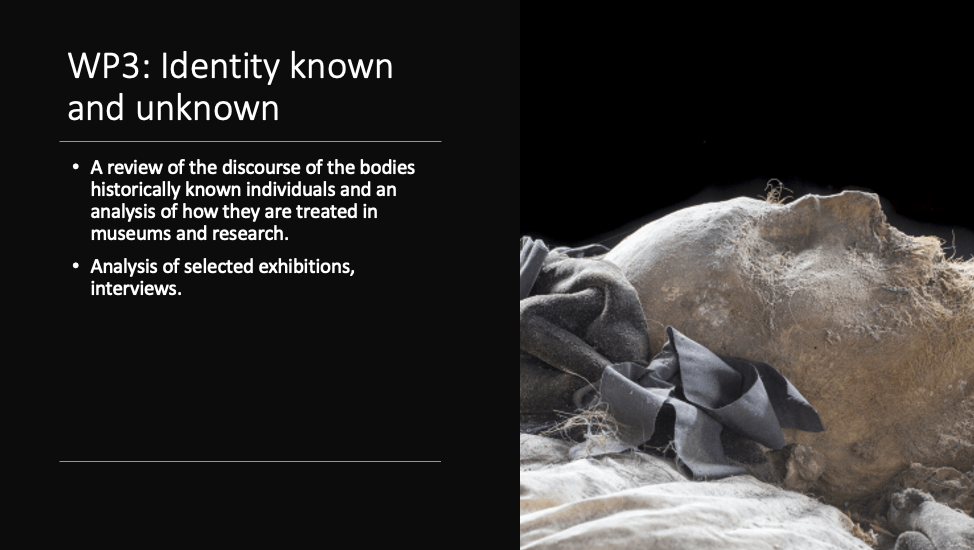
Last week (January 26-27) the researchers with Ethical Entanglements met with the advisory board for the project, including Fredrik Svanberg (Nordiska museet, Stockholm), Linda Andersson Burnett (Uppsala University), Olof Ljungström (Karolinska Instititutet), Malin Masterton (Örebro University), and Kicki Eldh (The Swedish National Heritage Board). The meeting was held at the Ethnographic Museum in Stockholm. The project members presented their respective work packages to the board and received invaluable feedback from the board members who represent a range of experiences and expertise that in different ways will enrich the project with perspectives from the museum world and Museology, Medical Ethics, the History of Ideas and Knowledge, Postcolonial Studies, and more broadly from a critical engagement with Humanities and Social Science research and its history.
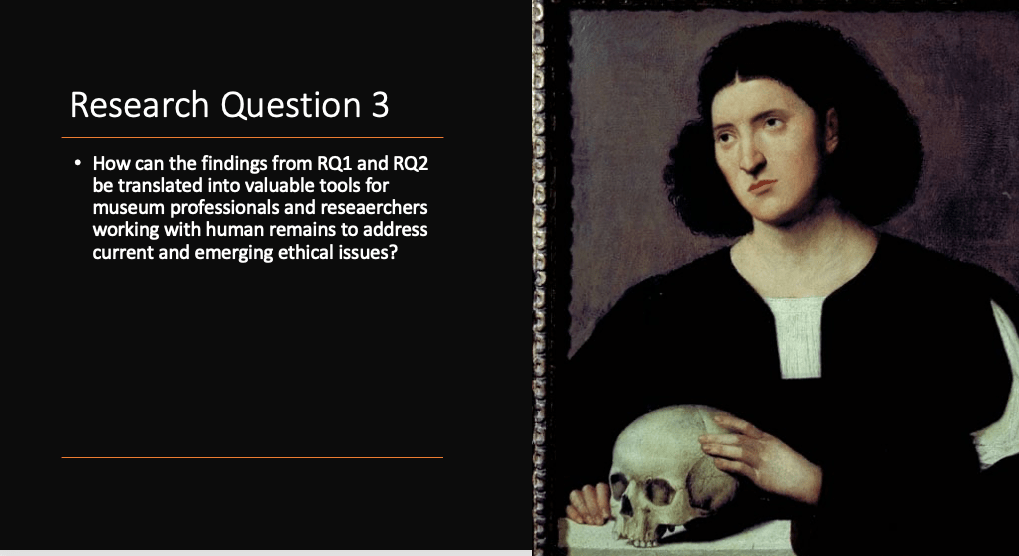
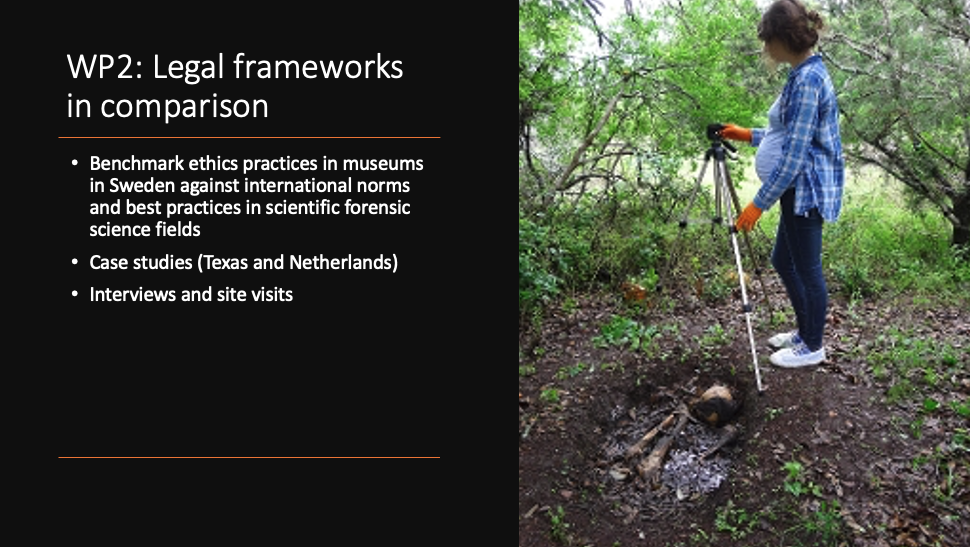
Abbreviated version of the ppt of the overall project
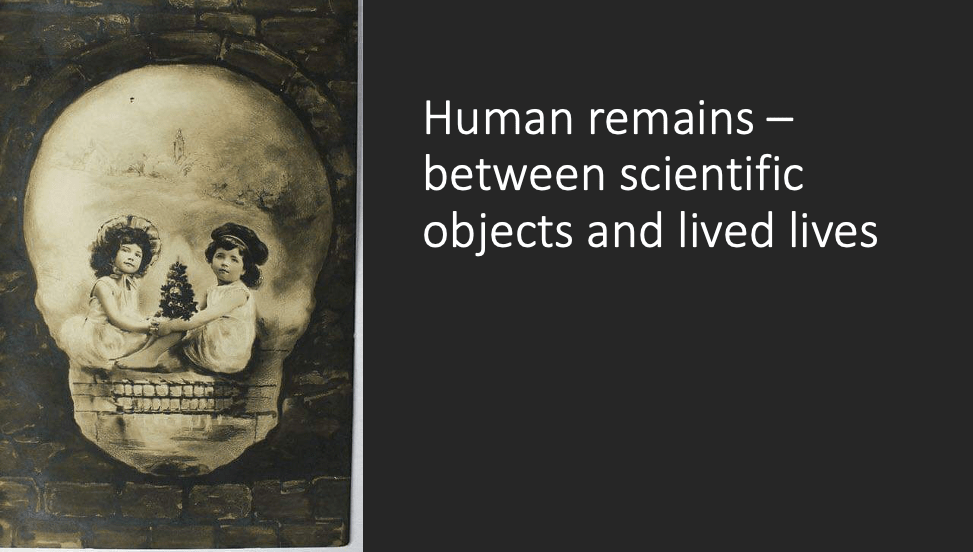
A lot of the discussions came to focus on the ways in which human remains are positioned on a sliding scale, between object and subject, between lived lives and specimens for sciences, and sometimes between evidence and victim – and how their positioning on the scale changes over time, between cultures and academic disciplines.
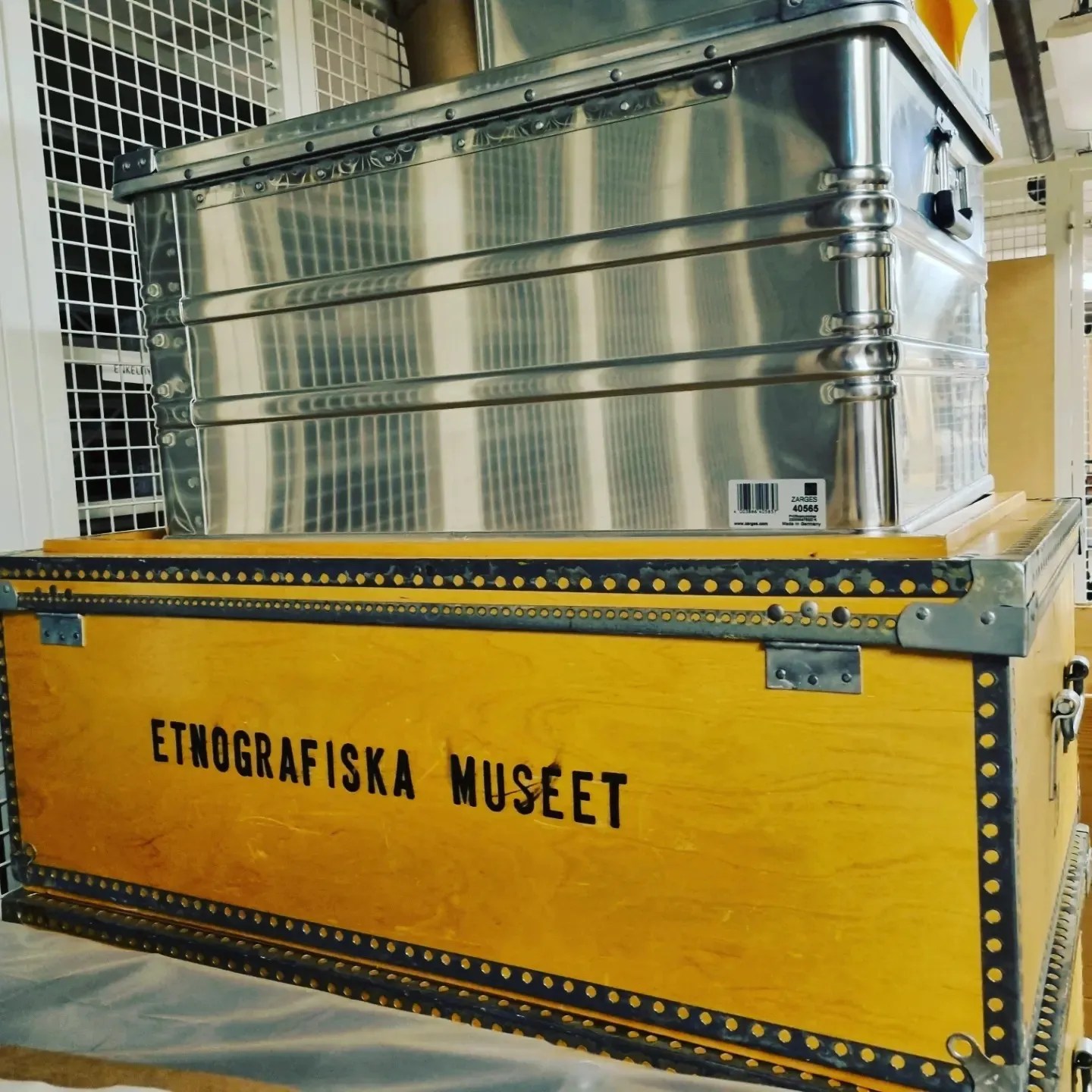
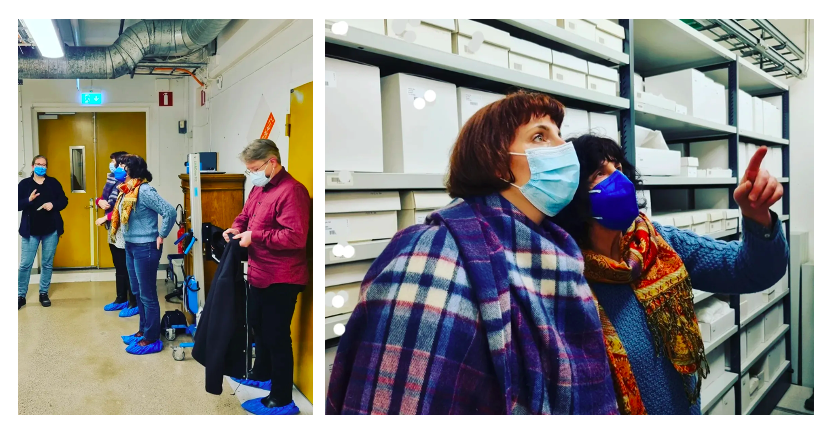
visit to the storage area of the Ethnographic Museum, photo: Liv Nilsson Stutz
After the meeting, Mia Broné, objects coordinator for the four National Museums of World Culture (Etnografiska museet, Medelhavsmuseet, Östasiatiska museet, och Världskulturmuseet), presented the work that these museums in different ways have worked intentionally with their collections of human remains, and the rich and complex history of the collections. We finished with a visit to the storage area where we continued to discuss practice and ethics of care.
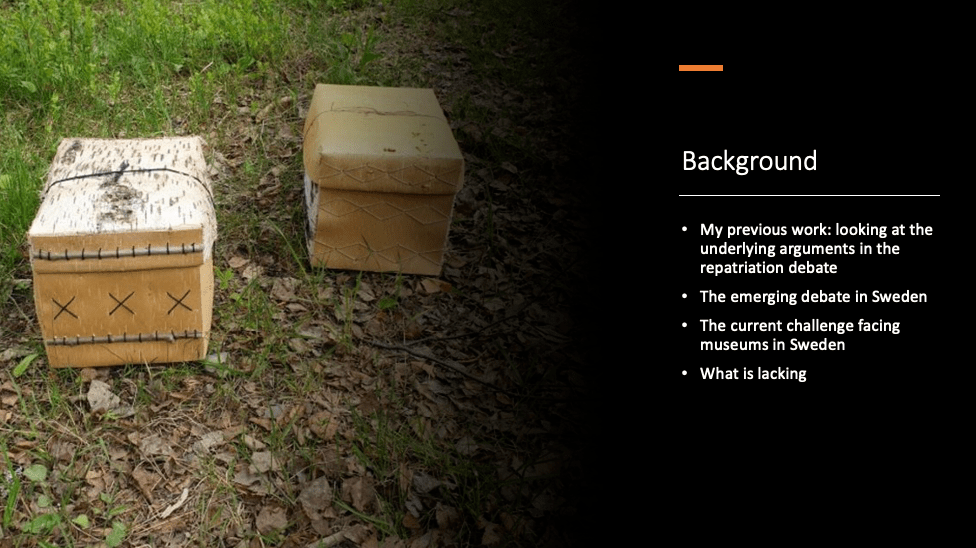
In recent conversations with the Swedish museum community, I have been made aware of the challenges they face as people, who for various reasons are in possession of human remains, approach them to make a donation. This may sound odd, but it is quite common, and this probably marks a shift in the culture regarding our attitudes to human remains and the ethics that surround them. And it presents museums, as institutions trusted to “take care of things,” with a difficult conundrum.
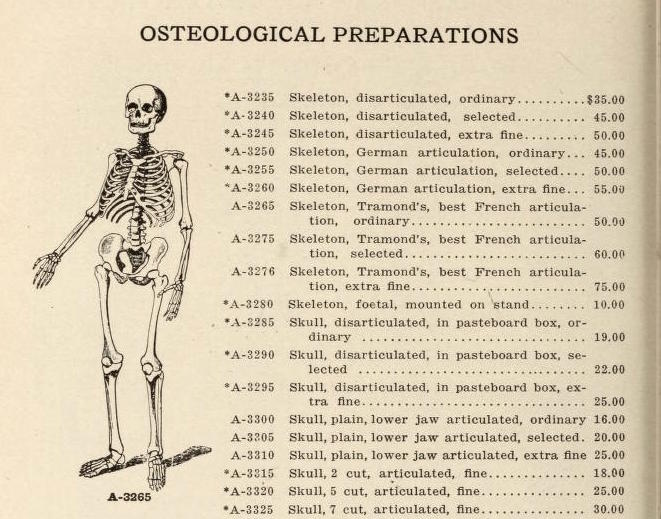
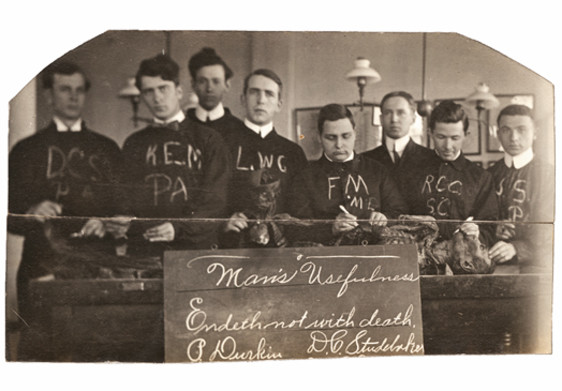
Most of these spontaneous donations are offered by family members of deceased physicians and dentists. In the past, it was quite common for medical students to acquire anatomical specimen as part of their professional training. Having a cranium at home probably initially helped you to learn some anatomy, but it is likely that the possession soon transitioned from pedagogical tool to professional symbolic marker. Studies have shown that the engagement with the human corpse, especially in the form of the practice of dissection, functioned as a rite of passage in medical schools in the past – and still to some degree can be argued to play that role. Through the completion of dissection the medical student becomes marked off as different, as part of a groups of specialists for whom engagement with cadavers is normal. This would have played a central role in professional identity production, and memorial photographs from medical schools indicate that this was also a performance which underscored the distinction from “civilians.” Here, the shock factor, played a part in marking the identity. The keeping of human remains, most commonly skulls, but also other specimen, in the office or even at home, can probably be viewed as part of the same professional identity performance.
American Medical Student dissection group photograph. The students are posing with the cadaver on a table signed with the name of the school and the year of their class – a common practice to commemorate the event. Photo from Discover Magazine (link above).
But times change – both outside of and in the medical profession. Dissection has become a place where medical ethics are taught, and it is no longer considered unproblematic to keep human remains around the house. Consequently, as older members of the profession die, the skulls kept on shelves start to become an issue to be solved by the survivors.
Another source for these remains is teaching institutions, like public schools, that historically would have a teaching skeleton in their pedagogical arsenal, and perhaps also as a symbol of science more generally (since advanced anatomy never was a core component of the curriculum for most students, although exceptions exist). A debate has emerged in the last few years also in the pedagogical community. Although an underresearched area, anecdotal evidence shows that cases of unethical practice can aslo be linked to these collections (like the case of a school skeleton in Strömsnäsbruk sourced from a marginalised local man who committed suicide in 1847). As the school system is being reformed, and schools reorganize and move to new or refurbished buildings, the old skeletons emerge as left overs from the past that need to be handled. With the change in the social and cultural debate they are no longer viewed as unproblematic, and perhaps their usefulness is also being questioned. Schools too are looking for ways to ethically dispose of or rid themselves of these bones. In some cases, like one in Strömsnäsbruk (and others), burial of the remains remind us of similar burials in cases of repatriation to indigenous peoples.
In a seminar held with museum representatives on Nov 12, 2022 and organised by the Nordic Network for Human Remains in Museums, different experiences were discussed. From the discussion it became clear that museums tend to avoid accessioning problematic human remains. Most of the museums have a policy based on perceived responsibility. For example, if the museum or institution can be connected to a university that provided the medical training of the person holding the remains, or if the remains to be returned has some other connection to the collections already held by the museum, then there is a certain responsibility to receive the remains. The responsibility is not only about personal ethics and postmortem dignity but can also be linked to the professional ethics of documenting the historical practices of collecting and using human remains. It is important to underscore that this is also a consideration that should not be neglected. Other museums only accept archaeological remains.
But when museums do not accept the spontaneous donations of human remains – what happens to them? Who takes responsibility?
The Swedish Church, The County Boards, the Police, and the Swedish National Heritage Board can also be considered stakeholders with different responsibilities. But so can all the municipalities that are formally responsible for the school system in Sweden today, and even the Swedish National Agency for Education. Bottom line, it is often unclear for an individual or an organisation, like a school, seeking guidance on how to properly dispose of human remains where to turn if the museum turns them down.
Most commonly people are referred to the Swedish Church that has routines for destruction, but it is still a bit unclear how to proceed since the organization is decentralized when it comes to burial rights and practice.
What I find fascinating in this discussion is that it so clearly illustrates that a new ethical dilemma has emerged as our social and cultural attitudes to human remains have changed.
What I find fascinating in this discussion is that it so clearly illustrates that a new ethical dilemma has emerged as our social and cultural attitudes to human remains have changed. This is a problem that did not exist in the public mind only a few decades ago. The issue spans many different professional and scientific spheres, from archaeology, to medicine, to forensics and to pedagogy. As it is no longer considered unproblematic to keep human remains in homes, offices, and school classrooms, we are all grappling with how to handle them. Should they be buried, destroyed, or preserved for teaching and research? How do we proceed?
A first step would be to clarify who in the long chain of stakeholders has the responsibility not to curate or dispose of, but to research the history and provenience of these remains. This is a first necessary step to even know what an ethical next step would be. But this is costly. It is not reasonable to lay the burden on individual museums that have no formal, historical connection to the remains, which is probably the reason why they are not willing and able to accept these donations. At the same time, it is not reasonable to lay this burden on the relatives of the collector, especially not if they explicitly want to pass them on for ethical reasons.






 Ethical Entanglements