Addressing dark heritage in exhibitions. The University Museum in Groningen.

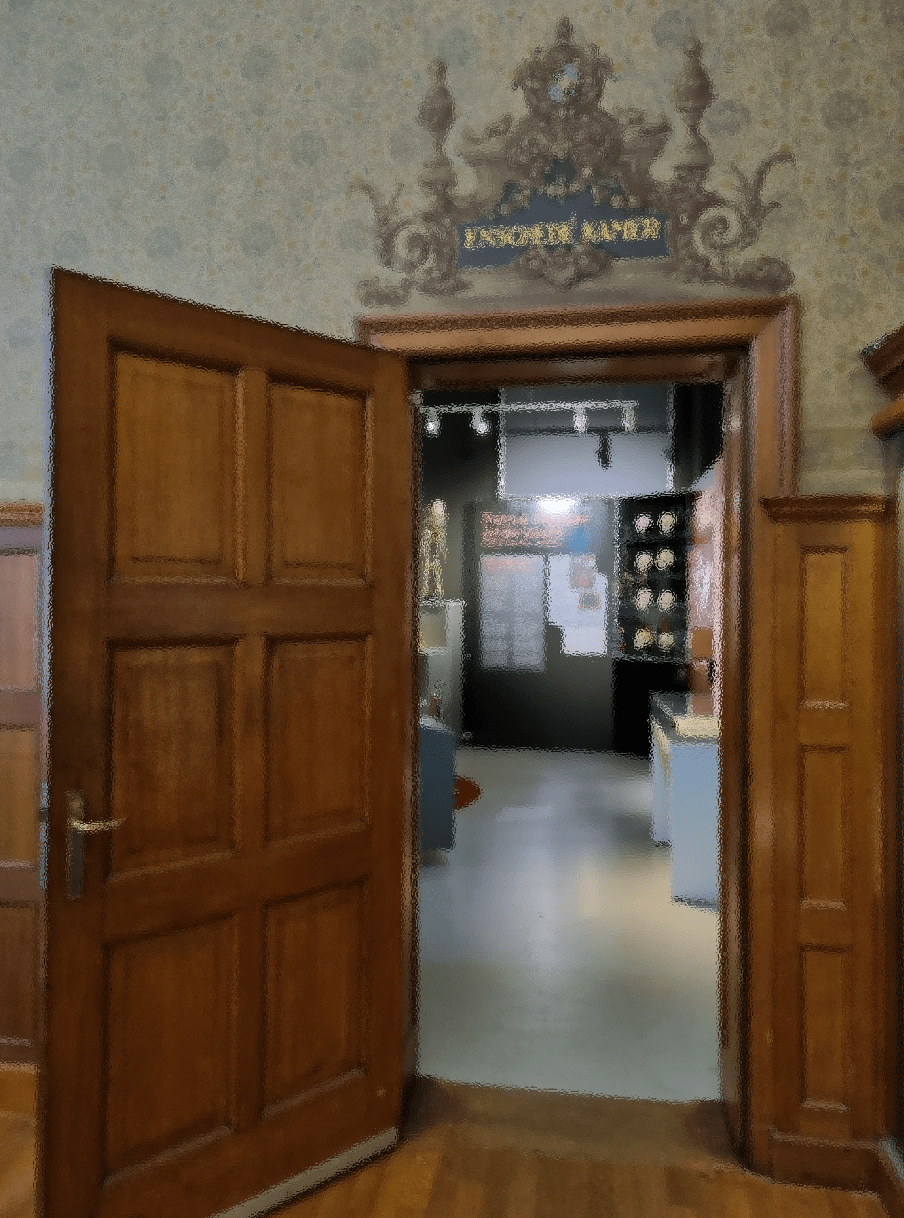
After our visit in Amsterdam I continued to Groningen which aslo has an anatomical collection on display in its University Museum. Here, the anatomical collection is part of the exhibition on the history of the university and its scholars, and it is thus clearly inscribed in the broader history of research and scholarship. A separate room is dedicated for this purpose. The anatomical display is arranged on stepped shelves organised in a semi-circle, with mounted skeletons on top and with preparations of body parts and organs on the lower shelves. The room has a claire-obscure quality with dimmed lights and spots illuminating the white bones, and the body parts almost glowing through the amber coloured liquid of the old preparations. The display is accompanied by an interactive screen where visitors can see close-up photographs of each displayed specimen and read descriptions about pathologies and preparations. The exhibition is extremely interesting, quite moving, and, I must admit, very aesthetic. 
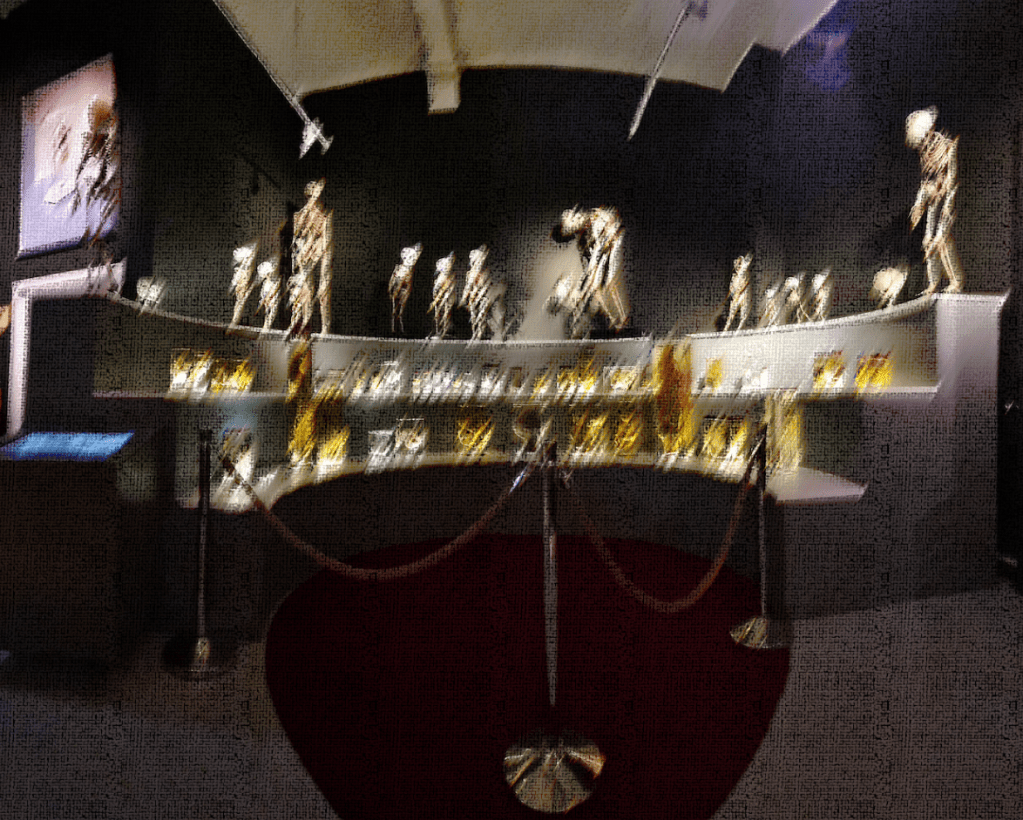
The anatomical collection arranged on stepped semi shelves organised in a semi-circle. Photo by Liv Nilsson Stutz (intentionally manipulated)

On the opposite side in the same room, an exhibition is devoted to the contribution of Petrus Camper (1722-1789). Camper was Professor Medicinae Theoreticae, Anatomiae, Chirurgiae et Botanicae at the University of Groningen from 1763 and to his death. He was an academic celebrity of his time and a leading scholar in many fields, including comparative anatomy.
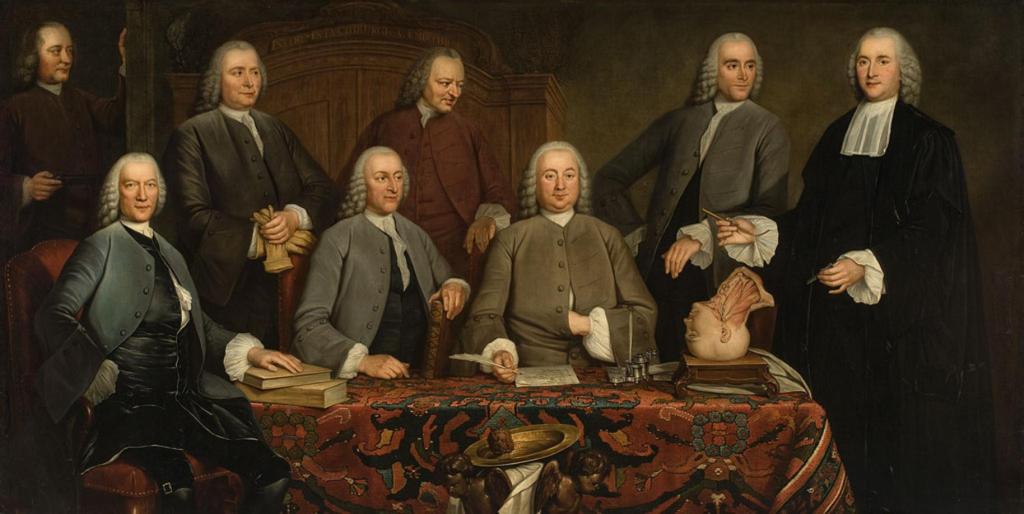
Tibout Regters – De anatomische les van Petrus Camper. Amsterdam Museum, Public Domain.

As part of his research, Camper studied the anatomical differences between humans and apes, in particular crania and larynxes. To address the context of this research, the museum signage both celebrates and problematises his legacy. The exhibition called “Bitterzoet Erfgoed” (Bittersweet Heritage) informs us that while Camper lived in a time of colonialism and slavery, he “did not accept this worldview” (i.e. slavery). That being said, the text continues “Camper’s work cannot be separated from colonial history,” as “he collected specimens (human and animal) from colonised regions including the skulls and skin specimens on display in this exhibition.” The next sentence sums up the central dilemma:

“This raises complex questions. We want to tell the story of Petrus Camper, but also treat the remains of people who did not choose to become subjects of scientific research with respect”

Text in the exhibition about Petrus Camper at the University Museum in Groningen.


Several human crania are on display in this part of the exhibition, and a color coded map indicates their provenance including Madagascar, Europe, Java, Russian Republic of Kalmykia, Angola, China, Jakarta, and Mongolia.

Display of skulls from different parts of the world. The crania wee collected by Camper for his research into comparative anatomy. Photo: Liv Nilsson Stutz, intentionally blurred.

The transparent and honest way in which the exhibition communicates about the content of the collections and their problematic history, is interesting and quite admirable. The display of remains such as skin samples brings the hot button topic of racism into focus. The exhibition strikes the balance between communicating that while Camper’s research was not seeking to support racism as an ideology and a “scientific” concept, he still worked within a context of colonialism and othering. And while not explicitly stated, the knowledgeable visitor can probably fill in the blanks as to how this research tradition came to be enmeshed with race science only a few generations later. While taking risk with this display, the museum paradoxically takes responsibility for its collections as it does not try to avoid confronting difficult issues or hide its collections.
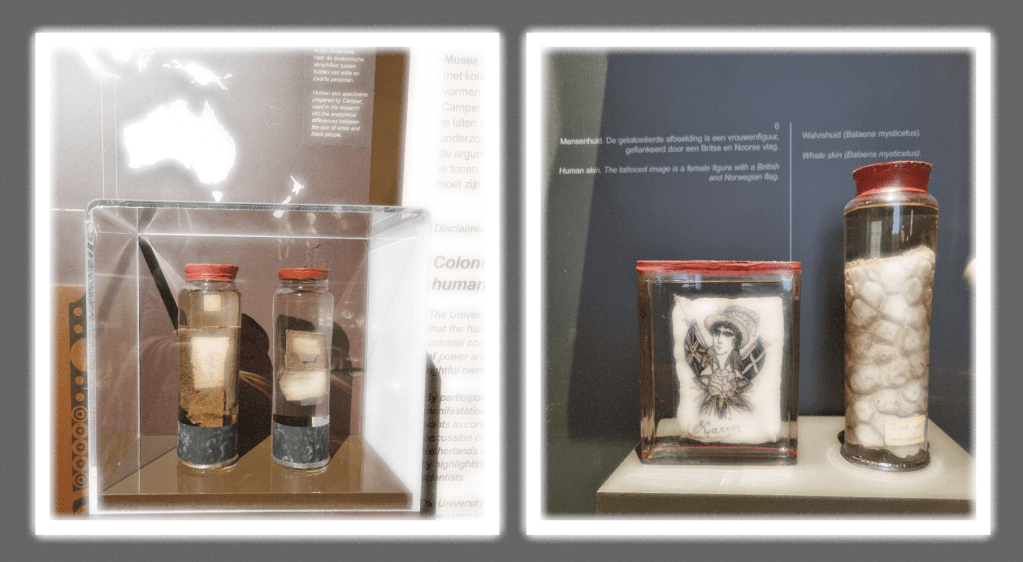
Skin samples on display in the museum. To the left, skin samples form humans from different parts of the world, displayed in the Bittersweet Heritage exhibition. The samples were used by Camper to understand human variation between white and black skin. To the right, human tattooed skin (the face of a woman and the British and Norwegian flags) exhibited with the skin of whale to illustrate Camper’s work in comparative anatomy. Photos by Liv Nilsson Stutz, intentionally blurred.

Interestingly (and typically) the problematisation is limited to the anthropological research and exhibition, and does not discuss the medical collection displayed only a few meters away in the same room. The context of the “bitter sweet heritage” is not extended to include collection practices from other contexts (such as, presumably, maternity wards and other care facilities). This relates to a more general pattern that we can see in how different categories of human remains sometimes are treated with different consideration and levels of problematisation.
Exploring Sustainable Collection Practices. Report from a workshop.

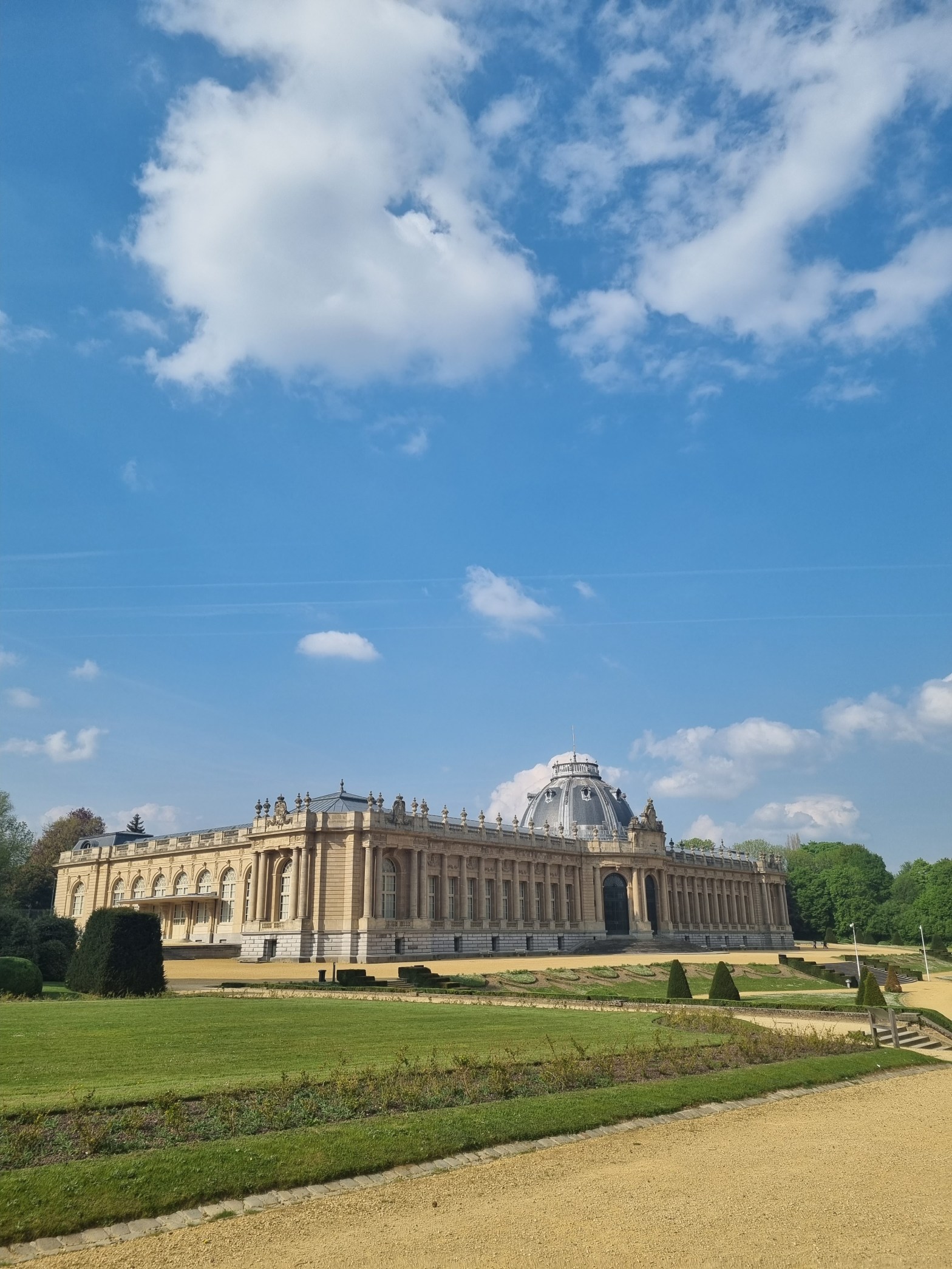
On May 2-4, 2022, I participated in a workshop “Museums, sustainability, collections” at the Africa Museum / the Royal Museum for Central Africa in Tervuren, Belgium. The workshop was organised within the European cooperation project “TAKING CARE – Ethnographic and World Cultures Museums as Spaces of Care” and included curators, conservators and other museum professionals from ethnographic museums from across Europe and Africa. A central focus of the TAKING CARE project is the climate crisis and the Anthropocene with a particular focus on entanglements with colonial histories and their reverberations in our contemporary world.

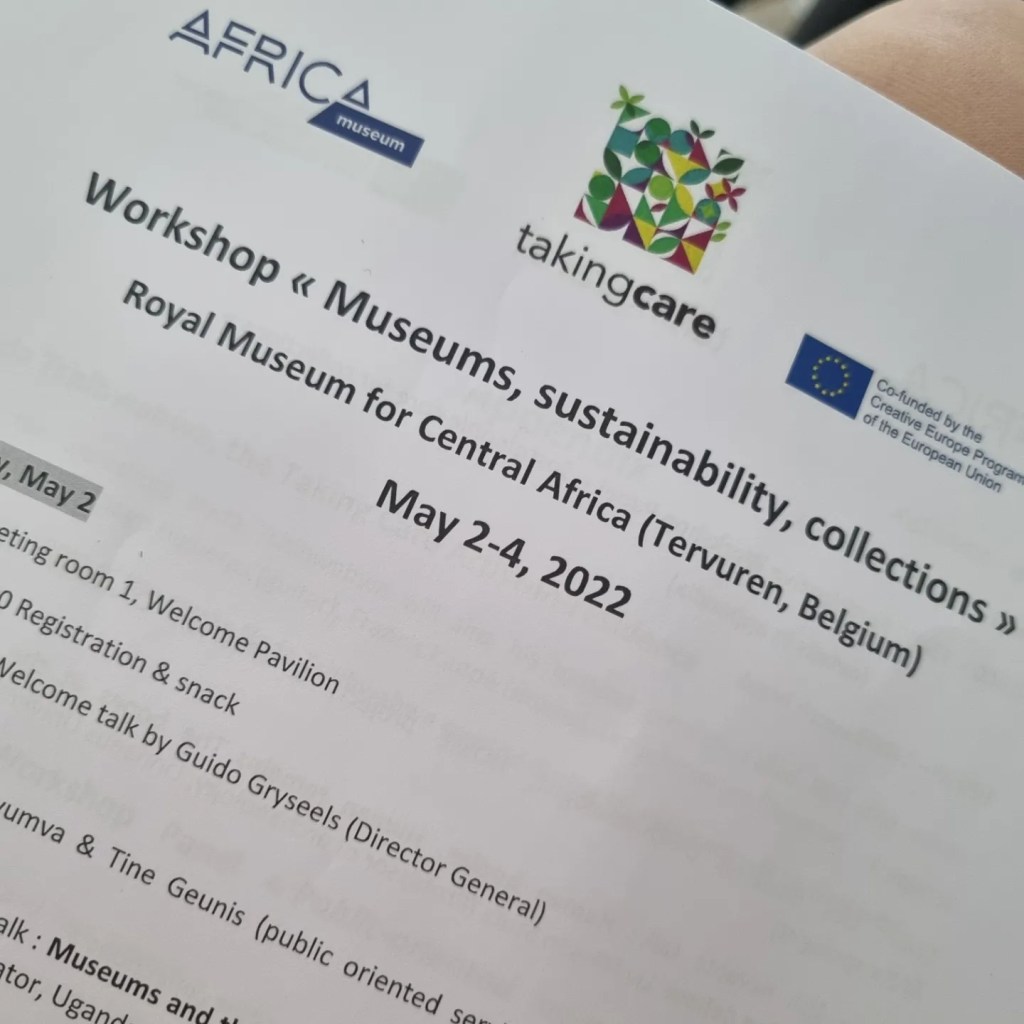
Glimpse of the workshop program. Photo: Liv Nilsson Stutz

The workshop included three keynotes that in different ways addressed sustainable collection practices. Chris Ssebuyungo (Conservator at Uganda National Museum) discussed the relationships between the museums and their publics from his experiences in Uganda. André Ntagwabira (Researcher in Archaeology at the Rwanda Heritage Academy) and Siska Genbrugge (Objects Conservator at the Royal Museum for Central Africa) explored challenges relating to collections care of African collections weighing conflicting interests such as accessibility, cost, environmental impact, and health risks relating to, for example, exposure to pesticides used in conservation practices. My talk on the care for human remains discussed the ethical entanglements of different collections with a range of power structures, including those of colonial histories, and explored alternatives for ethical care practices for these sensitive collections. The talks were all followed by extensive collaborative workshop discussions where participants shared their experiences and perspectives with these issues. It was clear that we are in a moment when museums across Europe are all grappling with the challenges of how to best deal with their history, their role as contemporary inclusive and safe spaces, and their role as agents for sustainable futures.

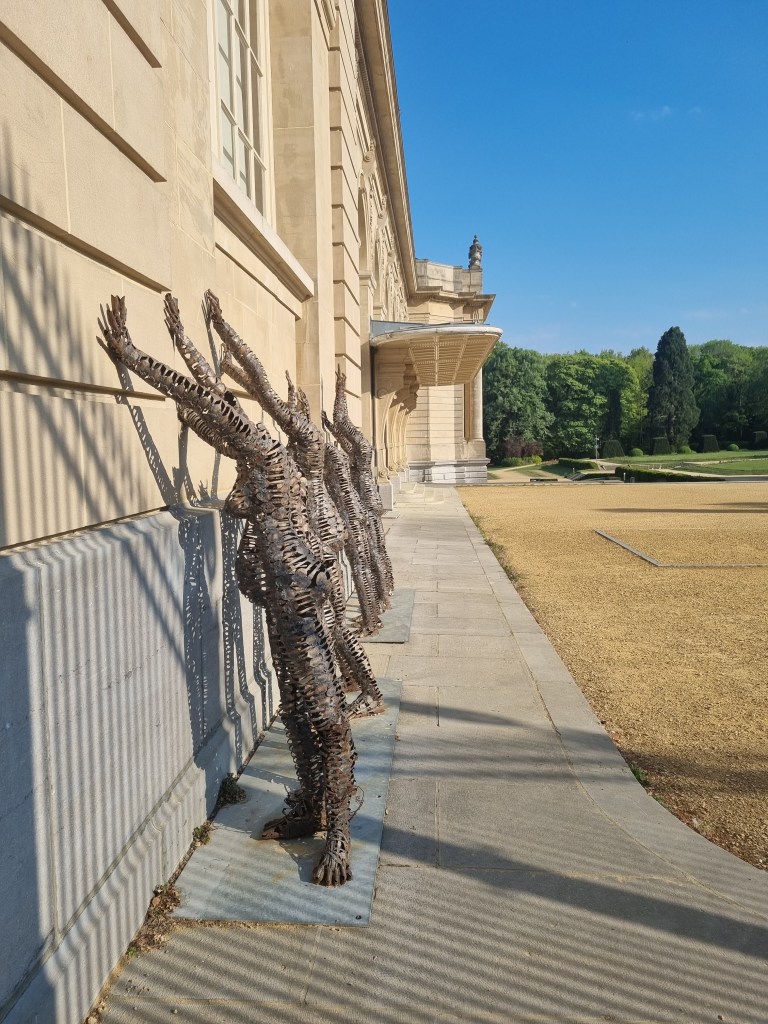
Freddy Tsimba “Centres fermés, rêves ouverts” Tervuren, 2016. Tsimba’s sculpture is made from materials recovered from the building site during the new constructions of the museum in 2016. The sculpture gives form to his experiences in a closed center in Belgium and is a tribute to refugees being interrogated across the world. Photo: Liv Nilsson Stutz

In the segment of the program devoted to discussing sensitive collections we discussed different strategies used by museums to tread the difficult balance between accessibility and respect – for example the ways in which searchable databases can include specific protection for sensitive materials, or only be accessible from within the museum by researchers, descending communities, and curators. Participants also discussed what ethical engagement might look like in the work with human remains – and one participant shared how many bioarchaeologists and biological anthropologists systematically talk to the human remains as they study them to maintain the connection to and acknowledge their humanity. The discussions also raised new questions emerged in relation to new museology techniques. As auditory elements become increasingly incorporated in museum exhibitions, we could for example ask ourselves whether the documented sound of a voice should be included in the category.

The TAKING CARE project involves museums with ethnographic collections, and this means that the focus of any ethical exploration will be rooted in a critical analysis of colonial research and collection practices. In this discussion human remains is only one of many categories of sensitive collections. But there is nevertheless significant overlap in the challenges we all face, and many of the ethical considerations are very similar. In 2013 The Royal Museum for Central Africa closed to accomplish a complete overhaul of its exhibitions. The ongoing work on provenance and restitution is currently central to the mission of the museum.

 Sculpture in openwood work by Aimé Mpane representing the Skull of Chief Lusinga which was taken by the Belgian officer Emile Storms as a trophy (the Chief was killed and beheaded) during a raid on the on the village of Lusinga in 1884. The cranium was part of the collections of the Royal museum for Central Africa until 1964, and was then passed on to the Royal Belgian Institute of Natural Sciences. The cranium has not been repatriated. Photo: Liv Nilsson Stutz

While the theme of human reamins was not central for this workshop, it is relevant when thinking about decolonisation and collections. Currently a large scale project called HOME (Human Remains Origin(s) Multidisciplinary Evaluation), to inventory all human remains collected abroad and currently located in museums, research institutions and private collections in Belgium has been initiated. The interdisciplinary project will identify “the individual people, the conditions under which their remains were collected and in some cases, will try to better understand past lifestyles, both from a cultural and biological point of view.”

“In Belgium, there are currently no guidelines for the conservation and management of human remains, nor a legal framework for the return of human remains to family members, institutions or countries of origin. “

Reinout Verbeke, http://www.naturalsciences.be

The project will also study Belgian and international legal frameworks for repatriation and restitution. Just like in, for example Sweden, “there are currently no guidelines for the conservation and management of human remains (in Belgium), nor a legal framework for the return of human remains to family members, institutions or countries of origin. A large inventory supplemented with archive material should help to identify more individual people and better understand the circumstances in which they were acquired.” This is in and of itself not unusual. What stands out in the case of Belgium however, is that up to today, Belgium has never repatriated any human remains to another state. This is perhaps especially striking given the well known colonial history of Belgium.