On November 5th, 2025, the Fondazione Professoressa Carla Barbati awarded Nicole Crescenzi for her PhD thesis “Exhibiting Human remains: an issue at the intersection of ethics, museology and law” defended at IMT Lucca on June 11th, 2025.
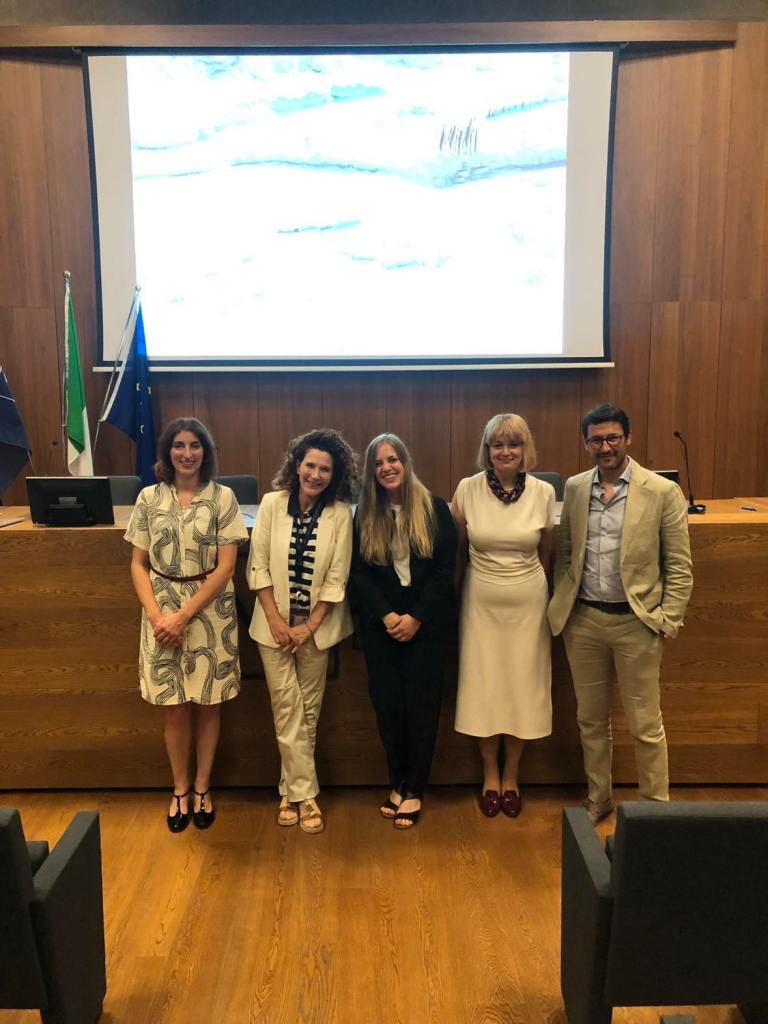
Afetr the very successful defense, from the left: Dr Hayley Mickleburgh, University of Amsterdam, Professor Marialusia Catoni, IMT Lucca, Professor Liv Nilsson Stutz, Linnaues University, and Professor Ricardo Olivito. Absent from this photo due to digital participation: Professor Melanie Giles, University of Manchester and Dr Christian Greco, Museo Egizio, Turin.
In her thesis Nicole explores the exhibition of human remains as a contested and controversial subject. She discusses different perspectives related to understanding the practice of exhibiting human remains in museums. The project collected information on the handling of human remains in museums and investigated the perspectives of both museums’ visitors and professionals through surveys and interviews, and compared the results obtained for different European countries. She also applied an ancient historical perspective to a debate that was so far mostly focused on modern and contemporary history. Doing this also meant that, in the line of Ethicakl Entanglements, all human remains, including the archaeological ones, that scholars had, up until now, left on the side, with very few exceptions were included in the discussion. The thesis includes a synthetic catalogue of regulations museums and states adopt in exhibiting human remains, a first catalogue of European museums hosting human remains in their collections, and a broad investigation of museums visitors, covering European and non-European countries. The thesis will be published by Oxbow.
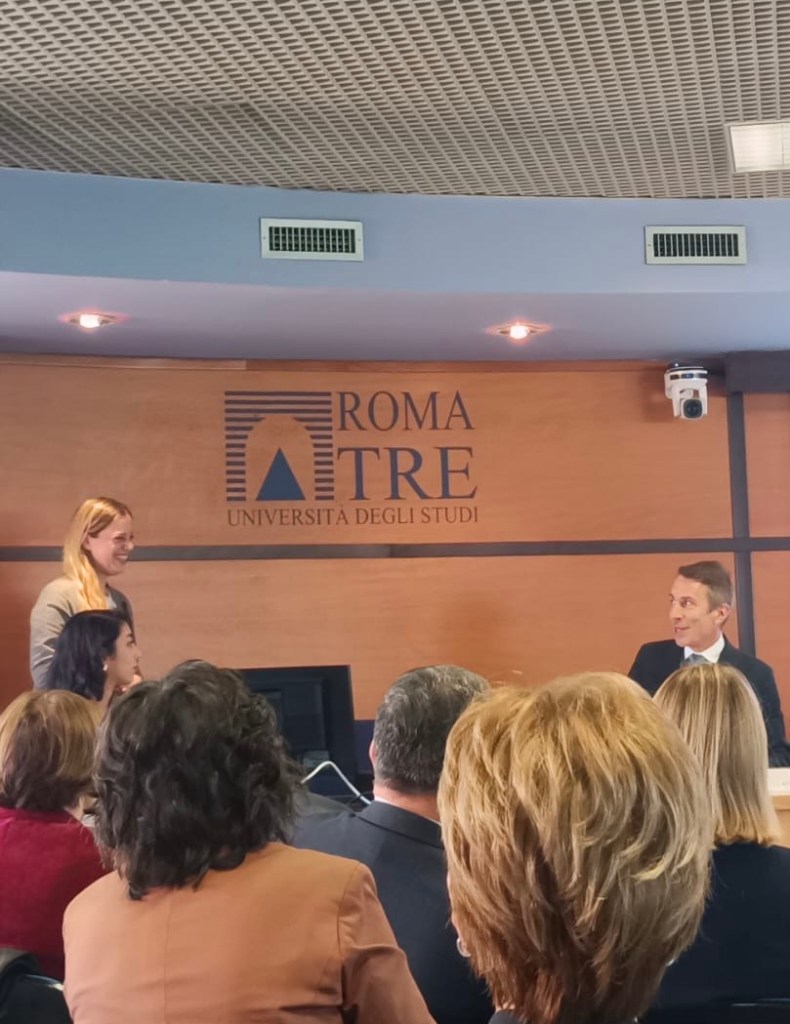
Nicole Crescenzi at the award ceremony, the 5th of November, 2025.
The Fondazione Professoressa Carla Barbati is a non-profit organisation established to honour the memory and continue the work of Professor Carla Barbati, an eminent scholar of cultural heritage. Its mission is to promote the study of cultural heritage in all its tangible and intangible forms, from an interdisciplinary perspective rather than an exclusively legal one. The Foundation awarded prizes for theses that explore the theme of cultural heritage in all its tangible and intangible forms, from an interdisciplinary perspective. Liv Nilsson Stutz who acted as co-advisor to the thesis together with Professor Marialuisa Catoni is incredibly proud of Nicole for receiving this distinguished award for her work, as is the whole The Ethical Entanglements team
Turin, like many other Italian University cities, has a long, illustrious, and sometimes problematic legacy of anatomy. Here, some of the largest anatomical collections were formed in the 18th and 19th century, and Italy is also the place of origin for the development of wax models used to teach anatomy and medicine.
A Cathedral to Science
Named after the anatomist Luigi Rolando, the Museum of Human Anatomy is still on the premises that University of Turin built for it in 1898. It is referred to as “a Cathedral to Science,” and its basic outline recalls the shapes of a basilica. When you enter the museum, you step into a central nave, stretching out in front of you in a unilinear direction, guiding your gaze and movement toward a room at the far end that reminds us of an apse, the place dedicated to the main altar and the holiest part of a cathedral. We will return to that space later. Pillars separate the nave from the aisles, where large wooden cabinets divide the space to form cells of exhibitions devoted to different anatomical parts or functions of the body. Behind glass, human remains, models in wax, wood, ivory, and papier mâché, dried specimens, and mummified remains make up a remarkable collection that once provided invaluable teaching materials to study the function and diversity of human anatomy.
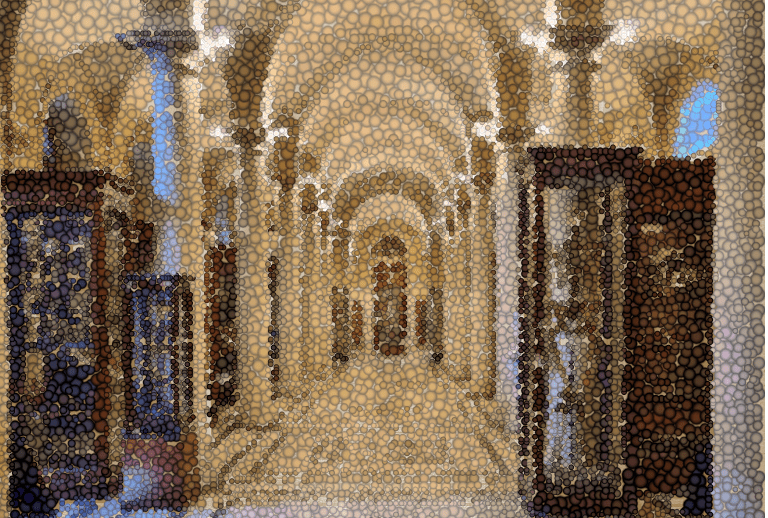
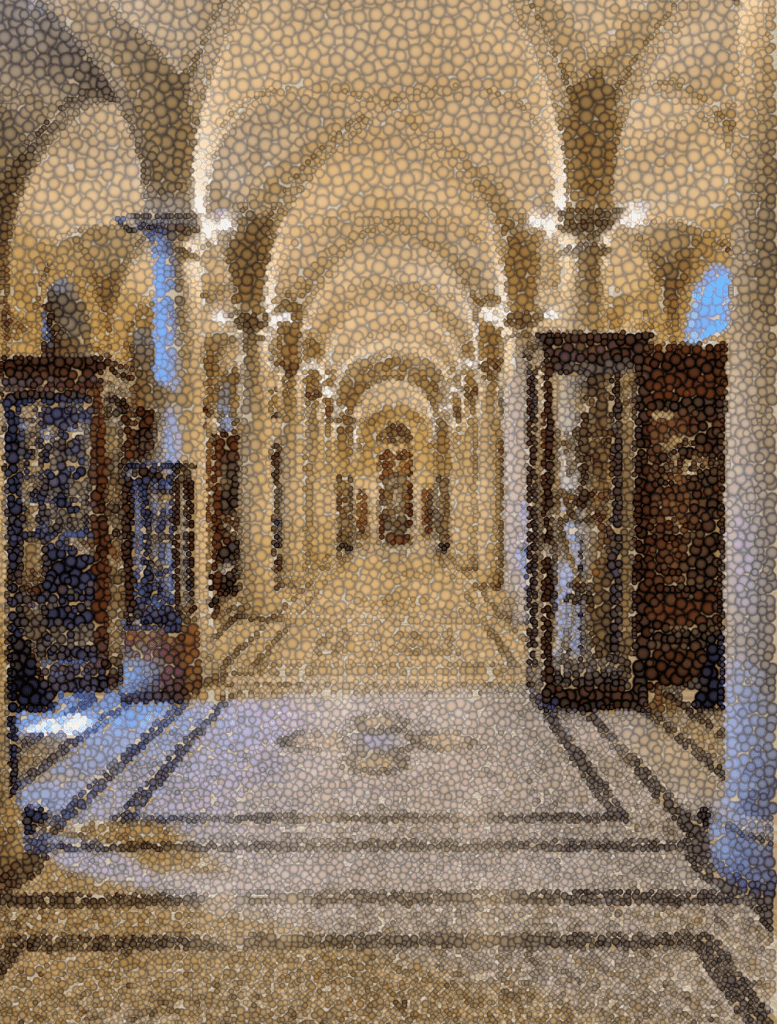
View of the museum. The photograph has been manipulated to blur the human remains exhibited here without their consent.
At the very entrance of the central nave, two individuals are placed to frame your path: “the dwarf” (sic!) and “the giant” (sic!). They are placed there to illustrate the drive to understand human variation. When you scan a small QR code on the side of the cabinet you learn that the individual with giantism was in fact Giacomo Borghello. Born in 1810, he would have experienced exceptional growth and, probably, related health problems linked to his condition. He worked in a circus and passed away at the age of 19. The individual with dwarfism is of unknown identity. On the walls, just under the vaults, frescos depict famous scientists, anatomists and anthropologists, including Andreas Vesalius, Realdo Colombo, Marcello Malpighi, Charles Darwin, and others. It really does feel like a sacred space devoted to the worship of scientific knowledge. It is beautiful, and as preserved cultural heritage of 18th and 19th century knowledge-production, it is sublime. It is also, of course, highly problematic.
Here, in the temple to science, the human remains appear to be firmly moved to the object-of-science end of the spectrum. Perhaps the most salient illustration of this can be seen in the treatment of two mummified bodies from Bolivia and Peru. The Peruvian mummy is a woman holding a small child in her arms. To the contemporary visitor this would seem quite emotional, but it is hard to make out the shape of these two individuals as they lay behind the glass, placed like objects on an elevated shelf, their surface transformed not just through mummification but also by some form of preservation technique that has left a hard and glassy surface on the skin. They almost look like obsidian lumps: hard and shiny. The shape of the woman’s cranium was modified according to Inca practices during her life time, and to show this phenomenon, the anatomists in the 19th century removed and anatomised her skull. It is now on display, detached and skeletonised, next to her body. None of this would have raised an eyebrow in anatomical circles in the 19th century. But it is still strange that the ethics of the choices made at the time are not addressed or commented on at all in any of the text materials that accompany the exhibition – not even in the online materials accessible through QR code.
Carlo Giacomini’s last will and testament
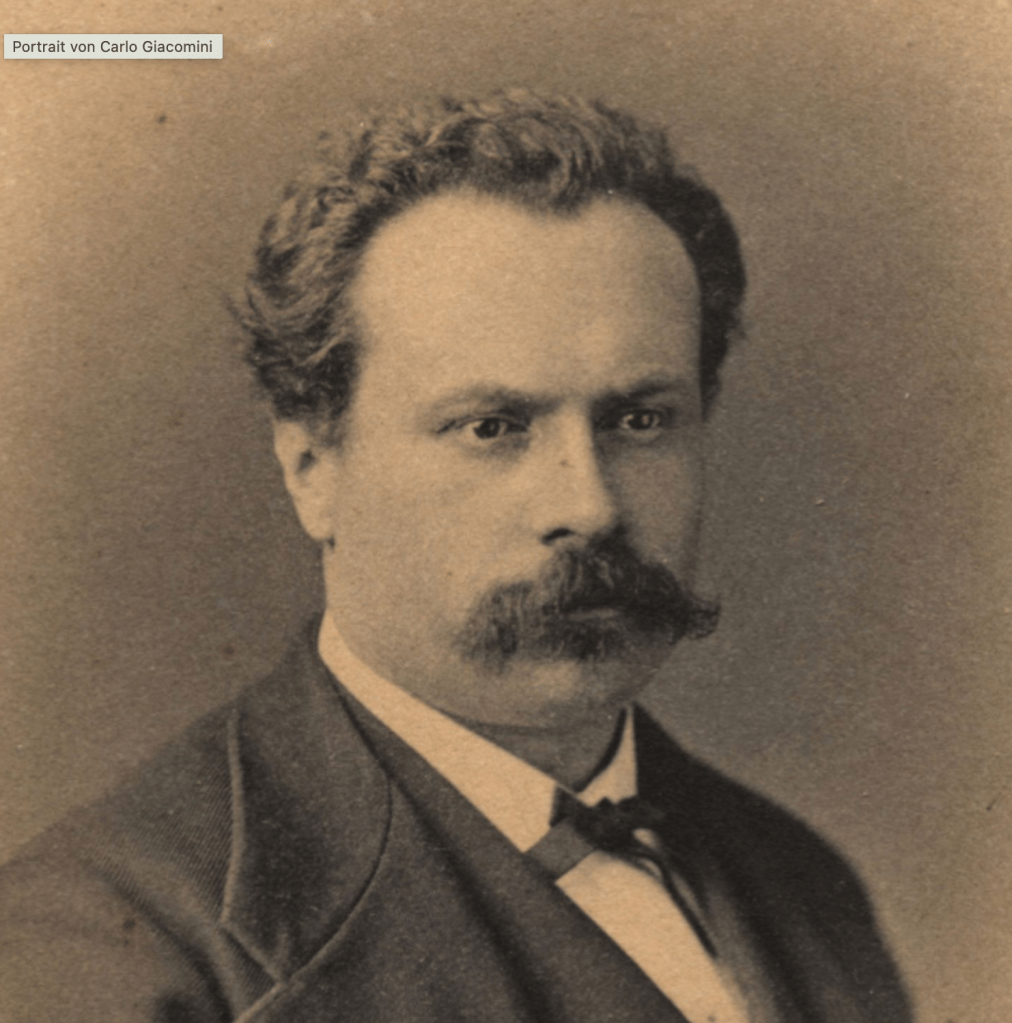
Portrait of Carlo Giacomini (1840-1898), Professor of Anatomy at the University of Turin and director of the Museo di Anatomia Umana Luigi Rolando.
The room at the end of the nave, which I referred to as an apse above, the “holiest part” of the museum, is dedicated to several collections devoted to the brain, its functions, and variations. The field was of central interest to many researchers associated to The University of Turin, which has even been credited as the place of birth of modern neuroscience. During the 19th century, Carlo Giacomini who was professor of Anatomy at the University of Turin and the director of the Museum of Anatomy from 1876, together with Luigi Rolando, dominated the field in Turin. Giacomini devoted a significant part of his career to describe and understand the surface of the cerebral hemispheres and their variation. He also developed a method to preserve brains by drying them using chloride of zink, alcohol, and glycerine. The preservation technique allowed him to collect 800 brains in a comparative research collection, which is now on display in this part of the museum. In this room we also find a part of his collection of crania (over 1,000) of individuals of known age and sex. The information in the exhibition is scarce (even when using the QR codes provided), and it never speaks of context of acquisition, only about the science these “specimens” were collected to support. In the same area there there is also a phrenological collection which once belonged to Joseph Gall, the founder of the discipline, and his pupil Johann Gaspar Spurzheim. It was donated to the museum in 1913.
Cabinet with a part of the collection of crania. The picture is published by the museum but has been intentionally blurred for this blog.
When considering the exhibitions of the mummified individuals and the ones with dwarfism and giantism described above, it would be easy to conclude that the human body was simply an object of science to be collected and studied. The disciplines represented in the museum seem to objectify the “Other” – the disabled, the poor, and the colonised. Context does not seem to matter, and the identity of the individual is only important as it helps establish scientifically significant variables such as biological sex and age of death. But, then, I encounter the anatomised remains of Carlo Giacomo himself, in a display case in the centre of his own research and teaching collection, and I start to wonder if, perhaps, the ideology extends into other, less scientific realms of perception as well.
When he died, Carlo Giacomo donated his body to the museum to be anatomised so that his skeleton and brain (treated according to his specific instructions) could be studied and displayed. The language of the will specifying this donation to the collection is included in the exhibition. At first it might seem like a straightforward donation to science, but the wording of the text reveals additional layers. It reads:
“Being neither an advocate of cremation nor cemeteries, I would like my bones to be laid to rest in the Anatomical Institute,” (—) “I would also like my brain to be preserved with my method and placed in the Museum together with the others.”
It thus appears that this was not simply a donation to science but an actual “laying to rest.” For Carlo Giacomo, the museum appears to have been a more pleasant place for his body than the traditional places of disposal. Did he feel this way due to the fact that the university was so familiar to him that it provided a sort of “home,” or was it that he felt more at ease being surrounded by science, order and hygiene? If so, did he actually think actively that the others his text actually mentions also were included in this type of care? Or were “the others” simply specimens whom he would now join, providing variation and measurements, growing the comparative sample by one? Here, the position on the spectrum all of the sudden starts to move in interesting, surprising, and potentially contradictory ways. The “Cathedral to Science” revelas itself not just as a place of worship and teaching of a new gospel, but also as a place where the dead rest in a privileged place.
The cabinet containing the skeleton and brain of Carlo Giacomo. The photo published by the museum has been intentionally blurred for this blog.
Given the many triggering aspect of the current exhibition, some of which have been discussed above, it would, of course, be absurd to propose this museum as a model for how to think ethically about human remains. But the example of Carlo Giacomo’s will still invites us to reflect not only on the complexity and contradictions at work in the past, but also, perhaps on productive ways to rethink museums for the future.
Should we consider the privacy of people in the past? Is the concept relevant, or applicable? Is privacy only a concern for the living in our contemporary moment – so obsessed by the boundary between the personal and the private in a constantly marketing and sharing economy, or is privacy a more universal human right? What duties do we have to past persons (to paraphrase the excellent PhD thesis by Malin Masterton)?
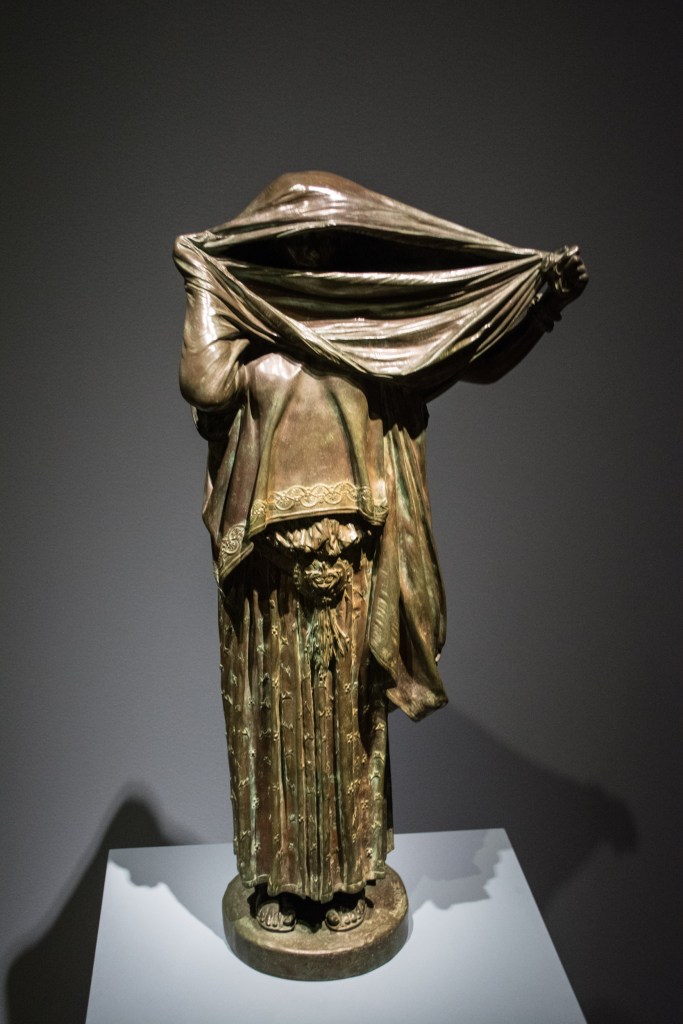
Woman With Veil – Cleveland Museum of Art (33666109413).jpg” by Tim Evanson from Cleveland Heights, Ohio, USA is licensed under CC BY-SA 2.0.
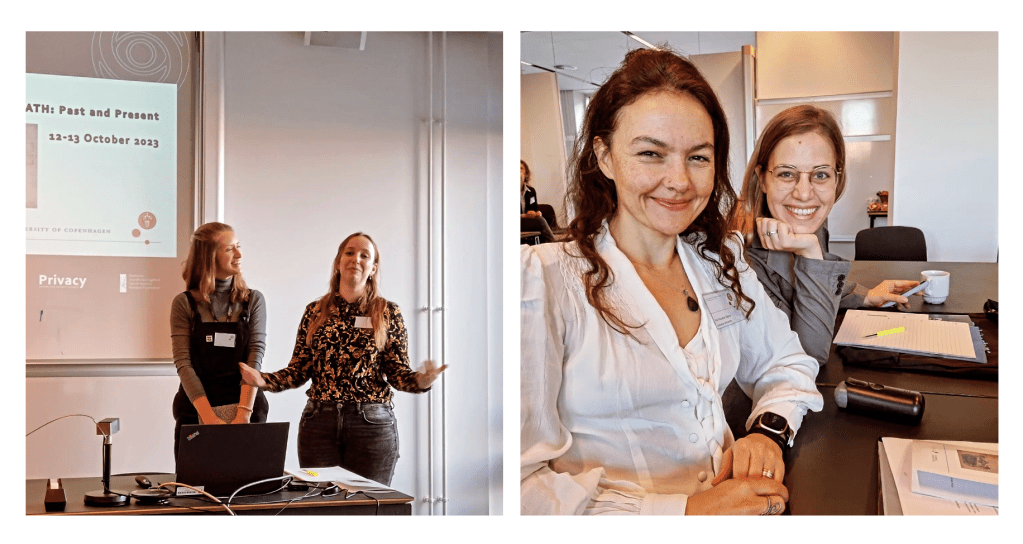
October 12-13, 2023 Ethical Entanglements participated in a conference at the Center for Privacy Studies at the University of Copenhagen, called Privacy and Death: Past and Present. The conference was interdisciplinary, with contributions from history, classics, archaeology, theology, law, and ethnography, and explored a range of issues touching on the broader issues of privacy and death. Ethical Entanglements contributed with two papers: Nicole Crescesnzi presented the paper: Human Remains and Privacy – a Contemporary Bias? and Liv Nilsson Stutz and Rita Peyroteo Stjerna presented The New Frontiers of Postmortem Privacy: Negotiating the Research Ethics of Human Remains in the Era of the Third Science Revolution in Archaeology.
Left: The organisers of the conference Felicia Fricke and Natacha Klein Käfer welcome the attendants. Right: Rita Peyroteo Stjerna and Nicole Crescenzi before their presentations. Photos by Liv Nilsson Stutz.
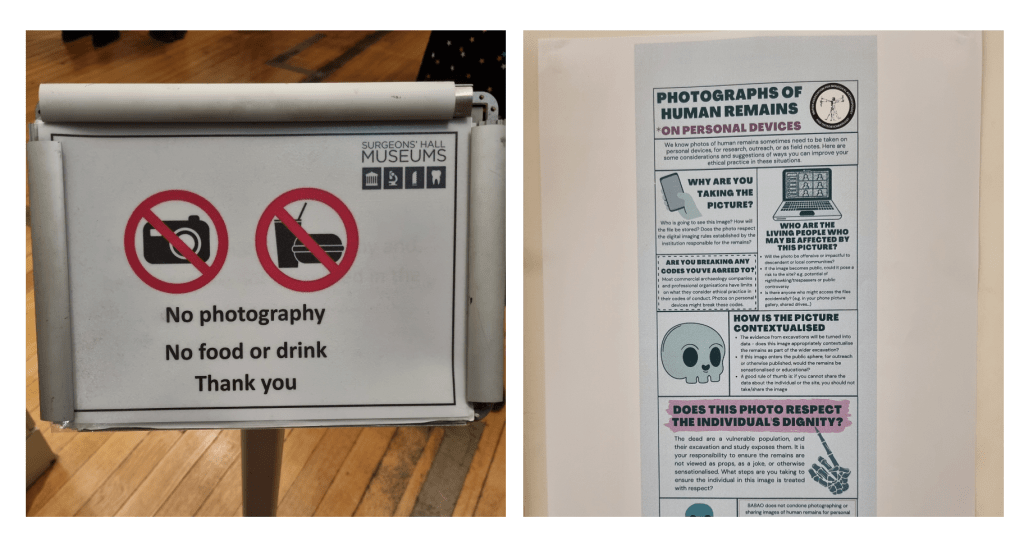
The privacy of old human remains is an issue that tends to lie at the periphery of our debates. There is rarely any explicit discussion about it, but we increasingly see the emergence of professional practices that may indicate a growing consideration, albeit almost invisible. One example of this is how human remains today, sometimes, are blurred in public presentations. If you are a regular reader of this blog, you may have noticed that we also do this from time to time. Another is the signage that is becoming more common, especially in anatomical and pathological exhibitions, of a no photography policy. It is quite possible that there are multiple reasons for this, and it is rarely explicitly stated that this is to protect the privacy of the dead, but it speaks of an awakening sensibility. In some rare cases, as shown below (right) in the signage at the Anatomical Museum at the University of Edinburgh, the sign elaborates on the reason, and in the process, it triggers reflection and raises awareness. In this context it is an explicit and integrated part of the university training of future professionals working in the field, but perhaps this would be useful also in more public exhibitions.
Signeage restricting photography of human remains. Left: at Surgeon’s Hall in Edinburgh, and Right: in the Anatomical Museum at the University of Edinburgh. Photos by Liv Nilsson Stutz.
These types of signs are much more rare, and perhaps even non existent in archaeological exhibitions, demonstrating yet again the gradual move on the spectrum of lived life toward object of science with the age, state of preservation, and disciplinary categorisation of the specimen. Sometimes a sense of respect and dignity is alluded to in the ways in which the human remains are exhibited also in archaeological museums, for example through separation to a reserved space, and dimmed lighting. However, the topic is very rarely addressed head on, and if anybody’s sensitivities are considered in archaeological and historic exhibitions, it is in general the contemporary visitor’s. Nicole Crescenzi’s work on the public’s reception of these types of exhibitions across Europe shows that there are multiple ways in which the exhibition is experienced.
The conference raised many important issues, and several fascinating talks on topics from problematic collections to contemporary mourning practices, that all led to stimulating discussions. For Ethical Entanglements is was especially interesting to see the overlaps of concerns and shared challenges in the keynote address by legal scholar Edina Harbinja entitled An Uneasy Relationship Between Post-mortem Privacy and the Law. She defines post-mortem privacy broadly as the right of a person to preserve and control what becomes of his or her reputation, dignity, secrets, or memory, after death (see also Edwards and Harbinja 2013). While Dr Harbinja’s work is focused on the contemporary digital world, the fundamental questions it raises concern, in our opinion, also the long dead and research ethics in our fields. She proceeded to introducing the term of post-mortal privacy which protects informatised bodies expressed, stored, mediated, and curated through technology – as an immortality by proxy. In our contemporary world this refers to images shared and data stored online and in cloud services and on platforms held by private companies. But, what about the research data we extract from old human remains and share as part of our research activities? These issues relate immediately to the presentation by Liv Nilsson Stutz and Rita Peyroteo Stjerna on the attitudes to postmortem privacy in bio-molecular archaeology, and where Rita’s work, collecting data through interviews with scientists working in the fields, shows both a need and a desire for more thorough professional ethical development in this emerging and constantly changing field.
Can we turn the key to protect private data from spreading – and if we do, does that not violate standards for good scientific practice?
Can we turn the key to protect private data from spreading – and if we do, does that not violate standards for good scientific practice? The challenge, of course, is to determine what such a new practice might look like. With multiple ethics at stake, and with best practices sometimes in complete conflict with one another – for example Open Data vs respect for post-mortem/post-mortal privacy, the challenge is complex. Ultimately we come back to the same question: who still counts as a person enough to deserve this kind of consideration. The answer is not obvious.
“Privacy” by rpongsaj is licensed under CC BY 2.0.
The work also has interesting relevance for thinking about museums. Through her research, Dr Harbinja could see that a lot of the progress to think through and identify solutions on behalf of social media platforms such as Facebook, with regards to post-mortem privacy, emerged ad hoc. Somebody in the company started to think about this as they experienced the death of a client who was also a loved one – for example a parent. It struck me that there is a similarity here between the social media giants and museums: they both store sensitive and valuable things, they have inward facing and outward facing responisbilities, and – they both react ad hoc. It is a learning process, but it is also one that in the very moment teaches you to be better prepared the next time if you want to be able to serve your stakeholders well.
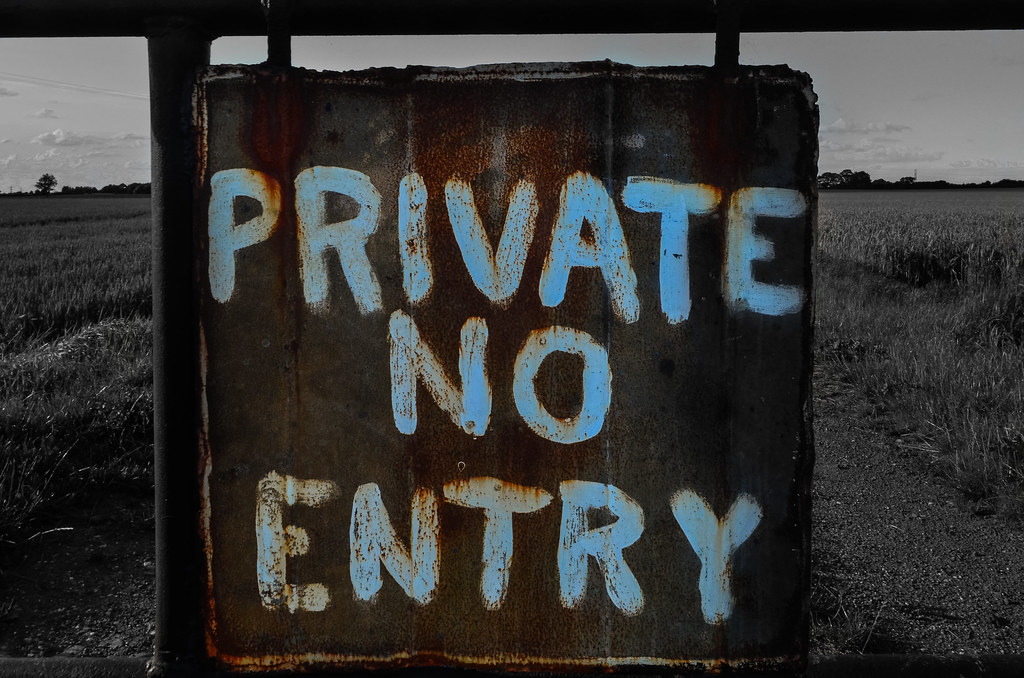
Featured image: “PRIVATE NO ENTRY” by Brad Higham is licensed under CC BY 2.0.
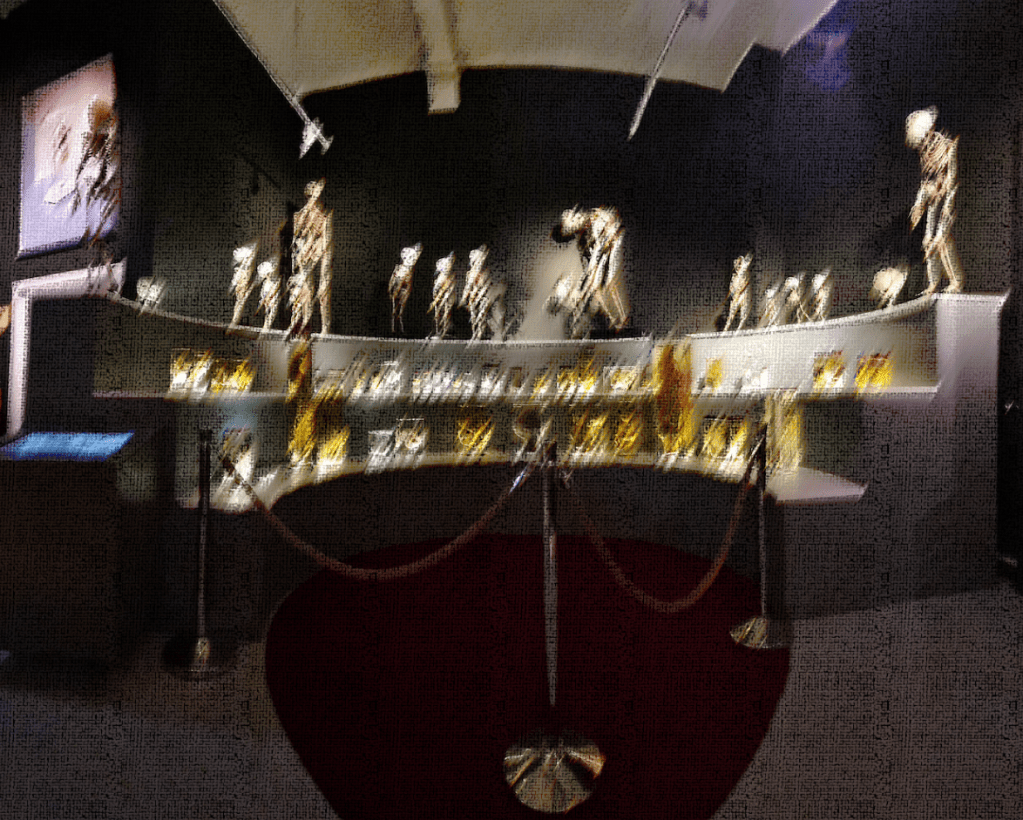
After our visit in Amsterdam I continued to Groningen which aslo has an anatomical collection on display in its University Museum. Here, the anatomical collection is part of the exhibition on the history of the university and its scholars, and it is thus clearly inscribed in the broader history of research and scholarship. A separate room is dedicated for this purpose. The anatomical display is arranged on stepped shelves organised in a semi-circle, with mounted skeletons on top and with preparations of body parts and organs on the lower shelves. The room has a claire-obscure quality with dimmed lights and spots illuminating the white bones, and the body parts almost glowing through the amber coloured liquid of the old preparations. The display is accompanied by an interactive screen where visitors can see close-up photographs of each displayed specimen and read descriptions about pathologies and preparations. The exhibition is extremely interesting, quite moving, and, I must admit, very aesthetic.
The anatomical collection arranged on stepped semi shelves organised in a semi-circle. Photo by Liv Nilsson Stutz (intentionally manipulated)
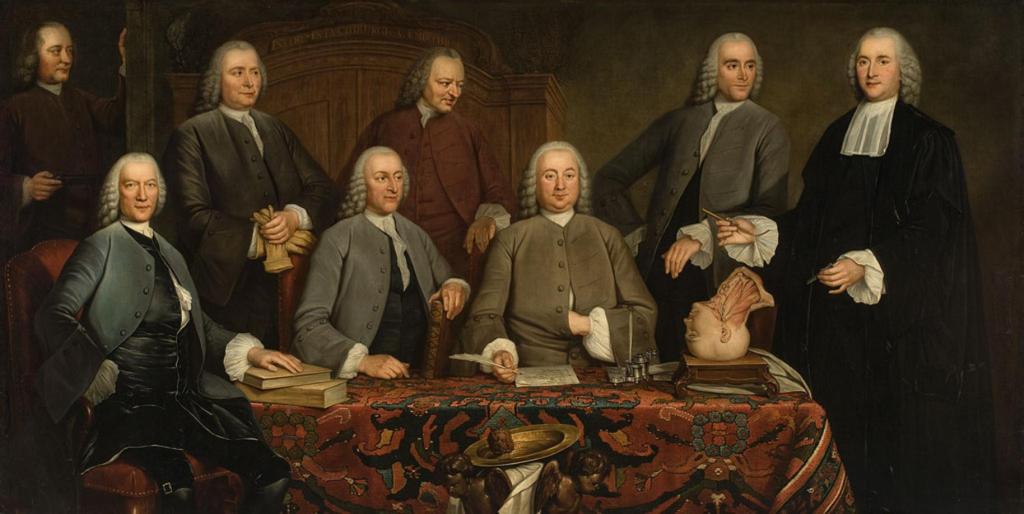
On the opposite side in the same room, an exhibition is devoted to the contribution of Petrus Camper (1722-1789). Camper was Professor Medicinae Theoreticae, Anatomiae, Chirurgiae et Botanicae at the University of Groningen from 1763 and to his death. He was an academic celebrity of his time and a leading scholar in many fields, including comparative anatomy.
Tibout Regters – De anatomische les van Petrus Camper. Amsterdam Museum, Public Domain.
As part of his research, Camper studied the anatomical differences between humans and apes, in particular crania and larynxes. To address the context of this research, the museum signage both celebrates and problematises his legacy. The exhibition called “Bitterzoet Erfgoed” (Bittersweet Heritage) informs us that while Camper lived in a time of colonialism and slavery, he “did not accept this worldview” (i.e. slavery). That being said, the text continues “Camper’s work cannot be separated from colonial history,” as “he collected specimens (human and animal) from colonised regions including the skulls and skin specimens on display in this exhibition.” The next sentence sums up the central dilemma:
“This raises complex questions. We want to tell the story of Petrus Camper, but also treat the remains of people who did not choose to become subjects of scientific research with respect”
Text in the exhibition about Petrus Camper at the University Museum in Groningen.
Several human crania are on display in this part of the exhibition, and a color coded map indicates their provenance including Madagascar, Europe, Java, Russian Republic of Kalmykia, Angola, China, Jakarta, and Mongolia.
Display of skulls from different parts of the world. The crania wee collected by Camper for his research into comparative anatomy. Photo: Liv Nilsson Stutz, intentionally blurred.
The transparent and honest way in which the exhibition communicates about the content of the collections and their problematic history, is interesting and quite admirable. The display of remains such as skin samples brings the hot button topic of racism into focus. The exhibition strikes the balance between communicating that while Camper’s research was not seeking to support racism as an ideology and a “scientific” concept, he still worked within a context of colonialism and othering. And while not explicitly stated, the knowledgeable visitor can probably fill in the blanks as to how this research tradition came to be enmeshed with race science only a few generations later. While taking risk with this display, the museum paradoxically takes responsibility for its collections as it does not try to avoid confronting difficult issues or hide its collections.
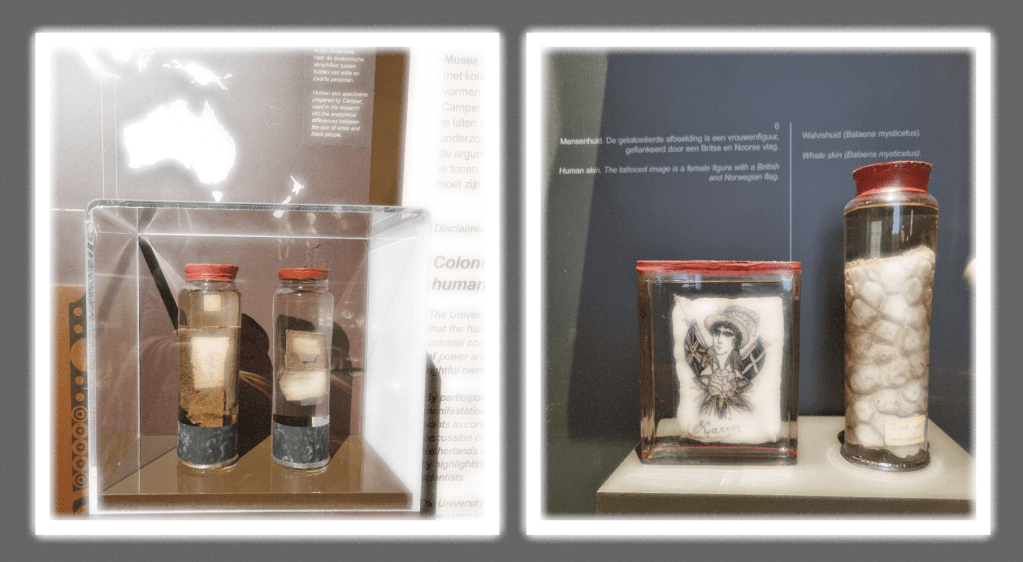
Skin samples on display in the museum. To the left, skin samples form humans from different parts of the world, displayed in the Bittersweet Heritage exhibition. The samples were used by Camper to understand human variation between white and black skin. To the right, human tattooed skin (the face of a woman and the British and Norwegian flags) exhibited with the skin of whale to illustrate Camper’s work in comparative anatomy. Photos by Liv Nilsson Stutz, intentionally blurred.
Interestingly (and typically) the problematisation is limited to the anthropological research and exhibition, and does not discuss the medical collection displayed only a few meters away in the same room. The context of the “bitter sweet heritage” is not extended to include collection practices from other contexts (such as, presumably, maternity wards and other care facilities). This relates to a more general pattern that we can see in how different categories of human remains sometimes are treated with different consideration and levels of problematisation.
In early November, we (Sarah Tarlow and Liv Nilsson Stutz) visited the Netherlands with the objective of viewing two different exhibitions of human remains: Museum Vrolik and Body Worlds, The Happiness Project, Amsterdam. While we realised it would be two distinct experiences, we were not quite prepared for just how radically different these two exhibitions would be, and how entangled the ethics of it all would appear at the end of the day.
The signage to the museum in the hospital foyer underscores the medical context of the collection. Photo by Liv Nilsson Stutz.
The Museum Vrolik is located on the bottom floor of the Amsterdam University Medical Center. As you enter the building you find yourself in a contemporary hospital, but as you turn left and enter the dark space of the museum you take a step into the past. A sign at the entrance cautions you that the exhibition contains human remains and may not be suitable for sensitive visitors. Photography is not allowed. The Museum website states:
“You should compare your position as a visitor to the Museum Vrolik with students of medicine during a practical anatomy session in the dissecting room. They observe and dissect mortal remains, but do so with proper respect and they are not allowed to take photographs of whatever they see in the room”
Museum Vrolik has an impressive collection. The remains were collected between 1750 and 1950. It contains 3300 human bones, skulls, and complete skeletons, 840 anatomical preparations with congenital defects, 1230 human anatomy preparations, 7400 glass negatives, 600 preparations related to dentistry, 530 plaster models and casts, 1760 drawers of brain slices, and 410 wax models. In addition the museum also contains animal bones and preparations. Only a small sample of this impressive collection is exhibited.
Cover of the catalogue of the Museum Vrolik “Forces of Form,” for sale in the museum shop. While I do not want to link to any online content of the displays, I show the cover of this book to provide an impression of the kind of specimens exhibited in the museum.
The exhibition consists of one square shaped room with dimmed lights and aesthetically illuminated glass display cases forming four areas in the center of the room displaying anatomical and pathological specimens, and along the perimeter of the room, a series of display cases that chronicles the history of the collection. It is breathtaking.
The collected are categorized as “objects of science” – but the display invites us to see people who once lived with pain, disability and strength to survive many years under difficult circumstances. It is moving and unsettling all at the same time.
In the historic overview the collection is contextualised with a focus on the collectors and their roles in the history of research. The presentation is honest and transparent and mentions collections from cemeteries and medical wards. In contrast to the matter of fact tone in the texts, the actual exhibition in this part of the museum is sometimes very moving – especially the mounted skeletons of physically disabled individuals, one of which is still leaning on their cane. The juxtaposition between the factual narrative on the signs with the emotional displays is interesting. While only the collectors are visible as agents in the narrative, the collected demand our attention in the display. It suddenly dawns on us that there is contextualisation but no problematisation. The collected are categorised as “objects of science” – but the display invites us to see actual people who once lived with pain, disability and the strength and support to survive many years under difficult circumstances. It is moving and unsettling all at the same time.
The main part of the exhibition focuses on anatomy and pathology. Here there is very little contextualisation of the collection beyond that of the human body itself, which presents itself as a timeless medical fact. The preparations of fetuses and new borns, or of more complete body parts, add a dimension of subjectivity to the exhibition, bringing to the fore a shadow of individual lives – viable or not. But in the end, these remains are exhibited as objects of science.
While an explicit reflection on the ethics of collection is absent from the exhibition, the museum webpage includes a statement that recognises that collection practices in the past were very different to contemporary medical practices, and that it is not possible to know if the deceased or their relatives consented to, or were even aware of the fact that the remains were collected. Just like in the exhibition itself, it is in the voids between what is explicitly stated and what is implicitly felt, that the ethical entanglements emerge for us to reflect on. It is interesting and moving.
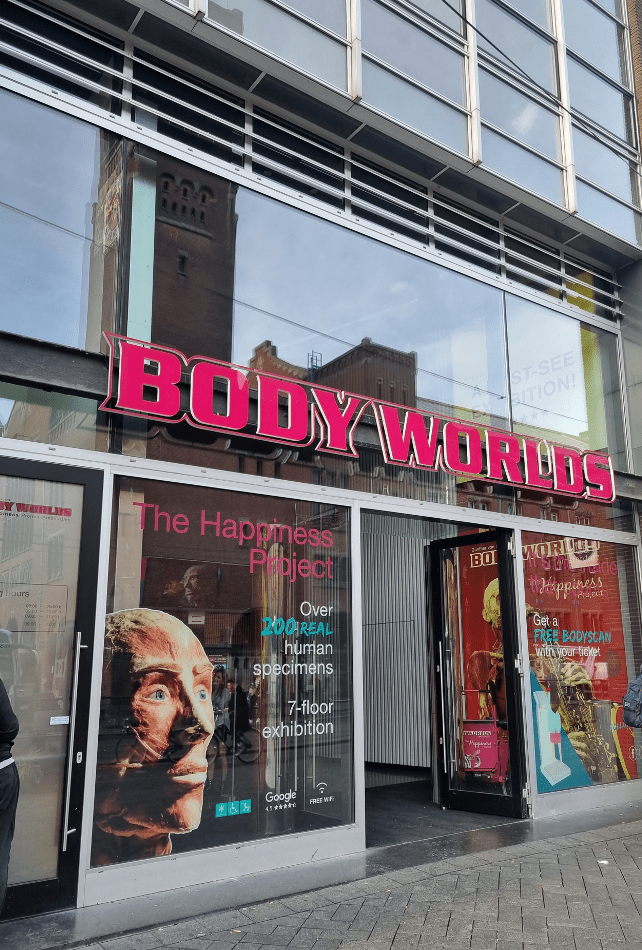
Entrance to Body Worlds in Amsterdam, advertising the exhibition of “over 200 real human specimens” in the midst of the Amsterdam tourist district. Photo by Liv Nilsson Stutz.
Later the same day we visited Body Worlds, The Happiness Project, Amsterdam, located in the tourist area of the city center, and marketed at the entrance by a man who, like in a manner that reminded us of old time fair ground exhibitions or freakshow, enthusiastically invited us in.
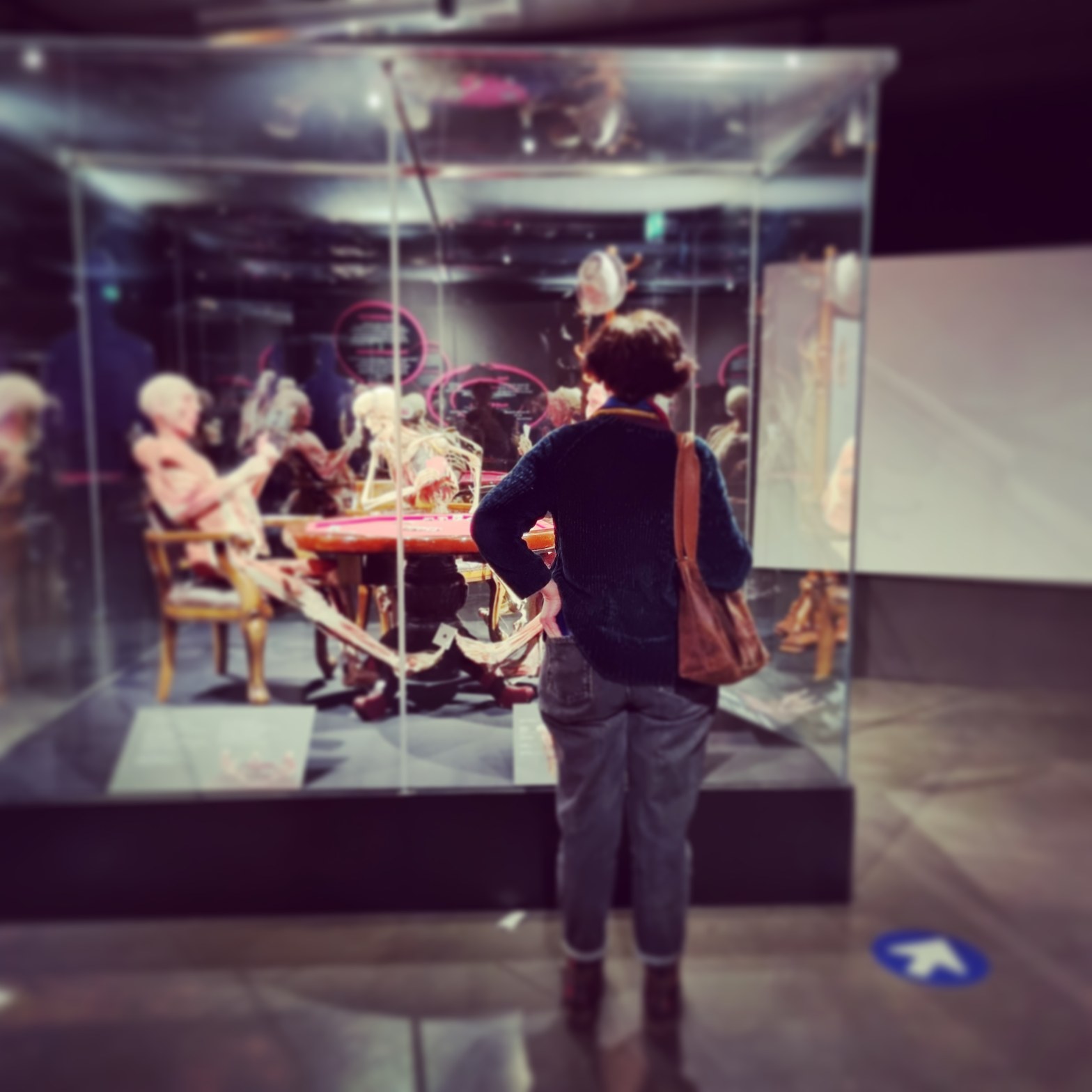
Three separate displays of plastinated human bodies at Body Worlds Amsterdam. Note the sexualised position of the woman (left), the active position of the male (center). To the right an arrangement of sexual intercourse. Photos by Liv Nilsson Stutz.
Body Worlds has become a world wide sensation and a lucrative private enterprise. Günter Hagen who developed the plastination process which makes it possible to display the anatomical structures of the human body like sculptures, has marketed the venture as a mission to educate lay people about anatomy and health. Body Worlds has been criticised for using unethically sourced bodies, but today claims that all bodies on display are of people who have given their informed consent.
The Amsterdam exhibition mixed the exhibition of plastinated bodies staged in evocative poses with the display of individual organs. The whole bodies were positioned in a way that was always gendered and sometimes even sexualised, with female bodies placed lifted, lying down or leaning to the side with their legs apart, and with male bodies jumping a fence, playing a saxophone and steering a ship. One room was devoted to sexual intercourse. The theme chosen to frame the exhibition was happiness, and it was communicated through basic educational texts about health and well being, and through inspirational quotes. Despite the unique selling point of Body Worlds – the display of actual human bodies (in the middle of the tourist district no less) – the experience seemed artificial. It was difficult to connect to the material/humans on display. The commercialisation of the venture added to the confusion. Was the purpose of the exhibition to provide education, and the plastinated bodies were used as a way to lure people to pay over 20 Euros for a mediocre learning experience? Or, was the educational theme just added on as a justification to show dead human bodies? It was impossible to say.
The contrast between the two exhibitions could not be greater. Museum Vrolik showed old and admittedly sometimes problematic collections, but managed to inspire compassion and emotion, while Body Worlds felt like a commercial carnivalesque display trying to pass as education. Even if these bodies were displayed with consent, the ethics seemed more muddled than ever.








 Ethical Entanglements