Turin, like many other Italian University cities, has a long, illustrious, and sometimes problematic legacy of anatomy. Here, some of the largest anatomical collections were formed in the 18th and 19th century, and Italy is also the place of origin for the development of wax models used to teach anatomy and medicine.
A Cathedral to Science
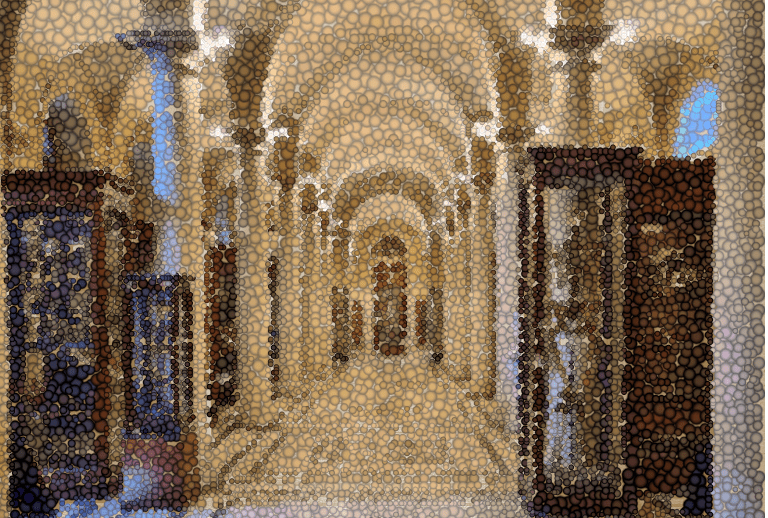
Named after the anatomist Luigi Rolando, the Museum of Human Anatomy is still on the premises that University of Turin built for it in 1898. It is referred to as “a Cathedral to Science,” and its basic outline recalls the shapes of a basilica. When you enter the museum, you step into a central nave, stretching out in front of you in a unilinear direction, guiding your gaze and movement toward a room at the far end that reminds us of an apse, the place dedicated to the main altar and the holiest part of a cathedral. We will return to that space later. Pillars separate the nave from the aisles, where large wooden cabinets divide the space to form cells of exhibitions devoted to different anatomical parts or functions of the body. Behind glass, human remains, models in wax, wood, ivory, and papier mâché, dried specimens, and mummified remains make up a remarkable collection that once provided invaluable teaching materials to study the function and diversity of human anatomy.
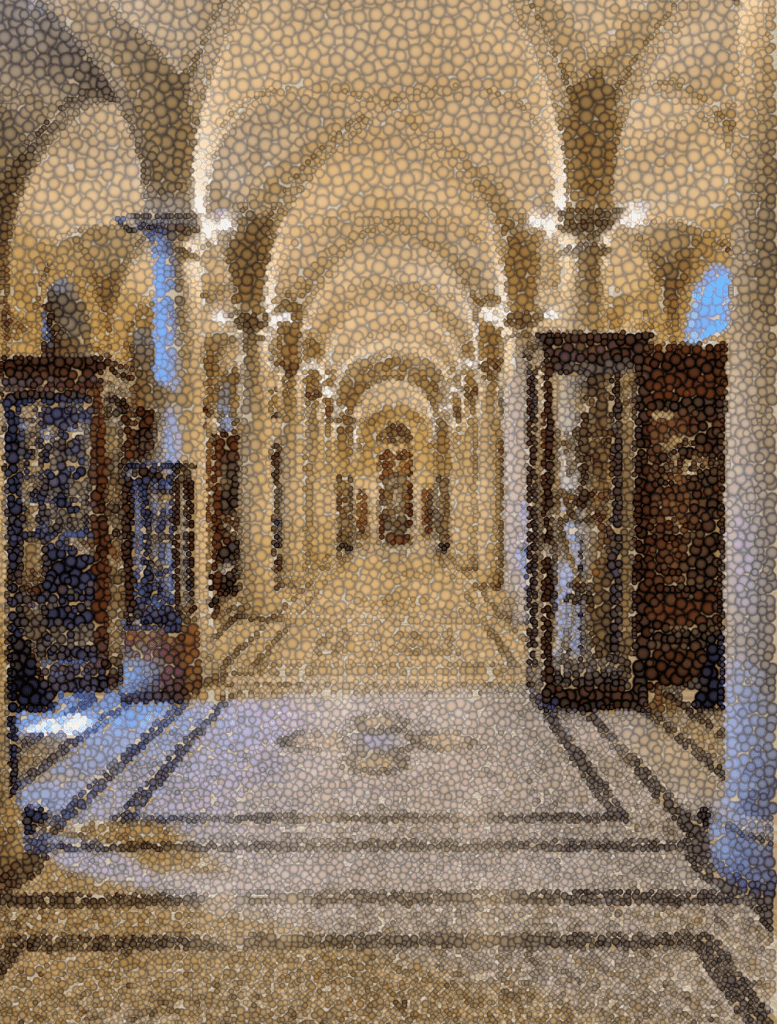
At the very entrance of the central nave, two individuals are placed to frame your path: “the dwarf” (sic!) and “the giant” (sic!). They are placed there to illustrate the drive to understand human variation. When you scan a small QR code on the side of the cabinet you learn that the individual with giantism was in fact Giacomo Borghello. Born in 1810, he would have experienced exceptional growth and, probably, related health problems linked to his condition. He worked in a circus and passed away at the age of 19. The individual with dwarfism is of unknown identity. On the walls, just under the vaults, frescos depict famous scientists, anatomists and anthropologists, including Andreas Vesalius, Realdo Colombo, Marcello Malpighi, Charles Darwin, and others. It really does feel like a sacred space devoted to the worship of scientific knowledge. It is beautiful, and as preserved cultural heritage of 18th and 19th century knowledge-production, it is sublime. It is also, of course, highly problematic.
Here, in the temple to science, the human remains appear to be firmly moved to the object-of-science end of the spectrum. Perhaps the most salient illustration of this can be seen in the treatment of two mummified bodies from Bolivia and Peru. The Peruvian mummy is a woman holding a small child in her arms. To the contemporary visitor this would seem quite emotional, but it is hard to make out the shape of these two individuals as they lay behind the glass, placed like objects on an elevated shelf, their surface transformed not just through mummification but also by some form of preservation technique that has left a hard and glassy surface on the skin. They almost look like obsidian lumps: hard and shiny. The shape of the woman’s cranium was modified according to Inca practices during her life time, and to show this phenomenon, the anatomists in the 19th century removed and anatomised her skull. It is now on display, detached and skeletonised, next to her body. None of this would have raised an eyebrow in anatomical circles in the 19th century. But it is still strange that the ethics of the choices made at the time are not addressed or commented on at all in any of the text materials that accompany the exhibition – not even in the online materials accessible through QR code.
Carlo Giacomini’s last will and testament
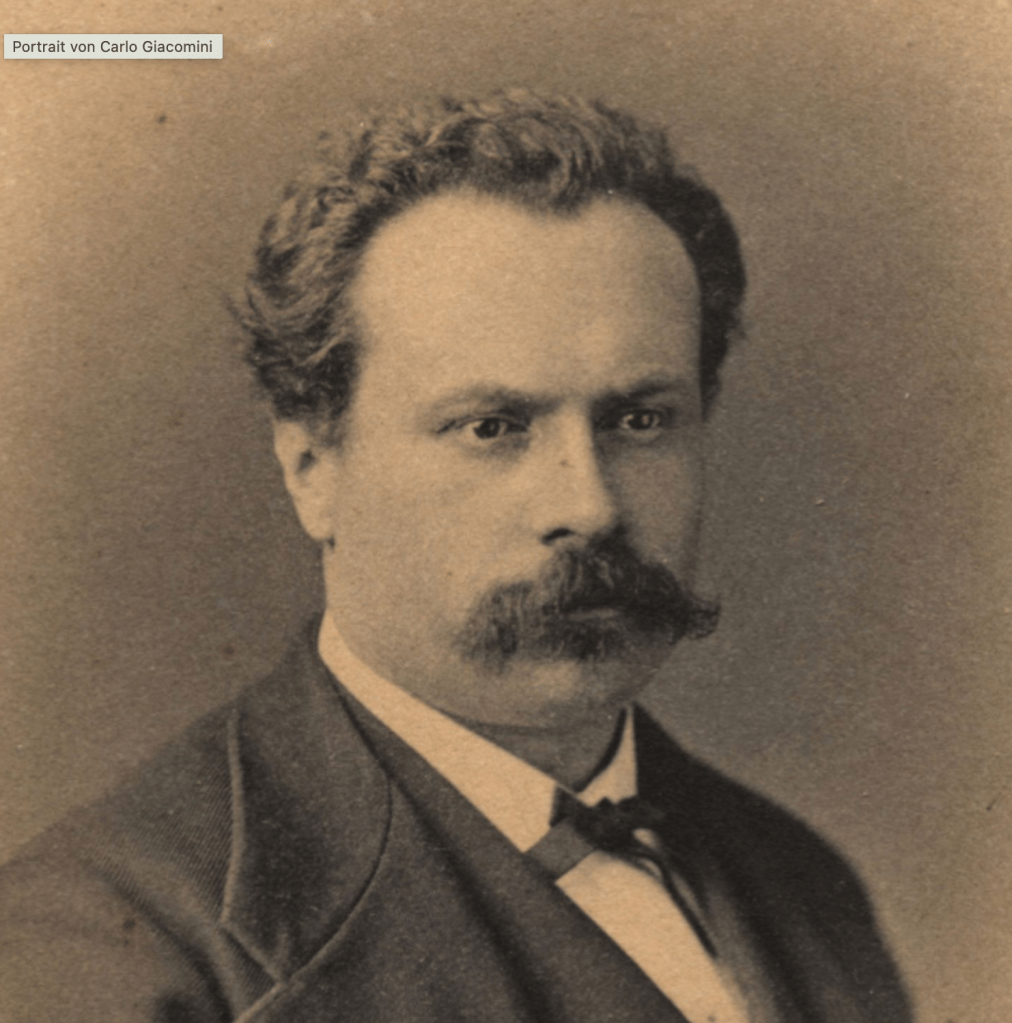
The room at the end of the nave, which I referred to as an apse above, the “holiest part” of the museum, is dedicated to several collections devoted to the brain, its functions, and variations. The field was of central interest to many researchers associated to The University of Turin, which has even been credited as the place of birth of modern neuroscience. During the 19th century, Carlo Giacomini who was professor of Anatomy at the University of Turin and the director of the Museum of Anatomy from 1876, together with Luigi Rolando, dominated the field in Turin. Giacomini devoted a significant part of his career to describe and understand the surface of the cerebral hemispheres and their variation. He also developed a method to preserve brains by drying them using chloride of zink, alcohol, and glycerine. The preservation technique allowed him to collect 800 brains in a comparative research collection, which is now on display in this part of the museum. In this room we also find a part of his collection of crania (over 1,000) of individuals of known age and sex. The information in the exhibition is scarce (even when using the QR codes provided), and it never speaks of context of acquisition, only about the science these “specimens” were collected to support. In the same area there there is also a phrenological collection which once belonged to Joseph Gall, the founder of the discipline, and his pupil Johann Gaspar Spurzheim. It was donated to the museum in 1913.

When considering the exhibitions of the mummified individuals and the ones with dwarfism and giantism described above, it would be easy to conclude that the human body was simply an object of science to be collected and studied. The disciplines represented in the museum seem to objectify the “Other” – the disabled, the poor, and the colonised. Context does not seem to matter, and the identity of the individual is only important as it helps establish scientifically significant variables such as biological sex and age of death. But, then, I encounter the anatomised remains of Carlo Giacomo himself, in a display case in the centre of his own research and teaching collection, and I start to wonder if, perhaps, the ideology extends into other, less scientific realms of perception as well.
When he died, Carlo Giacomo donated his body to the museum to be anatomised so that his skeleton and brain (treated according to his specific instructions) could be studied and displayed. The language of the will specifying this donation to the collection is included in the exhibition. At first it might seem like a straightforward donation to science, but the wording of the text reveals additional layers. It reads:
“Being neither an advocate of cremation nor cemeteries, I would like my bones to be laid to rest in the Anatomical Institute,” (—) “I would also like my brain to be preserved with my method and placed in the Museum together with the others.”
It thus appears that this was not simply a donation to science but an actual “laying to rest.” For Carlo Giacomo, the museum appears to have been a more pleasant place for his body than the traditional places of disposal. Did he feel this way due to the fact that the university was so familiar to him that it provided a sort of “home,” or was it that he felt more at ease being surrounded by science, order and hygiene? If so, did he actually think actively that the others his text actually mentions also were included in this type of care? Or were “the others” simply specimens whom he would now join, providing variation and measurements, growing the comparative sample by one? Here, the position on the spectrum all of the sudden starts to move in interesting, surprising, and potentially contradictory ways. The “Cathedral to Science” revelas itself not just as a place of worship and teaching of a new gospel, but also as a place where the dead rest in a privileged place.

Given the many triggering aspect of the current exhibition, some of which have been discussed above, it would, of course, be absurd to propose this museum as a model for how to think ethically about human remains. But the example of Carlo Giacomo’s will still invites us to reflect not only on the complexity and contradictions at work in the past, but also, perhaps on productive ways to rethink museums for the future.
 Ethical Entanglements