Reaching The Tipping Point – the repatriation of the Morton collection from the Penn Museum

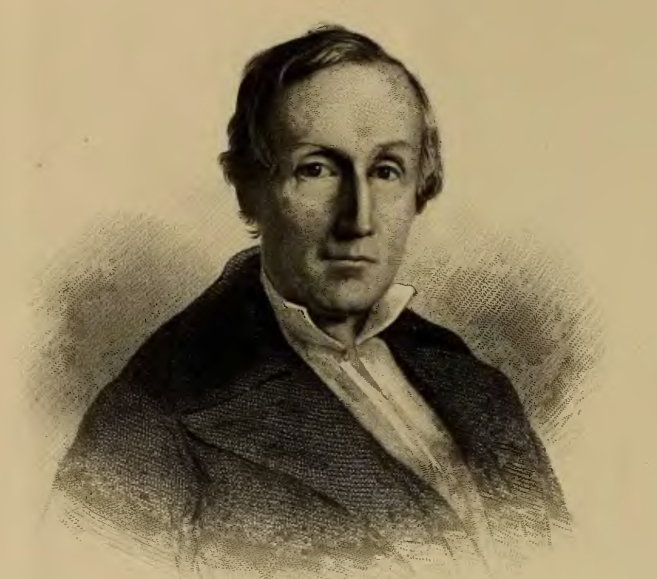
On April 12, 2021, The Morton Collection Committee released a report on their work of examining the ongoing issues relating to the anatomical collection created by Samuel George Morton (1799-1851), physician, natural scientist, renowned polygenist, and originator of the American School of Anthropology. Morton built a collection of 900 crania to provide “hard evidence” for the superiority of the white race, primarily by measuring the volume of the crania, linking the size of the brain to intellectual ability. The work was published in a series of volumes of which Crania Americana (1839), and Crania Aegyptica (1844) are the most well known. Both are renowned for their detailed drawings of the crania (see below), and both publications used the collection to demonstrate the alleged superiority of the “Caucasian race.” The collection is deposited at the Penn Museum since 1966, and it is now time, the report states, to take responsibility for this collection including developing a process for the repatriation of remains to descending communities.

Morton’s studies have been critically discussed by Stephen J. Gould who argued that they were plagued by implicit bias. This study, and Morton’s implicit bias in general have subsequently been discussed by J. E. Lewis et al., Michael Weisberg and Diane B. Paul, and Paul Wolff Mitchell , and while there is scholarly disagreement on the level of “fudging” in the study, there is a general consensus that Morton’s work was underpinned by the racist doctrine of polygenism, and that his ultimate conclusions as well as his casual remarks throughout the texts were openly racist. His work must also be understood in a context in which it provided scientific evidence that supported the American colonial effort, including attempts to eradicate and marginalise the Native Americans, and the economic system relying on both the transatlantic slave trade and on the labour of enslaved people.
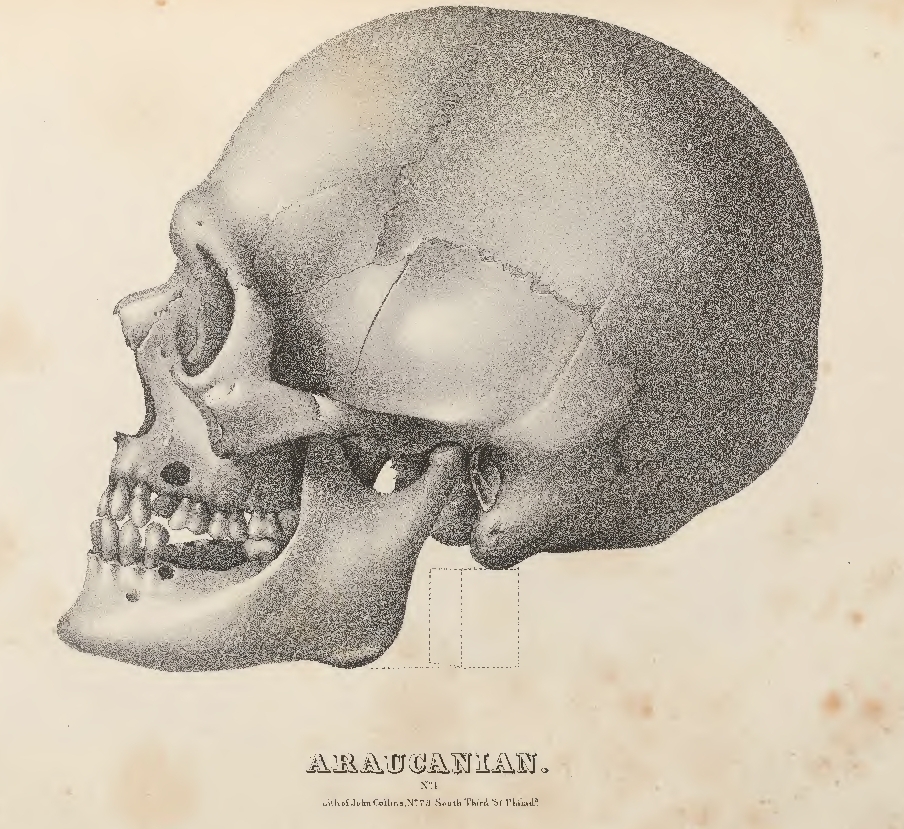
Engraving of an Araucanian skull from Crania Americana by Samuel Morton, John Collins (engraver}, Public domain, via Wikimedia Commons

Like so many other anatomical collections, the Morton collection has a complex history. Morton initially collected 900 crania, and after his death in 1851, the Academy of Natural Sciences in Philadelphia bought and expanded the collection to ca 1.300 specimens. It was moved to the Penn Museum in 1966. We are familiar with similar transitions of historic collections from medical faculties to history museums (e.g. the anatomical collection transfered to the Lund University Historical Museum in 1995, and collections transferred to Gustavianum in Uppsala in 2009 and 2011, etc). When they are transfered to these museums – they are, in many ways, already a part of our history, being the cultural artefacts of a dark heritage of science. However, the fact that these collections are historical does not automatically neutralise them, and they remain both valuable and problematic. Since 2002 the Morton collection has been extensively scanned (over 17.500 CT scans have been distributed to researchers across the world), and the collection has continued to be used for research (source: PennMuseum/The Morton Cranial Collection).

While the collection had been known and debated as problematic for a long time, it appears that the situation came to a tipping point in the summer of 2020. In the report, the Morton Collection Committee clearly states that it was the events following the police killing of George Floyd on May 25, 2020 and the continuously growing influence of the Black Lives Matter movement and renewed calls for racial justice that prompted the institution to critically examine its history and reevaluate its relationship to the Morton collection.

In the US context, and for researchers who are familiar with the impact of the the Native American Graves Protection and Repatriation Act on archaeological collections there since 1990, it seems almost strange that it took this long for the museum to “reassess its practices of collecting, storing, displaying, and researching human remains” and to provide “a visitation location for human remains that provides a quiet, contemplative space for reconnections and consultation visits in its future plans for rehousing the collections.” But this also demonstrates to what extent our practices are shaped by existing guidelines and legal frameworks, and how remains that are not explicitly subject to these have been able to remain more or less unaffected by the developments in other areas of museum practices with regards to human remains. However, it is also clear that the experience from engaging with NAGPRA over the past 30 years has been valuable as the museum develops practices to handle the current situation. It will be interesting to follow this development as a case study for how human remains in these complex and problematic anatomical collections may be curated and returned in the future.

As this work progresses, we must also remain engaged in continuing to examine how the engagement with these collections is shaped by current events, and assure that remains that are not illuminated by the limelight of current political debates are not forgotten. In addition, we should also ask to what extent new technology, like CT scanning, provides new solutions to old problems, or perhaps creates new problems and new ethical frontiers to examine.
Thoughts about Pharaohs’ Golden Parade

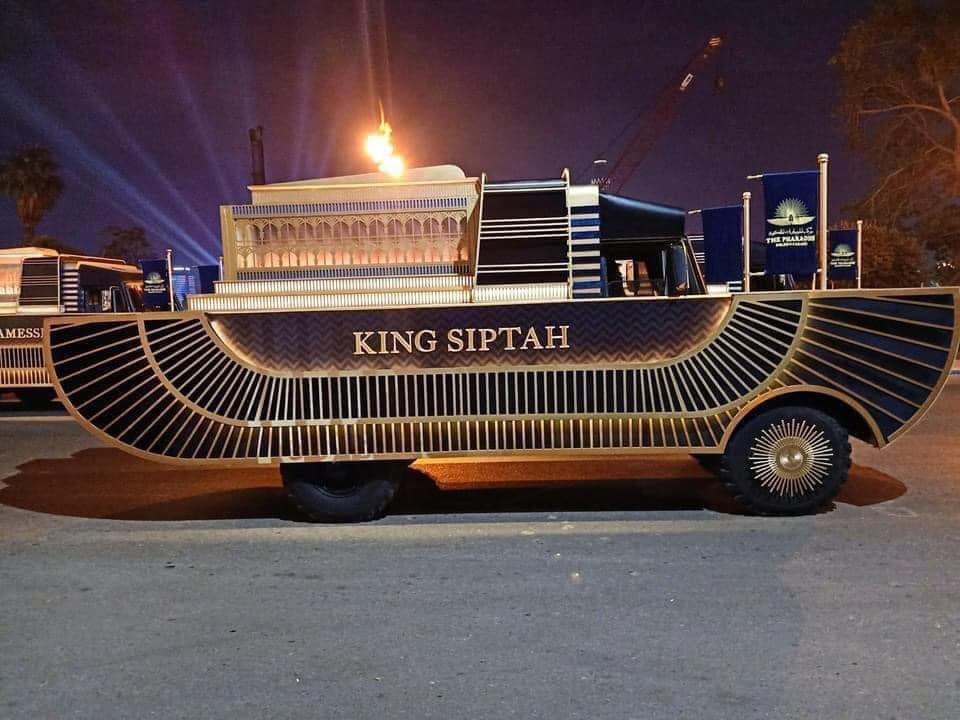
On April 3, 2021 a spectacular event took place. A parade of 18 kings and 4 queens – all mummies, were paraded through the streets of Cairo, from the Egyptian Museum to the new National Museum of Egyptian Civilization. There they all were, Ramses II, Hatshepsut, Amenhoteph the Magnificent, and others, transported in the order of their reign, on newly paved streets, in nitrogen filled coffins, and surrounded by a motorcade of security. The specially designed chariots, golden beasts, like a cross between a military vehicle and a boat and decorated with architectural shapes and Egyptian patterns, floated along the streets, one for each ruler, with their name clearly marked in Roman script, Arabic, and hieroglyphs, on the front, on the back and on the sides. The live streamed event also included performances by the United Philharmonic Orchestra, highly staged and produced parades by people in spectacular costumes, chants in ancient Egyptian language, readings form old inscriptions and from the Book of the Dead, and videos streamed of famous actors visiting important and restored Egyptian archaeological sites. At their final destination, the mummies were welcomed by president Abdel Fattah el-Sisi and a gun salute by the National Guard.

Theses mummies have all traveled before. They all come from two locations:  The Royal Cache in Deir El Bahari and The Tomb of Amenhotep II in Luxor, where they were excavated in 1881 and 1898, respectively. Back in the day they reached Cairo by boat on the Nile and in some cases by first class train. Since then they have been on display for both Egyptians and tourists to see. Now they will take up court in the newly built Royal Hall of Mummies which opens for visitors on April 18.

The display of mummies is not uncontroversial in Egypt. While it is one of the few categories of human remains that are regularly on display in the United States where otherwise such exhibits are considered controversial (see article by Liv Nilsson Stutz in Archaeologists and the Dead), many muslim scholars argue that the dead should be treated with dignity and not be put on display. In 1980 the president Anwar Sadat ordered that the the royal mummies should be reburied. Allegedly the position grew out of a dispute he had with Ayatollah Ruhollah Khomeini. Sadat criticized Khomieni for displaying the bodies of dead American servicemen on TV to which Khomeini retorted with questioning why Egypt displays mummies. Sadat did not get his wish, and the mummies remained in the care of the museum.

In this light – bringing together history, geopolitics, and religion, it is interesting to reflect over what the Pharaohs’ Golden Parade really means today. It is hard to miss the message of nationalism connecting the prestigeous past with the contemporary state, its president and military. It goes without saying that this is problematic. It is also likely that the live streaming and publicity surrounding this elaborate and costly event is an investment in the future tourist revenue streams which will be crucial for the economic post-covid recovery. The bread and circus aspect of the event is also hard to miss, and we are right to call it out. Finally, International media has taken the bite and in an expected and orientalist way brought to the fore “the curse of the mummies angle” as the days leading up to the event coincided with the stranding of an enormous ship in the Suez Canal.

But beyond all that we can see something else in the treatment of the royal mummies. The parade demonstrates how these human remains are treated, not only as invaluable antiquites, but also as the remains of important people, as individual named rulers with a public history, and personal dignity. We can reflect on what it says about us as we marvel and snicker at a performance like this, while we at the same time mine the graves of European royalty to extract DNA and other organic samples.

Dead Bodies are Not Neutral Objects. Report from a conversation about dead bodies and their place in museums.


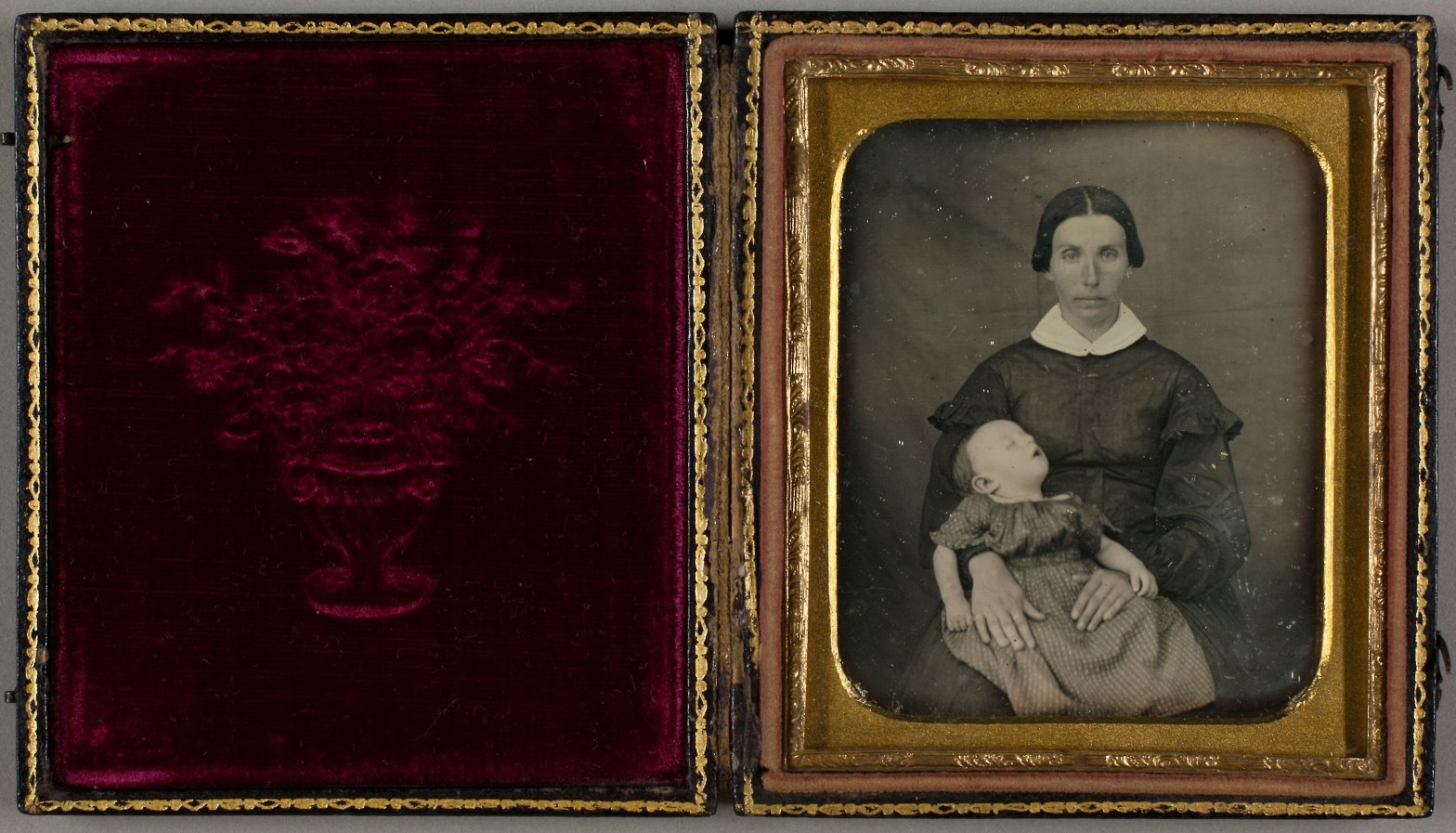
The old photograph shows a mother, looking straight at us, with a child in her lap. The small face of the child is turned upward and the mouth is sightly open, embodying that deep and completely relaxed baby sleep every parent learns to recognise as the body of the child suddenly becomes very heavy your arms. Only, this child is not sleeping. This child is dead. Photographs like this, a last memento of the child before burial, were common in the 19th century and are still made today (although today the practice of taking and showing these photos is no longer as public, nor is it as socially acceptable). Photographs like this remind us that dead bodies are not neutral objects, and that separating from them can be emotional, painful and problematic. Photographs like this also remind us of how our attitudes to the dead are culturally shaped and experienced. Photographs like this can help us untangle why some people feel that it is problematic to keep human remains in museums.

“The body of the dead, is something onto which people project meaning and emotion, and it is culturally varying how that projection happens and at what stage that projection changes. So when we talk about repatriation and reburial, what in the eyes of an archaeologist or a biological anthropologist may be material for research may still very well be perceived by other stakeholders as an individual to which they owe the duties of a proper burial.”

This fundamental realisation was one point of departure for a K-samtal – a structured conversation – on the topic of repatriation organised by The Swedish National Heritage Board on Dec 18th 2020 and led by Kicki Eldh and Ingela Chef Holmberg. The conversation was part of a continuing effort to support Swedish Museums in their work to develop policies and practices for curation and repatriation that live up to “an exemplary international standard.” Part of this effort has also been the development of support documents for the care for human remains in museum collections and in how to handle repatriation cases.

The conversation between Estelle Lazer (University of Sydney), and Liv Nilsson Stutz (me), was led by Kicki Eldh (for a sound file of the full conversation in English, please click here) and drew on international examples to unpack the complex issues of repatriation, indigenous rights, identity politics, the history of science, colonialism and research. The conversation came to circle back to questions such as “What does it mean to keep to an exemplary standard?”; “What can we learn from international experiences?”; and “What theoretical inquiries can help us problematize the issue, and how can we move from academic discourse to action and solutions?

Estelle Lazer shared her experiences from both Australia and Pompeii, and I drew on my work studying and analysing the repatriation debate in the US and NAGPRA (the Native American Graves Protection and Repatriation Act)

“We need to stop thinking about repatriation as a problem to be solved and instead approach it as an opportunity to learn.”

Both Estelle and I agreed that while we can learn from the international experiences, there is not a golden standard that easily can be transferred from one cultural, historical and political context to another. Instead we must educate ourselves and approach the issue with flexibility. To aim for an exemplary standard must be to learn from experiences and competences, and work toward developing legal instruments that are at the same level as international standards, but that are also tailored to fit the Swedish context.

We must also learn how to be critical. Repatriation cases are not always unproblematic. When approaching these complex issues it is important to be aware of this. But first of all we need to become better listeners, because a successful repatriation is not a process that strives only for closure, but one that is approached as an opportunity for collaboration. In other words, we need to stop thinking about repatriation as a problem to be solved, and instead approach it as an opportunity to learn.

Liv Nilsson Stutz

Caption to figure: Mother with dead child, 19th century, probably American. Art Institute of Chicago, CCO Public Domain

Ethics take center stage at conference on the Archaeology of Death in the Digital Age

This year’s edition of the University of Chester Archaeology Student Conference on the Archaeology of Death, DigiDeath 2021, on January 27-28 (for a complete program as well as links to several of the presentations, please see entry on professor Howard Williams blog Archaeodeath), was dedicated to the public archaeology of digital mortality. The event was clearly framed by the global pandemic. The ever looming themes of death and mortality are not new to the yearly conference devoted specifically to these topics, but the changes in how we die and how we mourn in the time of Covid-19 probably brought the themes of mortality, mourning and commemoration even closer to home this year. In addition, the closure of museums and universities, and the cancellation of conferences, workshops, and other meeting spaces for academic exchange and learning, brought digital tools and social media into focus, and of course, the event took place online.

The papers were presented by students as well as researchers in a range of formats, from live papers presented digitally, to twitter papers and video recordings, all engaging new forms for communication and archiving of academic production.

When summing up the many presentations, several themes around public archaeology and digital tools come into focus, all relating in explicit and implicit ways to broader considerations of ethics – professional and personal.

“Sharing is not always caring”

Several papers on different aspects of public archaeology raised interesting questions about accessibility, education and multi-vocality. While images of archaeological remains and virtual tours of exhibitions serve the important goal of opening up museums, collections, and even the archaeological research process to all, they also pose new questions. Where do we draw the line regarding what to share and how? “Sharing is not always caring” – as stated by Erin Munro in her paper on virtual exhibition tours and mortuary heritage. But how can we tell when we cross the line? Does the showing of human remains become less respectful when it leaves the museum context and moves out on the web – in a virtual exhibit or an instagram post – and if so, why? By asking ourselves these questions we get the opportunity to examine our culturally shaped understanding of museum spaces, and in that process we must also realise that what may be a respectful place in our eyes may be perceived very differently by others

New technologies bring new possibilities – and ethical challenges. The reproduction of 3D models of human remains (paper by Campanacho and Alves Cardoso) invites us to reflect over post mortem privacy and integrity in new ways. This is a growing and unregulated field that has not yet found its ethical footing.

Other ethical issues that were raised related to the ways in which engagement with the public also entails sharing the power over the narrative. Powerful narratives of the past that are presented in the press, in movies, TV series and video games, often take great liberty with the creative license, focusing on the spectacular or gory, highlighting male elites at the expense of others, and reproducing stereotypes about the past. The digital era and its many and various tools intensifies this engagement through online communities, comment sections, an approach to lived experiences through gaming, and so on. What is more important, we may ask: that the past is represented in a “correct” way, or that people engage with it at all? The consequences of misrepresentation might be even higher in the ways in which the press and social media often present archaeology and anthropology, reproducing colonial and ethically questionable images of treasure hunters and grave openers. While these images appear to still attract a part of the public, they are offensive and disrespectful to others and threaten to undermine the work of making archaeology a more respectful and inclusive practice.

In our contemporary digital era, images play a central role in how we communicate with each other and how we draw attention to our work. Online presences on blogs and social media pose new questions about both personal and professional ethics. It is important at this moment to not be satisfied with easy formulaic answers to our ethical dilemmas, but to view our task ahead as one of constant questioning and examining of the ethics of the discipline – and most importantly, of ourselves in our roles as archaeologists and fellow human beings.