Can an exhibition explore the darker sides of the heritage of anatomy without slipping into the familiar tones of morality? It is, of course, important to recognise the power imbalances in this history; it is crucial to call it out and to teach it. But today this insight can be viewed as fundamental, and it seems difficult to bring new dimensions to the discussion that really adds depth to our understanding, rather than simply expose, quite literally, yet more bodies, for us, in turn to share our outrage around.
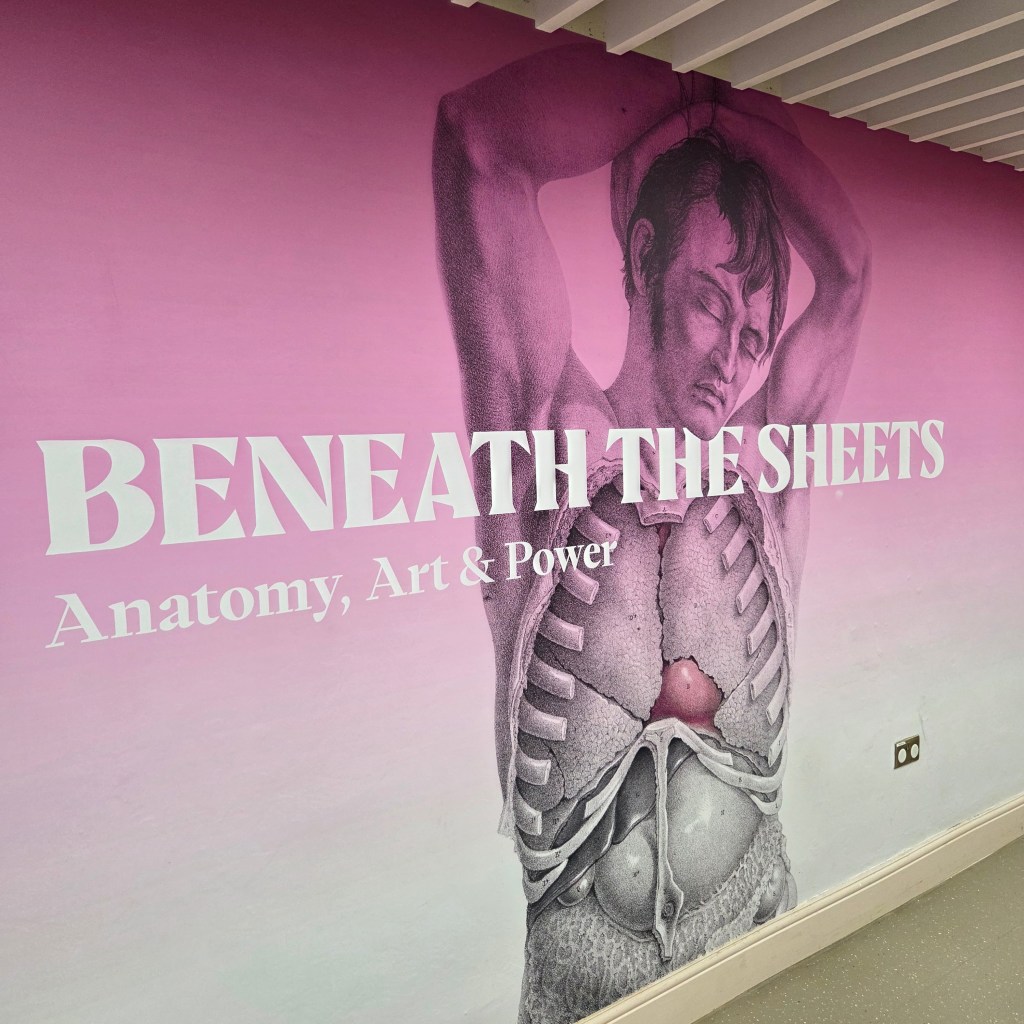
The exhibition “Beneath the Sheets: Anatomy, Art and Power” currently showing at the Thackray Museum of Medicine in Leeds manages to strike a new and interesting tone. Through the work of 18th and 19th century artists and anatomists, working side by side to penetrate, reveal, document, categorise and research the human body, this exhibition lays bare a field charged by equal amounts of desire, sexuality, and science. By centring the transgressive in the practice, the exhibition invites us to reflect on the practice itself in a deeper way. Rather than simply giving in to the aesthetics of it, or adversely condemn the immorality of it, the invitation to focus on the transgressive allows the visitor to confront head on what is usually only alluded to. We are invited to reflect on how the desire to scientifically understand the human body of others, often was entangled with the desire to control, possess, and perhaps even harm it. It is disturbing, but it also seems significant.
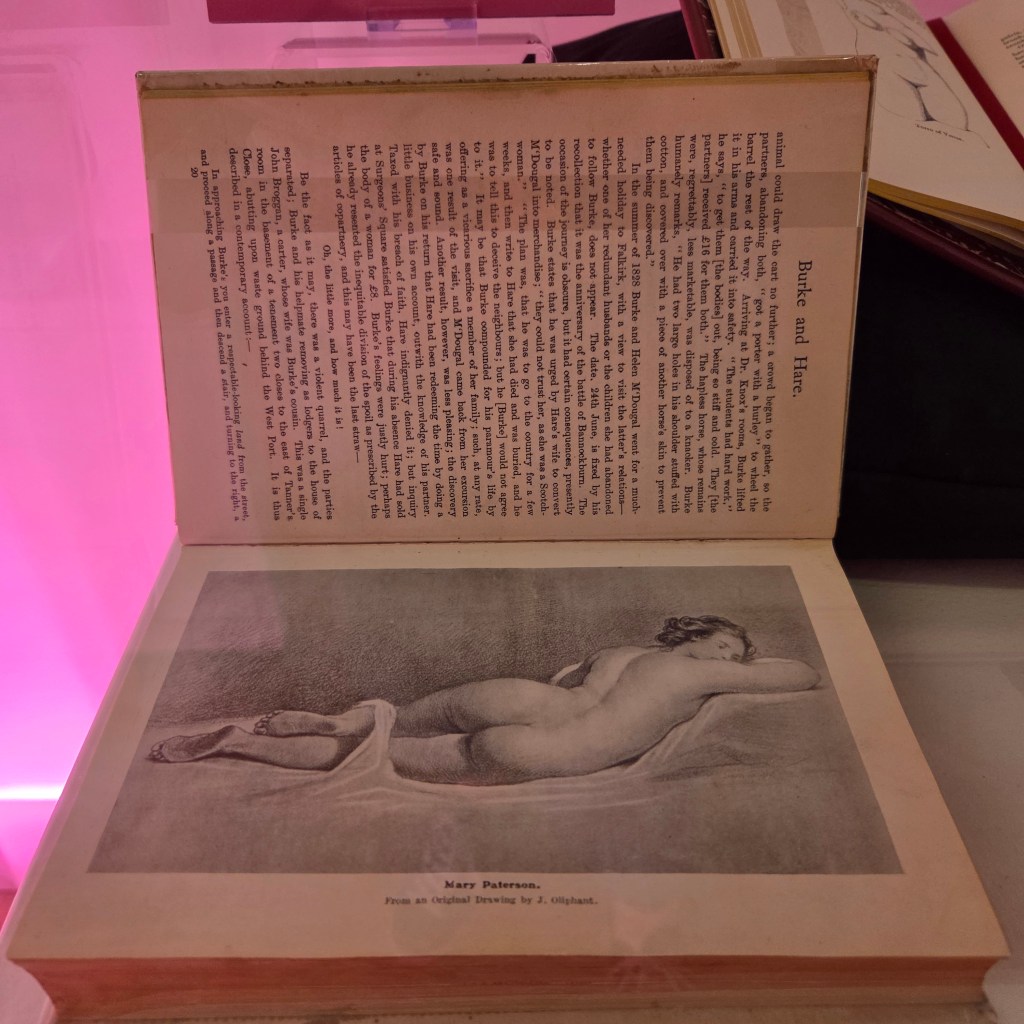
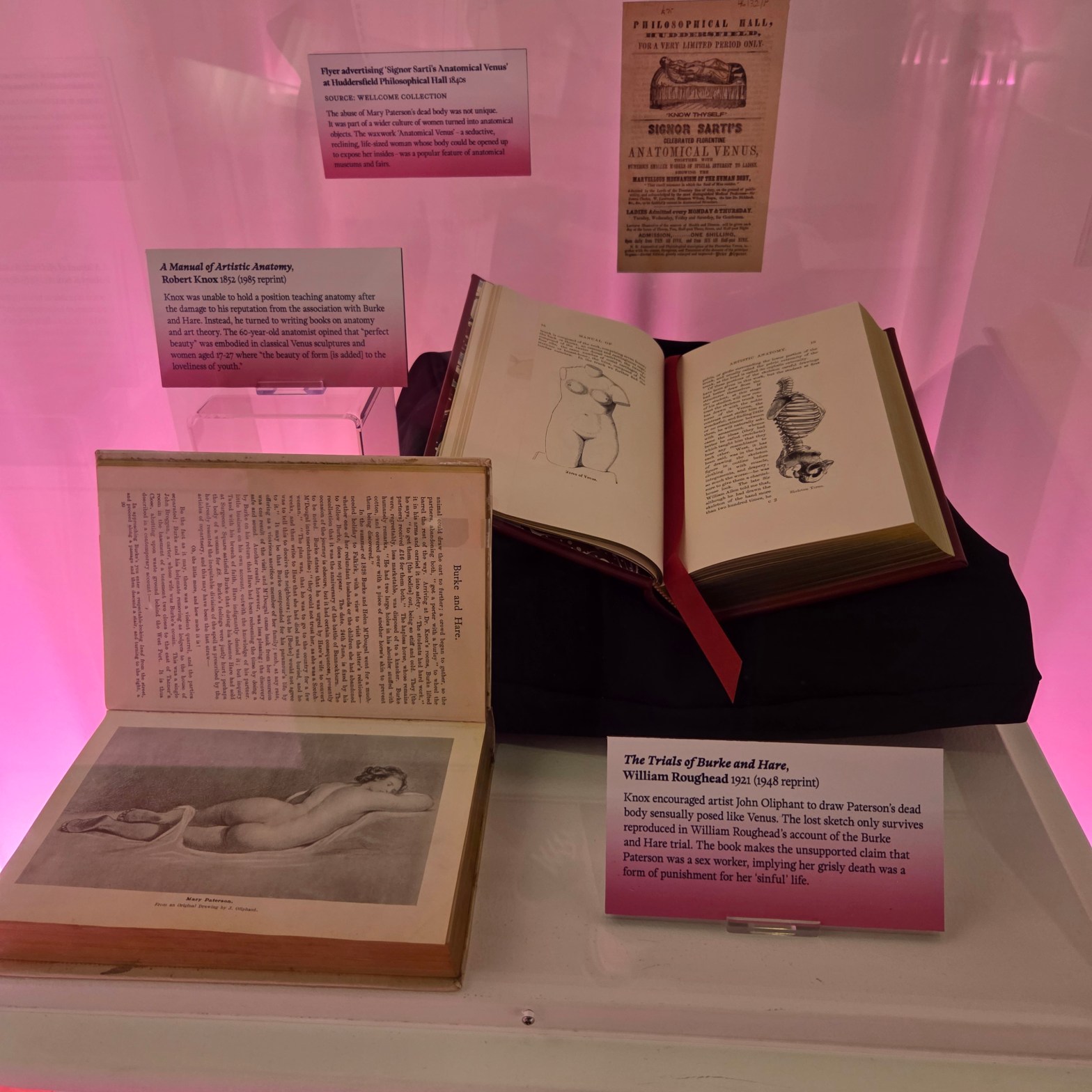
The violence against the objectified female body took different forms. Some were preserved to be possessed as was the case with Mary Paterson, a marginalised woman, murdered by Burke and Hare in Edinburgh in 1828, and preserved in whiskey by anatomist Robert Knox – as he was allegedly “enamoured with her beauty.” This allowed him to possess her, and to show her off to others. In the exhibition we can see the drawing of her dead body by artist John Oliphant. Knox had instructed him to pose her dead body in a sensually suggestive manner, like “a Venus.”
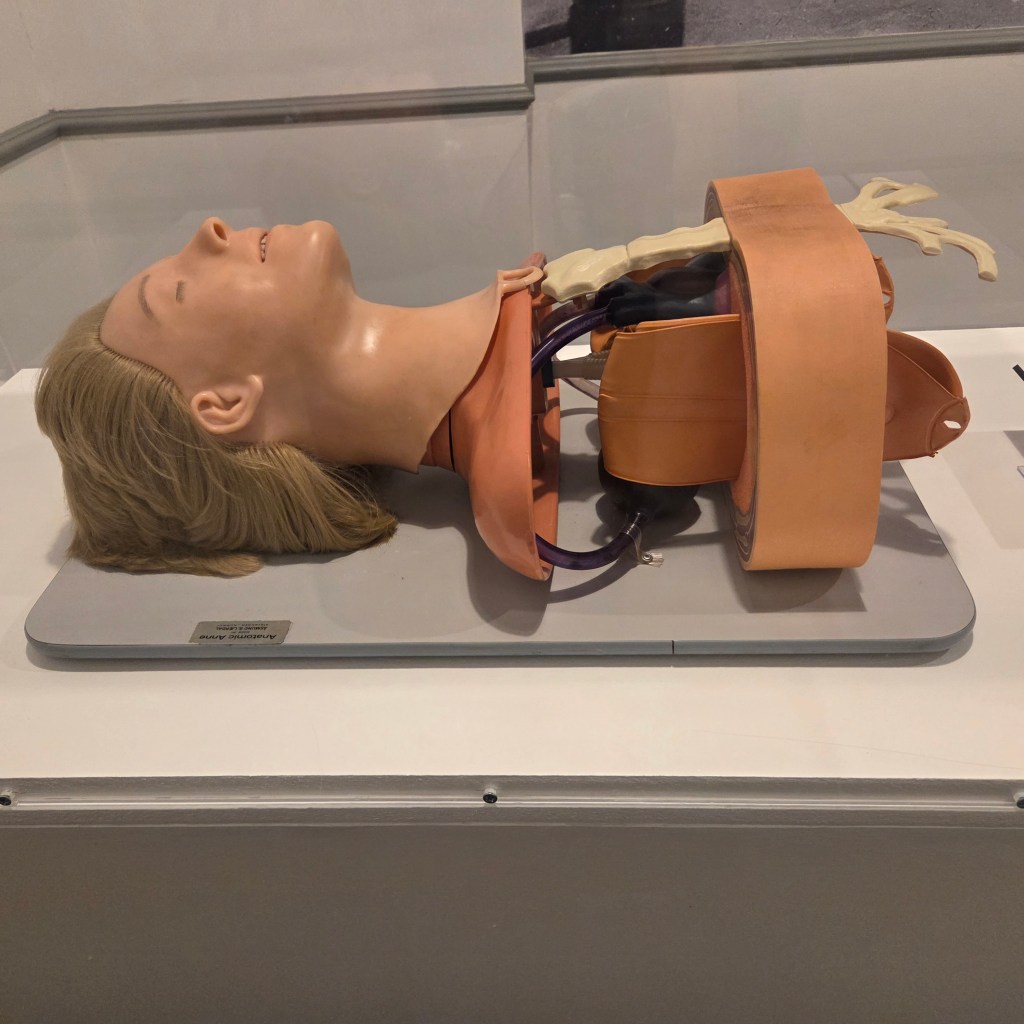
The theme of female beauty, objectification, and sexual desire is also explored through the case of “l’inconnue de la Seine,” the woman who in the 1880s became famous for her beautiful corpse, recovered from the Seine after she committed suicide. The fascination with her beauty, immortalised by the large scale reproduction, commodification and circulation of her death mask (on display), is a master class in abject objectification of women. In addition to her death mask, the exhibition also includes a CPR training manikin, developed in the 1960s, where the face is modeled on hers. The lack of care for her as a person thus extended well into the 20th century with the joke about her being “the most kissed woman in the world.”
The relationship between the anatomist and artist could be contentious. William Hunter employed artist Jan van Rymsdyk to make realistic images of a pregnant uterus with skin removed and exposed, viewed from below, and under it the genitals bared between spread thighs partially covered by fabric, giving her body a fragmented allure – like a broken statue. The woman is reduced to a specimen, objectified and at the same time hyperrealistic. Jan van Rymsdyk described his working relationship with Hunter as unpleasant, leaving him feeling “ill used and betrayed,” lines that indicate that the unequal power dynamics in the dissection room also extended to artists and anatomists.
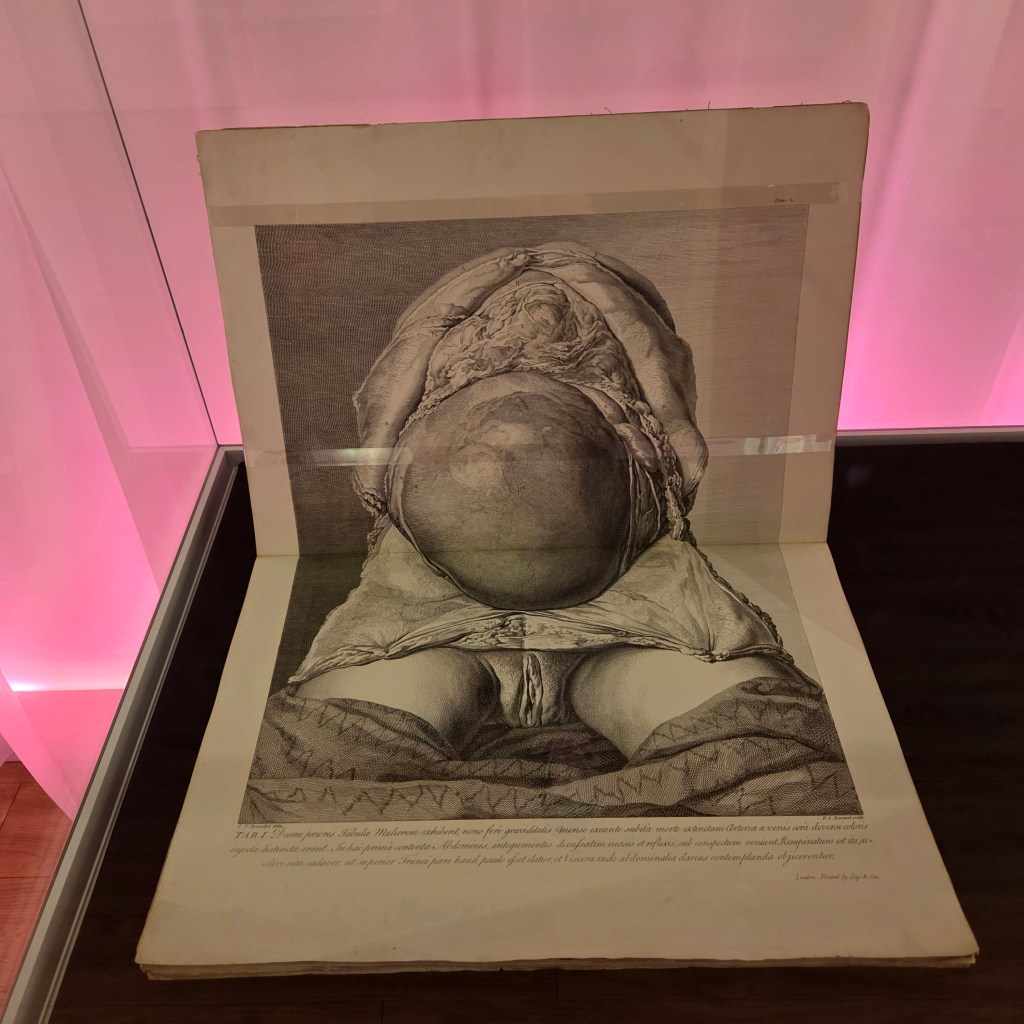
Photo: Liv Nilsson Stutz.
The work of John Maclise merges the two roles as he was both an anatomist and an illustrator. He had spent time in Paris in the 1830s and 1840s and adapted the ‘Continental Style’ with a focus on the naked male body, dead and alive, often posed in ways that signal that this was also a space to explore homosexual desire. Again, the body is beautified and simultaneously objectified.
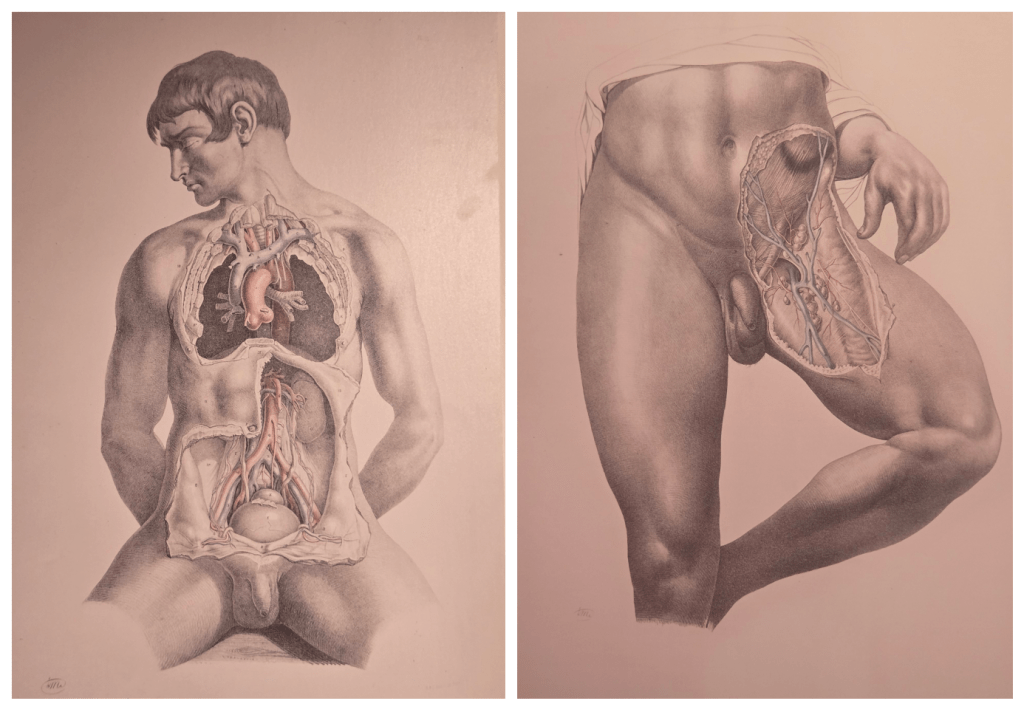
For more – his Surgical Anatomy from 1851 is available online here and here.
To me, the most original contribution to the exhibition is the inclusion of Anne Lister, a landowner and Yorkshire woman who left for Paris in 1829 to learn anatomy and practice dissection. Her contribution to the exhibition is not visual, but comes from her collection of books (including Aristotle’s ‘Masterpiece or the Secrets of Generation’ – a widely read sex manual), and her own diaries in which she has written extensively about her exploration of anatomy, in no small part with the goal of understanding her own body and sexuality, and that of other women with whom she had sexual relationships. Lister also, interestingly, in a diary entry reflects over the strange feeling of cutting into another human hand – bringing a recognition of the liminal to the experience – acknowledging the transgressive aspect of the act.
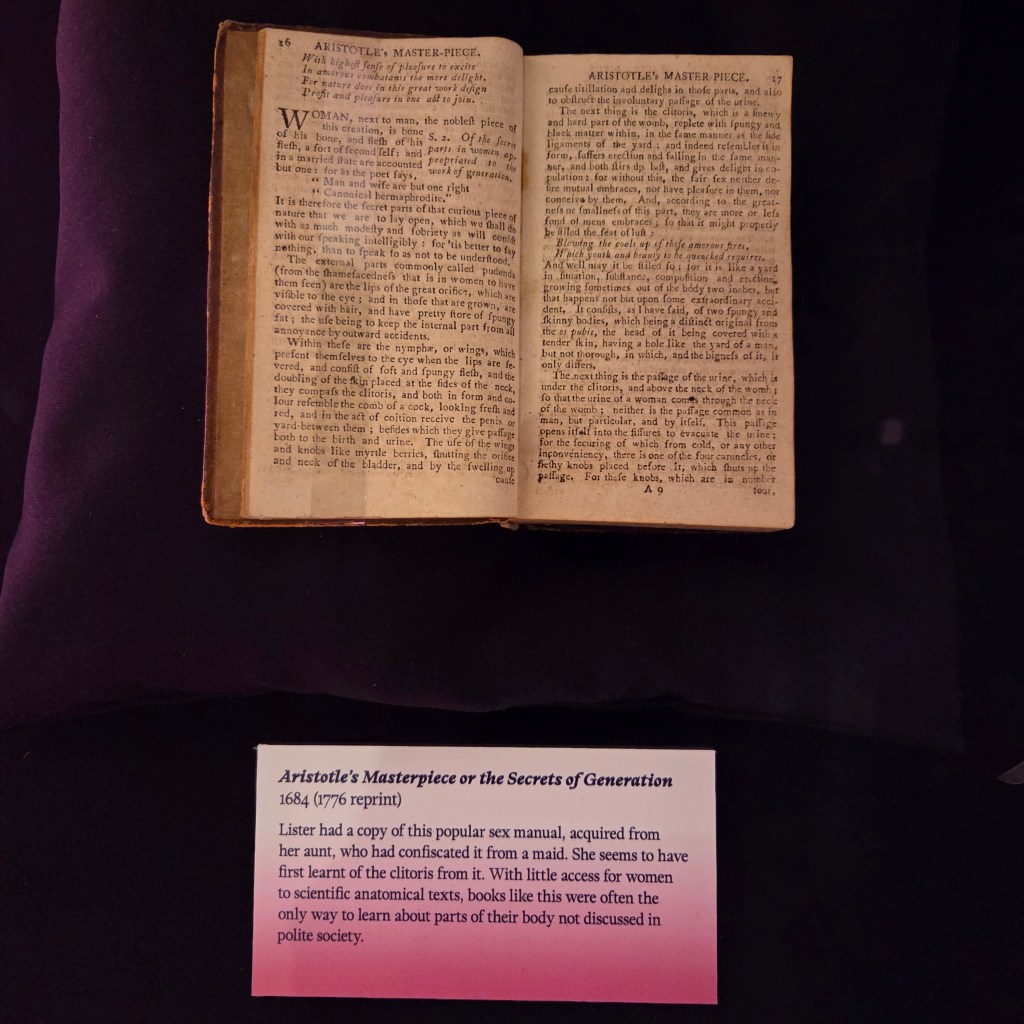
The exhibition allows us to explore the dark sides of anatomy without resorting to morality that inevitably would halt any further exploration. A queer reading of the objects, art, and texts on display shows how anatomy and its art mimics science, but at the same time hides fetishes and desires that mirror cultural concerns, such as beauty, gender roles, and sexuality, all while contorting them through abuse and violence – at the margins, below the surface, beneath the sheets.


